Block paving is one of those features homeowners in Bournemouth love because it instantly elevates kerb appeal while staying durable through our mixed coastal weather. But sooner or later, every homeowner asks the same question the moment weeds begin to show or the driveway turns patchy and dull: does pressure washing damage my block paving, or is it actually a safe way to clean it?
It’s a fair concern. Pressure washers can transform a dirty driveway in minutes, yet they are powerful machines that can just as easily cause long-term damage if used incorrectly. The key isn’t avoiding pressure washing altogether; it’s understanding how to clean your paving safely, protect the joints, and maintain its lifespan.
As someone who’s seen block paving in every condition, from pristine new installations to old driveways damaged by years of harsh cleaning. I’ll walk you through what really happens when block paving is pressure washed, what mistakes to avoid, and how homeowners in Bournemouth can keep their surfaces looking sharp without putting them at risk.
Does Pressure Washing Actually Damage Block Paving? The Truth Behind It
The short answer is that pressure washing can damage block paving, but only when it’s done incorrectly. The danger lies not in the cleaning method itself but in how much pressure is used, the angle of the spray, and whether the cleaning is followed up with proper maintenance.
Block paving is designed with sand-filled joints that stabilise the entire surface. When a pressure washer is aimed directly into the joints at close range, the force can blast out the jointing sand. Once that support is removed, blocks start to loosen, shift and sink. Over time, this leads to uneven areas, pooling water, and even cracks.
However, when the right pressure setting is used and the process is carried out using a surface cleaner or controlled lance, pressure washing is actually one of the most effective ways to deep-clean block paving without causing harm.
Why Homeowners in Bournemouth Notice Damage More Quickly
Living near the coast means block paving is exposed to extra moisture and humidity, which encourages quicker moss and algae growth. When homeowners try to combat this with overly aggressive pressure washing, the paving ends up taking the hit.
The pressure washer itself isn’t the problem — it’s the combination of:
- softer sub-bases after heavy rainfall
- weakened joints from sand erosion
- blocks moving slightly due to natural coastal ground shift
Once the sand starts disappearing, the problem becomes visible within months, which is why so many Bournemouth homeowners think pressure washing ruined my driveway. In reality, it was the technique, not the method.
What Happens When Block Paving Is Pressure Washed Too Harshly?
There are several issues that appear when pressure washing is done without proper control. The most common is joint sand being removed, and once that happens, the paving loses the interlocking structure that gives it strength.
You may also notice the paving surface looks rougher or more porous. This usually happens when high pressure strips away the protective layer on the blocks, making them more susceptible to weeds, moss and stains. I’ve seen driveways where the owner unknowingly etched patterns into their surface because they held the lance too close, creating permanent marks that can’t be undone.
The Safe Way to Pressure Wash Block Paving (Backed by Experience)
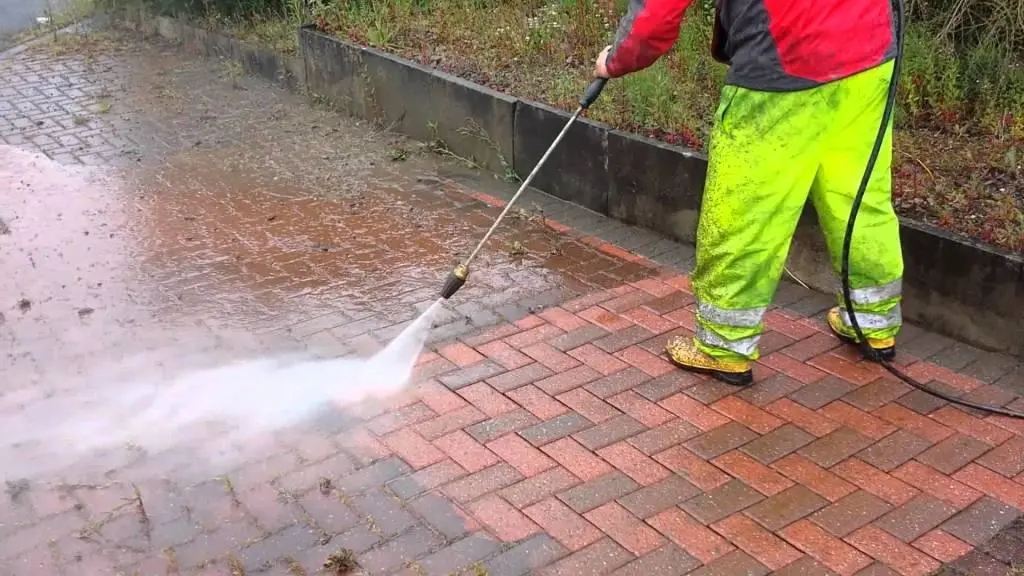
Professional exterior cleaning companies use controlled systems rather than raw pressure. A surface cleaner, for example, distributes water evenly across the paving and prevents the spray from hitting the joints directly. This means stubborn dirt is removed while the integrity of the paving remains intact.
Most homeowners who accidentally damage their driveways usually use domestic pressure washers at maximum settings, or they work too close to the surface. Cleaning requires a balance: enough power to lift algae and stains, but not so much that you strip away the stability of the paving.
Once the cleaning is complete, the paving must be re-sanded with kiln-dried sand to restore joint strength. Without this step, the paving becomes vulnerable, especially in wetter areas of Bournemouth where rain can quickly erode leftover sand.
How Often Should You Clean Your Block Paving?
In a coastal climate like ours, once a year is usually enough for a deep clean, as long as the paving is maintained throughout the year. If your driveway is shaded or prone to moisture, you may notice algae forming more frequently. In these situations, gentle maintenance washing can keep things under control without stressing the paving.
Homeowners often worry about cleaning patios, roofs and gutters at the same time. Although these tasks are different from block paving cleaning, they all benefit from a planned approach. For example, keeping gutters clear reduces water overflow, which helps protect paving joints from repeated saturation.
What About Alternatives to Pressure Washing?
Some homeowners prefer soft washing because it uses lower pressure combined with cleaning solutions. This is effective for algae, lichen and moss. However, soft washing alone doesn’t always deliver the deep clean that block paving needs, especially if the paving has years of grime.
The best approach often combines both methods: a controlled pressure clean followed by a soft wash treatment to prevent regrowth. This keeps the paving cleaner for longer and reduces the need for heavy washing sessions in future.
How Professional Pressure Washing Protects Your Block Paving
At Platinum Exterior Cleaning Bournemouth, we use a set of methods designed specifically for block paving, patios, roof cleaning, and gutter cleaning across the Dorset region. Our approach is purpose-built to prevent long-term damage.
We use controlled, low–medium pressure cleaning
Instead of blasting the paving, we clean at a calibrated pressure that removes dirt but keeps the sand bedding intact. We use flat surface cleaners, not direct jet nozzles, so the pressure is evenly distributed.
We protect the jointing sand
During cleaning, we avoid direct pressure on joints. Once the area dries, we re-sand using high-quality kiln-dried sand to lock the blocks back into position.
We apply optional sealing
For many Bournemouth homeowners, sealing is one of the best decisions they make. It reduces moss, slows weed regrowth and protects colours from UV fading. It also stabilises the sand even further.
We consider local Bournemouth conditions
Living near the coast means higher moisture, more salt exposure, and quicker organic growth. This is why patios cleaning, roof cleaning and gutter cleaning are essential home maintenance tasks here and why controlled pressure washing is particularly important for block paving.
Local Example: Bournemouth Driveway Damaged by DIY Cleaning
A homeowner in Southbourne recently contacted us after pressure washing their block paving themselves. They used a narrow jet nozzle and unknowingly blasted out a significant amount of sand. Within weeks, they noticed blocks shifting, and green algae returned even faster than before.
When we inspected the driveway, we found water had pooled beneath several blocks, and the owner assumed the paving had “gone bad”. In reality, the paving was fine, it simply needed professional re-sanding and sealing.
Should You Seal Block Paving After Pressure Washing?
Sealing isn’t mandatory, but it’s highly recommended, particularly in areas with high moisture like Bournemouth. A quality sealant protects the blocks from stains, algae, and water penetration. It also helps keep the jointing sand in place.
Sealed paving often stays cleaner longer and reduces the frequency of deep cleaning. Many homeowners notice their paving lasts years longer with regular sealing.
Final Thoughts: So, Does Pressure Washing Damage Block Paving?
Pressure washing itself does not damage block paving, incorrect pressure washing does. When carried out with the right technique, correct pressure settings, and followed up with re-sanding and maintenance, block paving remains strong, clean and visually appealing for many years.
If you’re in Bournemouth and unsure whether your driveway needs cleaning, resurfacing or sealing, professional advice can save you money and prevent long-term damage.