If you have ever cleaned your patio and felt pleased with the immediate results, only to notice fading, loose joints, or surface wear months later, you are not alone. Many homeowners in Bournemouth unintentionally shorten the life of their paving by making well-meaning but costly patio cleaning mistakes. Coastal weather, salt in the air, and frequent rainfall already put outdoor surfaces under pressure. Add the wrong cleaning approach, and even relatively new patios can age faster than they should.
This article looks at the most common patio cleaning mistakes, why they cause long-term damage, and how to clean paving properly without compromising its structure or appearance. The aim is not to scare you off maintenance, but to help you protect what is often a significant investment in your home.
Why Patio Cleaning Needs a Careful Approach
Patio surfaces are not designed to be indestructible. Whether you have natural stone, concrete slabs, or block paving, each material has a specific tolerance for pressure, chemicals, and moisture. One of the biggest misconceptions is that harder cleaning equals better cleaning. In reality, aggressive methods often strip away protective layers, weaken joints, and expose the surface to water ingress.
In a coastal town like Bournemouth, freeze-thaw cycles, wind-driven rain, and salt deposits already accelerate wear. Poor cleaning habits compound these environmental stresses and lead to premature cracking, sinking, or discolouration.
Using Too Much Pressure on Paving
How Pressure Washing Becomes a Problem
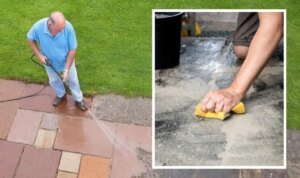
High-pressure washers are one of the most common causes of patio damage. While they are effective at removing surface dirt, they are often used at pressures far higher than paving can safely handle. This is especially true for older patios or surfaces with weathered joints.
Excessive pressure erodes jointing sand, loosens blocks, and can even score the surface of concrete or stone slabs. Once the joints are compromised, water can seep underneath the paving. Over time, this leads to movement, uneven surfaces, and weed growth returning faster than before.
Why Block Paving Is Particularly Vulnerable
Driveway block paving and patio block paving rely on compacted sand for stability. When that sand is blasted out during cleaning, the blocks lose lateral support. Homeowners often notice the issue months later when the surface starts to dip or shift. At that stage, the fix is no longer cleaning but repair or partial relaying, which is significantly more expensive.
Choosing the Wrong Cleaning Chemicals
Acid-Based Cleaners and Long-Term Damage
Many off-the-shelf patio cleaners contain acids designed to break down stubborn stains quickly. While this might seem effective, acidic products can react with the minerals in concrete and natural stone. Over time, this reaction weakens the surface, causing pitting, fading, and a rough texture that attracts more dirt.
In Bournemouth, where patios are often damp for extended periods, chemical residues can linger longer than expected. This increases the risk of ongoing surface deterioration even after cleaning appears to be complete.
Bleach Is Not a Safe Shortcut
Bleach is another commonly misused product. While it can kill algae and moss on the surface, it does not remove spores embedded deeper in the paving. The result is often rapid regrowth. Bleach can also discolour slabs and harm surrounding plants and drainage systems, creating problems beyond the patio itself.
Ignoring Jointing Sand After Cleaning
Why Re-Sanding Matters
One of the most overlooked patio cleaning mistakes is failing to replace jointing sand after washing. Even low-pressure cleaning can remove some of the sand that holds paving in place. Without topping it up, gaps form between slabs or blocks, allowing water and weeds to return.
Proper re-sanding stabilises the surface and extends the lifespan of the patio. In block paving, kiln-dried sand is essential to lock the blocks together and prevent movement.
The Knock-On Effect of Skipped Maintenance
When joints are left exposed, moisture penetration becomes more severe during winter. This can lead to frost damage beneath the surface, causing cracks and lifting that are often mistaken for natural ageing rather than avoidable deterioration.
Cleaning Without Considering Drainage and Gutters
Patio cleaning does not exist in isolation. One of the less obvious mistakes is ignoring how water flows away from the cleaned surface. Blocked or poorly maintained gutters can discharge excess water directly onto patios, undermining the sub-base over time.
Gutter cleaning plays an important role in protecting outdoor paving. Overflowing gutters concentrate water in areas not designed to handle it, leading to erosion beneath slabs and staining that repeatedly returns no matter how often the patio is cleaned.
Cleaning Too Often or at the Wrong Time of Year
Over-Cleaning Causes Wear
There is a growing trend of frequent pressure washing, sometimes multiple times a year. Each clean removes a small amount of material from the surface. Over time, this cumulative wear becomes visible as fading, roughness, and reduced resistance to stains.
Seasonal Timing Matters
Cleaning patios during very cold periods or prolonged wet spells increases the risk of water penetration and frost damage. In Bournemouth, late spring and early autumn tend to offer the best balance of mild temperatures and drying conditions, allowing surfaces to recover properly after cleaning.
Real-World Experience from Bournemouth Properties
Local patio cleaning professionals regularly encounter patios that appear old but are only a few years into their expected lifespan. In many cases, the common factor is repeated high-pressure washing combined with no re-sanding or sealing. According to industry data from UK paving associations, improper pressure washing is one of the leading causes of premature block paving failure, often reducing lifespan by up to 30 percent.
These are not dramatic, immediate failures. They are slow, cumulative problems that only become obvious when repairs are unavoidable.
How to Clean a Patio Without Damaging It
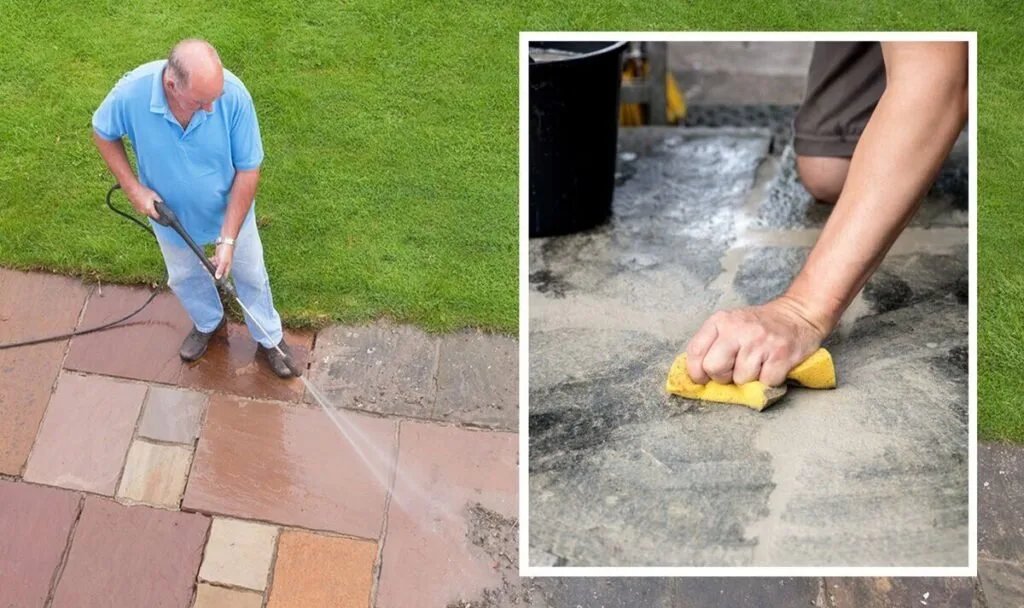
The safest approach to patio maintenance starts with understanding the surface material and its limitations. Gentle washing, appropriate detergents, controlled pressure, and proper aftercare all matter more than brute force. Sealing paving where appropriate can also provide an extra layer of protection, particularly in coastal environments.
For homeowners who are unsure, professional patio cleaning services offer the advantage of experience, correct equipment, and an understanding of how patios interact with drainage, driveways, and gutter systems.
Frequently Asked Questions About Patio Cleaning
What is the biggest patio cleaning mistake homeowners make?
Using excessive pressure is the most common issue. It often delivers short-term visual results but causes long-term structural damage that shortens the lifespan of the paving.
Can patio cleaning damage driveway block paving?
Yes. Driveway block paving is especially sensitive to pressure washing because it relies on jointing sand for stability. Removing that sand leads to movement and uneven surfaces over time.
How often should a patio be cleaned in the UK?
For most properties, once a year is sufficient. More frequent cleaning should only be done using low-pressure methods and appropriate products.
Does gutter cleaning really affect patio condition?
Absolutely. Poor gutter cleaning can cause water to overflow onto patios, increasing erosion beneath the surface and accelerating staining and joint failure.
Is professional patio cleaning worth it?
In many cases, yes. Professionals understand how to clean effectively without causing damage and can spot early signs of structural issues before they become expensive repairs.
Final Thoughts and Next Steps
Patio cleaning mistakes rarely cause immediate, obvious damage. Instead, they quietly reduce the lifespan of paving, leading to repairs that could have been avoided with the right approach. In Bournemouth’s coastal conditions, careful maintenance is not optional if you want your patio to last.
If you are unsure whether your current cleaning routine is helping or harming your patio, it may be time to get professional advice. A proper assessment can save money, preserve the appearance of your outdoor space, and prevent small issues from turning into major problems.