If you live in Bournemouth, you’ve probably noticed how quickly moss creeps across roof tiles. One winter passes, then another, and suddenly your roof looks tired, patchy and damp. Most homeowners see it as cosmetic. It isn’t. Left untreated, moss and algae trap moisture against tiles, weaken surfaces and quietly shorten the life of your roof.
The right roof cleaning techniques do more than improve kerb appeal. They actively protect your home from structural damage, internal damp and unnecessary repair costs. The problem is that not all cleaning methods are equal. In fact, the wrong approach can do more harm than good.
Why Roof Cleaning in Bournemouth Is More Than Just Appearance
Bournemouth’s coastal climate plays a major role in roof deterioration. According to data from the UK Met Office, the south coast experiences high levels of rainfall and humidity compared to many inland areas. That damp environment creates ideal conditions for moss, algae and lichen to thrive.
Moss retains water like a sponge. During colder months, that moisture freezes and expands. Over time, tiles crack, protective coatings wear away and small gaps appear. Water then finds its way beneath tiles and into roof felt and timber structures.
I’ve seen properties where a simple maintenance clean could have prevented thousands of pounds in repairs. Instead, neglected moss led to blocked gutter cleaning callouts, damp loft insulation and internal staining.
The Most Effective Roof Cleaning Techniques for Long-Term Protection
Manual Moss Removal
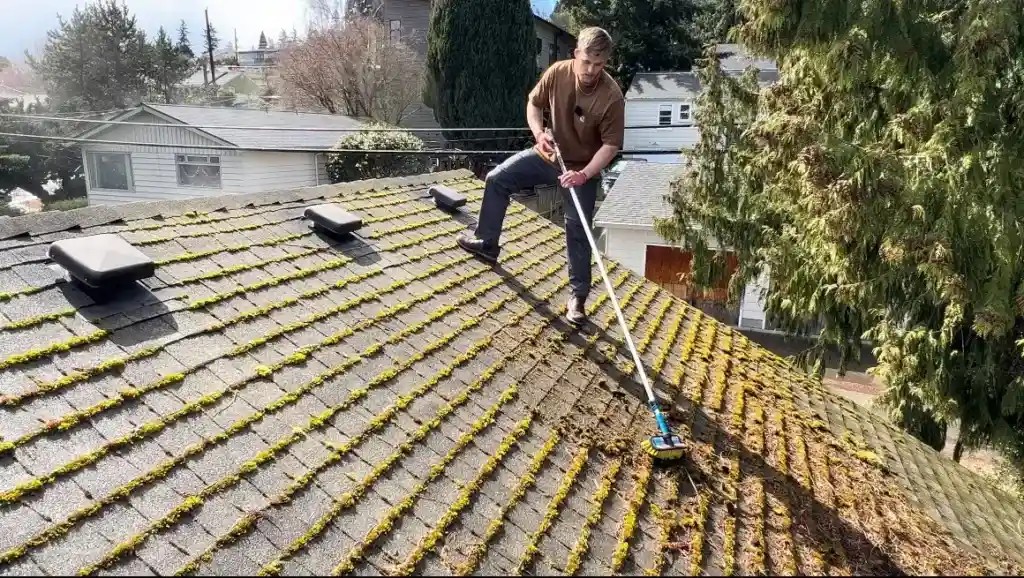
The safest starting point is manual removal. This involves carefully scraping moss from tiles using specialist tools designed not to damage the surface.
Unlike aggressive pressure washing, manual removal protects tile integrity. It also allows close inspection of cracked or slipped tiles before problems escalate.
In many Bournemouth properties, especially older homes with clay or concrete tiles, this approach reduces risk while delivering visible improvement.
Soft Washing: The Protective Approach
Soft washing is one of the most recommended roof cleaning techniques for long-term results. Instead of blasting water at high pressure, a low-pressure system applies biodegradable cleaning solutions that kill moss spores and algae at the root.
This method matters because scraping alone doesn’t stop regrowth. Without treatment, moss often returns within months.
A professional-grade biocide continues working long after application. Many reputable cleaning providers follow guidance aligned with standards set by organisations such as the Roof Cleaning Institute UK, which promotes safe and non-damaging methods.
Why High-Pressure Washing Can Be Risky
Pressure washing has its place in exterior cleaning. It works well for patio cleaning and driveway restoration. However, on roofs, high pressure can strip protective coatings, dislodge tiles and force water beneath the surface.
Concrete tiles manufactured after the 1980s often have a protective top layer. Once that’s removed, tiles become porous and deteriorate faster.
We’ve seen cases where homeowners attempted DIY pressure washing only to require urgent gutter cleaning afterwards due to debris clogging the system. Worse still, some experienced leaks weeks later.
The issue is not pressure washing itself. It is using it where it does not belong.
The Role of Gutter Cleaning in Roof Protection
Roof cleaning without gutter cleaning is incomplete.
When moss is removed, debris naturally falls into the guttering system. If not cleared, water cannot drain correctly. Overflowing gutters push water down external walls, increasing the risk of damp penetration.
A combined roof and gutter cleaning service ensures water flows freely. It also protects fascias and soffits from unnecessary moisture exposure.
In many Bournemouth homes, blocked gutters are the hidden cause of water staining inside bedrooms and loft spaces. The roof is blamed, but the drainage system is often the real culprit.
Seasonal Timing: When Should You Clean Your Roof?
Spring and early autumn are typically ideal.
Cleaning in spring removes winter moss build-up and prepares the roof for summer heat. Autumn treatment reduces moisture retention during the colder months.
In coastal areas like Bournemouth, annual inspections are advisable. Roofs shaded by trees or facing north may require more frequent maintenance due to slower drying times.
Regular care extends the lifespan of roofing materials significantly. Some industry studies suggest that proactive cleaning and treatment can add 5 to 10 years to tile longevity compared to neglected roofs.
How Roof Cleaning Connects With Wider Exterior Maintenance
Your roof does not exist in isolation. Exterior maintenance works best as a coordinated effort.
For example, patio cleaning reduces algae growth near walls and drainage points. Clean patios and driveways prevent dirt from being washed back onto walls and gutters during heavy rain.
Likewise, routine gutter cleaning protects both roofing and ground-level areas from overflow damage.
This joined-up approach is often overlooked. Yet it is one of the most effective ways to preserve property value in competitive housing markets like Bournemouth.
Common Myths About Roof Cleaning Techniques
One myth is that moss “protects” tiles from weather. In reality, it traps moisture and accelerates decay.
Another assumption is that all cleaning methods are equally effective. They are not. Some techniques prioritise speed over protection.
Homeowners also assume that visible cleanliness equals safety. But the real benefit lies beneath the surface in spore control and moisture management.
Understanding these differences is key to making informed decisions.
Frequently Asked Questions
What is the safest roof cleaning technique for UK homes?
Soft washing combined with manual moss removal is widely considered the safest method. It protects tile surfaces while killing spores that cause regrowth.
How long does roof cleaning last in Bournemouth?
With proper treatment, results typically last between two and four years, depending on exposure, nearby trees and coastal conditions.
Can roof cleaning damage my tiles?
It can be done incorrectly. High-pressure washing may remove protective coatings. Professional assessment reduces this risk significantly.
Is roof cleaning worth the cost?
In most cases, yes. Preventative cleaning is far less expensive than repairing leaks, replacing damaged tiles or treating internal damp.
Final Thoughts: Protecting Your Home the Right Way
Your roof is one of the most important structural elements of your home. Ignoring moss and algae may not cause immediate problems, but over time the impact is real.
Effective roof cleaning techniques focus on protection, not just appearance. When combined with professional gutter cleaning and broader exterior maintenance, they safeguard your property against avoidable damage.
If you’re based in Bournemouth and unsure about the condition of your roof, now is a sensible time to act. A professional inspection costs far less than a full roof repair.
Get in touch with a trusted local exterior cleaning specialist today and protect your home before minor issues turn into major repairs.