It usually starts with good intentions. A sunny weekend, a bit of spare time, and the thought, “I’ll give the patio a proper clean.” Fast forward a couple of hours, and what should have been a simple refresh ends up with faded paving, loose joints, or worse, permanent damage.
If you’re a homeowner in Bournemouth, this is more common than you might think. Coastal weather, damp conditions, and organic growth make patios harder to maintain. And while cleaning seems straightforward, the reality is that a few common patio cleaning mistakes can quietly ruin your outdoor space.
Why Patio Cleaning Isn’t as Simple as It Looks
A patio isn’t just a flat surface. It’s a mix of materials, jointing compounds, sealants, and often years of wear from weather and foot traffic. In areas like Bournemouth, where moisture and salt in the air accelerate moss and algae growth, patios need careful handling.
According to property maintenance data across the UK, improper pressure washing is one of the leading causes of surface damage in outdoor spaces. What looks like a quick fix can reduce the lifespan of paving by years.
Using Too Much Pressure on Delicate Surfaces
One of the most common patio cleaning mistakes is assuming that more pressure equals a better clean. It doesn’t.
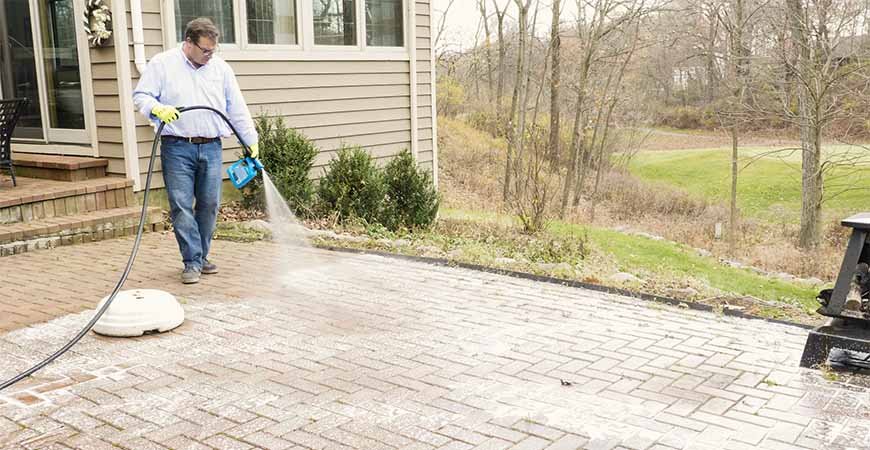
High-pressure washing can strip away the top layer of stone, especially on softer materials like sandstone or limestone. Once that protective layer is gone, the surface becomes more porous, meaning it will absorb dirt and moisture faster. In Bournemouth’s damp climate, that leads to quicker regrowth of algae and staining.
Professionals adjust pressure depending on the surface type. What works for concrete might completely ruin natural stone. If you’ve ever noticed patios looking patchy or rough after cleaning, excessive pressure is usually the reason.
Ignoring the Type of Stone or Material
Not all patios are built the same, yet many people treat them that way. Porcelain, natural stone, block paving, and concrete all react differently to cleaning methods and chemicals. Using the wrong approach can cause discolouration, etching, or structural damage.
For example, acidic cleaners might remove stains quickly, but they can also react with limestone, leaving permanent marks. Similarly, aggressive scrubbing on resin-bound surfaces can break down the binding material.
A proper clean starts with understanding what you’re working with. Skipping this step is one of those patio cleaning mistakes that often leads to irreversible damage.
Using Harsh or Incorrect Cleaning Chemicals
It’s tempting to grab a strong cleaner and expect instant results. But stronger doesn’t always mean safer.
Bleach-based solutions, for instance, can kill algae effectively, but they can also weaken jointing materials and harm nearby plants. Over time, repeated use can leave your patio looking uneven in colour.
In coastal areas like Bournemouth, where patios are already exposed to environmental stress, using harsh chemicals only accelerates wear. A more balanced, surface-specific solution is usually more effective and far safer.
Neglecting the Joints Between Paving
The joints between your paving slabs are just as important as the slabs themselves. Yet they’re often overlooked.
Pressure washing can easily wash away jointing sand or mortar. Once those joints are compromised, the slabs become unstable. Water seeps underneath, leading to movement, sinking, and even cracking over time.
This is one of the most expensive patio cleaning mistakes because the damage isn’t always visible straight away. It develops gradually, often requiring re-pointing or full repairs months later.
Cleaning Without Proper Preparation
Another issue that comes up often is skipping the preparation stage.
Leaves, debris, and loose dirt should always be cleared before any cleaning begins. If not, you’re effectively grinding that debris into the surface, which can cause scratches and staining.
Also, failing to protect surrounding areas like lawns, plants, and nearby walls can lead to unintended damage. Overspray from cleaning solutions can affect more than just the patio.
Not Sealing the Patio After Cleaning
Cleaning is only half the job. Protection is what keeps your patio looking good long-term.
After a thorough clean, especially if pressure washing has been used, the surface is more vulnerable. Applying a suitable sealant helps protect against moisture, stains, and algae growth.
Without sealing, patios in Bournemouth can start showing signs of wear again within months due to the coastal climate. This step is often skipped, yet it makes a noticeable difference in longevity.
Trying DIY Methods Without Proper Knowledge
There’s nothing wrong with tackling home maintenance yourself, but patio cleaning is one area where experience matters.
Many homeowners rely on online tips or rental equipment without understanding the risks. The result is often uneven cleaning, damaged surfaces, or missed problem areas.
This is where professional services stand out. They don’t just clean; they assess, treat, and protect the surface properly. The same applies to services like Roof Cleaning and Gutter Cleaning, where incorrect methods can cause long-term damage rather than solve the problem.
Overlooking the Bigger Picture of Exterior Maintenance
Patio issues don’t exist in isolation. Blocked gutters or a moss-covered roof can contribute to patio problems. Water overflow from poor Gutter Cleaning can lead to constant dampness around your patio, encouraging algae growth. Similarly, debris from Roof Cleaning can settle on your patio surface, undoing your cleaning efforts.
Looking at your property as a whole helps prevent recurring issues. It’s not just about cleaning one area, but maintaining everything together.
A Real Example from Bournemouth
A homeowner in Bournemouth recently attempted to clean their sandstone patio using a high-powered pressure washer. Initially, the results looked impressive. The surface was bright and clean.
Within weeks, however, the patio began to darken unevenly. The pressure had stripped the protective layer, making the stone more absorbent. Algae returned faster than before, and the surface started to feel rough underfoot. Fixing the issue required professional re-treatment and sealing, costing significantly more than a standard clean would have in the first place.
How to Clean Your Patio the Right Way
The right approach isn’t about shortcuts. It’s about using the correct pressure, appropriate cleaning solutions, and understanding the material.
Professional cleaners typically use a combination of soft washing and controlled pressure, followed by re-sanding joints and applying a protective sealant. This method not only cleans but preserves the patio. If you’re unsure, it’s worth consulting a specialist rather than risking damage that could cost more to repair.
FAQs About Patio Cleaning Mistakes
How often should I clean my patio in the UK?
In most cases, once or twice a year is sufficient. However, in coastal areas like Bournemouth, more frequent maintenance may be needed due to moisture and algae growth.
Can pressure washing damage my patio?
Yes, if used incorrectly. High pressure can erode surfaces and remove jointing material, leading to long-term issues.
Is sealing really necessary after cleaning?
It’s not mandatory, but it’s highly recommended. Sealing helps protect against stains, moisture, and organic growth, extending the life of your patio.
What’s the safest way to remove algae?
Using a surface-appropriate cleaning solution combined with low-pressure washing is usually the safest method. Avoid harsh chemicals unless you’re certain they’re suitable for your patio material.
Should I hire a professional for patio cleaning?
If you’re unsure about the process or dealing with delicate materials, hiring a professional is often the safer and more cost-effective option.
Final Thoughts and Next Steps
Patio cleaning might seem like a simple job, but as you’ve seen, small mistakes can lead to costly damage. From using too much pressure to choosing the wrong cleaning solution, these issues are more common than most homeowners realise.
If your patio is starting to look tired or you’re unsure how to clean it safely, it’s worth getting expert advice. A professional service can restore your outdoor space properly while protecting it for the future.
If you’re based in Bournemouth and want your patio cleaned without the risk of damage, consider reaching out to a trusted exterior cleaning specialist. It’s a simple step that can save you time, money, and a lot of frustration in the long run.