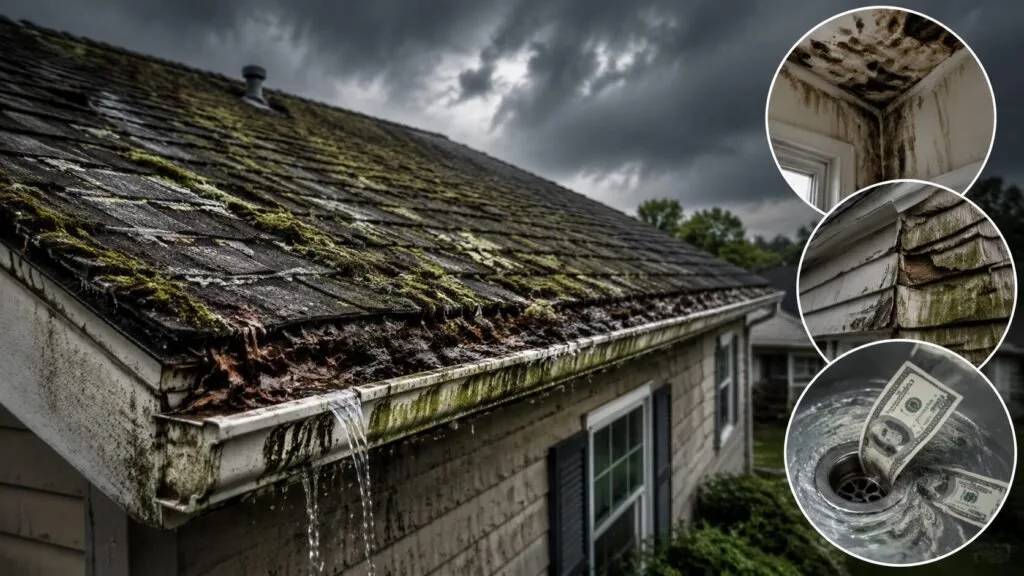
Your roof is the one part of your home you almost never look at and it’s also the part doing the most work to protect everything beneath it. So when moss starts creeping across the tiles or dark streaks appear from the gutter line down, it’s easy to shrug and put it off until next spring. Then the spring after. Then the one after that.
The problem is, while you’re ignoring it, your roof isn’t ignoring the weather. In the UK’s damp, mild climate and especially along the South Coast around Bournemouth, Poole, Christchurch and Ringwood, moss, algae and lichen find ideal conditions to spread. Every month of neglect adds to a hidden bill: cracked tiles, rotting timbers, blocked gutters, rising damp, soaring energy costs and, in worst cases, a complete roof replacement running into five figures.
This guide breaks down exactly what those hidden costs look like, how they escalate over time, and how a relatively small investment in regular professional roof cleaning can save you thousands and protect your home for decades.
Why UK Roofs Need More Care Than You Think
The UK climate is essentially a moss factory. Long stretches of mild, damp weather punctuated by short cold snaps create the perfect environment for biological growth on roofing materials. Coastal areas like Bournemouth and Poole add salt-laden air and high humidity to the mix, accelerating wear on tiles, mortar, and flashings.
Most homeowners assume their roof is a passive, “fit and forget” part of the house. In reality, every year it’s under attack from:
- Airborne spores that germinate on damp tiles and grow into moss, algae and lichen.
- Falling leaves and organic debris that trap moisture and feed biological growth.
- Air pollution and UV radiation that slowly break down protective surface coatings.
- Freeze-thaw cycles that widen tiny cracks until water gets in.
- Birds and pests that nest, dislodge tiles, and leave acidic droppings.
None of this looks dramatic from ground level. But each year of inaction adds up and unlike most home maintenance, you typically don’t see the damage until it’s already expensive.
The Six Hidden Costs of Ignoring Roof Cleaning
1. Accelerated Roof Deterioration
Moss acts like a sponge. Once established, it holds water against your tiles for days after every shower, keeping the roof surface permanently damp. That constant moisture does three things, all bad.
It prevents tiles from drying properly between rainfalls. It triggers freeze-thaw damage every winter, as trapped water expands inside microscopic cracks and widens them into splits. And as moss grows, it physically lifts the edges of overlapping tiles, breaking the seal that keeps your roof watertight.
The result is faster, often irreversible wear. A well-maintained tiled roof can last 25 to 40 years. A roof left to moss for a decade or more can need replacing 10 to 15 years earlier than it should, a five-figure piece of your property quietly destroyed by something a regular soft wash would have prevented.
2. Water Ingress and Internal Damage
Once tiles shift, crack or lose their protective surface, water finds its way in. First into the underlayment (the felt or membrane beneath your tiles), then into the roof timbers, and eventually into the loft and ceilings below.
By the time you spot a damp patch on a bedroom ceiling, you’re rarely looking at a quick fix. Persistent water ingress causes:
- Rotting roof battens, rafters and decking, which can compromise structural integrity
- Saturated, ineffective loft insulation
- Stained, blistered or collapsed ceilings
- Mould growth on internal walls
- Damaged plaster and decorative finishes
Replacing one or two tiles might cost £80–£250. Replacing a section of underlayment, treating rotten timbers, replastering a ceiling and redecorating? That can easily climb past £2,000–£5,000 and all of it stems from problems that started with moss on the roof.
3. Blocked Gutters and Wall Damage
Roof neglect is rarely just a roof problem. As moss matures and breaks off, fragments wash into your gutters along with dirt, leaves and lichen. Add in standard autumn debris and your drainage system is fighting a losing battle.
Blocked gutters can’t move water away from your home. Instead, they overflow, sending water cascading down walls and pooling around foundations. The knock-on effects include rotting fascias and soffits, saturated brickwork, peeling render, damp penetration in upper-floor walls, and in severe cases, rising damp at ground level.
It’s a domino effect that turns a £100 gutter cleaning visit into thousands of pounds of remedial work on walls and foundations. Keeping the roof clean dramatically reduces what ends up in the gutters in the first place.
4. Higher Energy Bills
This is one of the most overlooked hidden costs. When water seeps into your loft insulation through a moss-damaged roof, the insulation’s thermal performance drops sharply. Damp fibreglass or mineral wool can lose a significant proportion of its insulating value, meaning more heat escapes through your roof in winter and more enters in summer.
In an era of high energy prices, that inefficiency translates directly to higher bills, month after month. Many homeowners replace boilers or chase draughts trying to fix rising heating costs, when the real culprit is moisture quietly soaking into the loft from above. A clean, watertight roof is genuinely one of the most cost-effective ways to keep your energy bills in check.
5. Damp, Mould and Health Risks
Persistent damp inside the home is not just a building problem, it’s a health one. Black mould in particular has been linked to respiratory issues, allergic reactions and aggravated asthma symptoms, and is especially harmful to children, the elderly and people with existing lung conditions.
Standing water and rotting organic matter on a neglected roof can also harbour bacteria, and bird droppings (which accumulate in untouched moss and gutter debris) can carry pathogens linked to conditions like salmonellosis and psittacosis. Most homeowners never connect a chesty cough or worsening allergies to the state of their roof, but the link is real, and well documented.
6. Lost Property Value and Insurance Headaches
A visibly dirty, mossy roof tells every potential buyer the same story: this home hasn’t been looked after. Estate agents and surveyors flag roof condition routinely, and buyers use it as leverage to negotiate the price down, sometimes by far more than a professional clean would have cost.
The insurance angle is even more important. Most home insurance policies include a clause requiring you to maintain your property “in good repair.” If a leak, ceiling collapse or damp claim arises and the insurer’s loss adjuster determines that long-term neglect, moss buildup or blocked gutters contributed to the damage, your claim can be reduced or refused entirely.
Regular, documented cleaning (keep your invoices) demonstrates responsible maintenance and makes legitimate storm or accidental damage claims far easier to settle.
How the Costs Escalate Over Time
The longer a roof goes uncleaned, the more expensive the consequences become and the cost curve is exponential, not linear. The table below shows what typically happens to a UK roof left unmaintained:
| Years Without Cleaning | Visible Condition | Underlying Damage | Likely Cost to Resolve |
| 0–2 years | Minor dirt, light algae | None significant | £0–£100 (inspection) |
| 3–5 years | Visible moss patches, dark streaks | Surface erosion, moisture retention begins | £350–£800 (soft wash + biocide) |
| 6–10 years | Heavy moss, lifting tiles, blocked gutters | Tile damage, early water ingress | £800–£2,500 (clean + tile repairs + gutter work) |
| 11–15 years | Cracked tiles, internal damp patches, sagging gutters | Rotting underlayment, ceiling damage, damp insulation | £2,500–£6,000 (repairs + internal redecoration) |
| 16–20+ years | Major leaks, sagging sections, visible structural sag | Timber rot, structural failure | £8,000–£20,000+ (partial or full replacement) |
The numbers tell a simple story: regular cleaning every 3–5 years is the cheapest insurance policy you can buy for your roof.
Preventive Maintenance vs Neglect: The 20-Year Maths
To put the financial case beyond doubt, here’s how the two approaches compare over a typical 20-year homeownership period for an average semi-detached property:
| Approach | Routine Maintenance | Likely Repairs | 20-Year Total |
| Clean every 4 years | £500 × 5 cleans = £2,500 | £500–£1,000 (minor repairs caught early) | ~£3,000–£3,500 |
| No cleaning | £0 | Premature roof replacement + internal repairs | ~£10,000–£20,000+ |
That’s potentially a five-figure saving for a job most homeowners spend more on every year just topping up their car insurance.
Why DIY Roof Cleaning Often Makes Things Worse
When the moss is finally too obvious to ignore, plenty of homeowners reach for a pressure washer and a ladder. It’s almost always a mistake.
Domestic pressure washers operate at pressures that can strip the protective coating off concrete tiles, dislodge mortar from ridge tiles, blast water under overlapping seams, and damage flashings. The result: a roof that looks cleaner for a few months, but is in worse condition than before, with regrowth often appearing faster than ever.
Roof work is also genuinely dangerous. Wet, mossy tiles are extraordinarily slippery, and ladder falls remain one of the most common causes of serious household injury in the UK every year.
Professional roof cleaning isn’t about brute force. It’s about using the right method for your specific roof material and the right biocide treatment to kill spores at the root, so growth doesn’t simply return. That’s why specialists rely on soft washing and low-pressure steam cleaning rather than high-pressure jets. You can read more about how these techniques work and which is right for your roof on our roof cleaning services page.
How Often Should You Have Your Roof Cleaned?
There’s no one-size-fits-all answer, it depends heavily on your property’s location, surroundings and roof material. As a general guide for the UK:
| Property Environment | Recommended Frequency |
| Urban, exposed to sunlight, few trees | Every 4–6 years |
| Coastal (e.g. Bournemouth, Poole, Christchurch) | Every 3–4 years |
| Rural or partly shaded | Every 2–3 years |
| Heavily wooded or north-facing | Every 1–2 years |
If your roof is showing visible moss, dark streaks, or your gutters keep filling with green debris, you’re overdue. An annual inspection, even just a visual one from the ground with binoculars, helps you catch trouble while it’s still cheap to fix. Adding a roof check to your regular exterior maintenance routine means small issues never get the chance to become big ones.
Warning Signs Your Roof Is Overdue for a Clean
Don’t wait for water to come through your ceiling. Book a clean if you notice any of the following:
- Green or black patches visible on the roof from the ground
- Dark streaks running down from the ridge or gutter line
- Moss debris collecting in gutters or on the driveway below
- Lifted, cracked, or visibly displaced tiles
- Damp patches, musty smells, or staining on upstairs ceilings
- Higher-than-usual heating bills with no obvious cause
- A general “tired,” patchy look to the roof compared to neighbours’
Any one of these is a clear signal that biological growth has taken hold. Two or more, and you’re likely already accumulating hidden damage.
How Platinum Exterior Cleaning Protects Your Roof
At Platinum Exterior Cleaning, we’ve spent years cleaning roofs across Bournemouth, Poole, Christchurch and Ringwood and we know exactly how the South Coast climate punishes neglected ones. Our roof cleaning approach is built around two safe, proven methods:
- Soft washing, which uses low-pressure application of biodegradable biocides to kill moss, algae and lichen at the root, preventing fast regrowth and leaving tiles intact.
- Low-pressure steam cleaning, for stubborn growth and delicate materials like clay tiles and slate, where mechanical removal would risk damage.
Every clean includes a visual inspection of your tiles, ridges, flashings and gutter line, so if something needs attention, you hear about it before it becomes a leak. We’re fully insured, eco-conscious, and 100% local. If you’d like to extend the same care to your patios, driveway or guttering, we cover patio and decking cleaning, driveway and block paving cleaning, and gutter and fascia cleaning too.
For a free, no-obligation quote, get in touch with our team or call 07734 928740. The longer you wait, the more it costs, but a five-minute call today could save you thousands tomorrow.
Frequently Asked Questions
How much does professional roof cleaning cost in the UK?
For a typical UK semi-detached home, a professional soft wash or moss-removal service generally costs between £350 and £800, depending on roof size, pitch, access and the level of growth. Add-ons like biocide treatment to prevent regrowth typically add £150–£300 but extend results for years.
Is roof cleaning safe for the tiles?
Yes, when done correctly. Professional roof cleaning uses soft washing or low-pressure steam, not high-pressure jets, so tiles, mortar and flashings aren’t damaged. The wrong method (pressure washing or harsh chemicals) absolutely can cause damage, which is why DIY attempts often do more harm than good.
Will cleaning my roof really extend its lifespan?
Significantly. Moss, algae and lichen trap moisture, accelerate freeze-thaw damage, and physically lift tiles. Removing them and treating the surface to prevent regrowth can add 10 years or more to a roof’s effective lifespan, easily delaying an expensive replacement.
Does home insurance cover damage from a neglected roof?
Usually not. Most UK home insurance policies require you to maintain your property to a reasonable standard. Damage that loss adjusters trace back to long-standing neglect (heavy moss, blocked gutters, missing maintenance) is often excluded or only partially paid. Keeping records of regular cleaning protects future claims.
How long does a professional roof clean take?
Most domestic roofs are completed in a single day. Larger or particularly mossy roofs may take longer, especially if a biocide treatment is being applied as part of the service. Your installer should give you a clear time estimate as part of the quote.
What’s the best time of year for roof cleaning?
Late spring and early autumn are ideal. Avoid extreme cold (biocides work best at moderate temperatures) and heavy rain. A spring clean tackles winter moss buildup before it spreads; an autumn clean clears gutters and treats algae before the wet season.