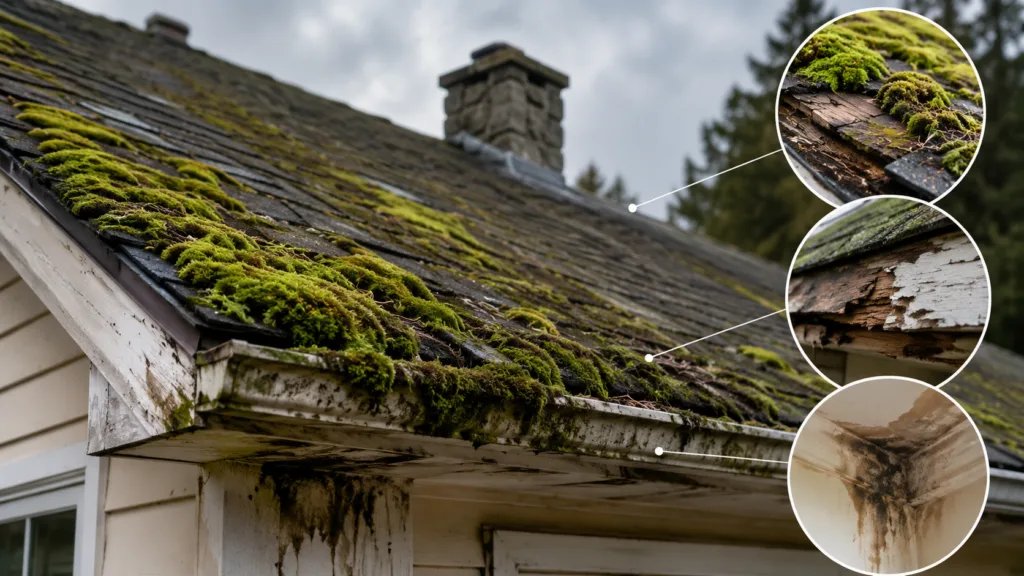
That fuzzy green carpet creeping across your roof tiles might look harmless, even charming, in a cottage-y kind of way. But left unchecked, roof moss is one of the most underestimated threats to a home in the UK, and especially here on the South Coast. The damp, mild climate around Bournemouth, Poole, Christchurch and Ringwood is practically a five-star spa for moss spores, and the damage they cause builds quietly, year after year, until the bill becomes impossible to ignore.
The good news is that moss damage is almost entirely preventable when you know what to look for and act early. In this guide, we explain exactly how roof moss damages your home over time, the warning signs to watch for at every stage, why some “moss removal” methods do more harm than good, and the safest way to get your roof clean and protected for the long term.
What Is Roof Moss and Why Does It Grow?
Moss is a soft, simple plant that thrives in cool, damp, shaded environments, three conditions the UK delivers in abundance. It doesn’t need soil to grow. Spores carried on the wind, by birds, or washed off nearby trees settle into the tiny pores and rough textures of roof tiles, where they take root using the dirt, leaves and rainwater that naturally collect there.
According to the National Federation of Roofing Contractors (NFRC), the principal cause of moss and lichen on pitched roofs is the rough surface of the tiles themselves, which filters dirt out of rainwater. Concrete tiles with a sanded or granule finish are particularly susceptible.
Your roof is more vulnerable if you have:
- North-facing slopes or shaded areas that rarely see direct sunlight
- Overhanging trees that drop leaves and create damp shade
- Older concrete or clay tiles with a more porous surface
- Blocked gutters keeping moisture trapped against the eaves
- Coastal weather patterns, exactly what we get in Dorset
A small green patch may seem cosmetic. But once moss takes hold, it doesn’t stay still, it spreads, thickens, and starts working its way into your roof structure.
Moss vs Algae vs Lichen: Knowing What’s on Your Roof
Homeowners often lump everything green into “moss,” but it helps to know which growth you’re dealing with, each behaves a little differently.
Moss is the soft, spongy, cushion-like growth that holds water like a wet sponge. It’s the most damaging of the three because of how much moisture it traps.
Algae usually shows up as dark green, grey, or black streaks running down the tiles. It feeds on the limestone fillers used in some roof tiles and slowly degrades them, while also making your roof look prematurely aged.
Lichen is the toughest of the trio, a fungus and algae combined, forming crusty, circular patches in pale green, white or grey. It anchors itself deeply into the tile surface, is very difficult to remove, and often leaves behind stains even after treatment.
Most UK roofs end up hosting all three at some point. Each accelerates the others’ damage, which is why a thorough professional clean addresses all three together.
The Stages of Moss Growth (And the Damage at Each)
Catching moss early is everything. Here’s how it progresses if left alone:
Stage 1 — Light specks (cosmetic): Small green or yellow-green dots appear in shaded patches and tile crevices. At this point, the damage is purely visual.
Stage 2 — Patches and clumps (moisture starts holding): Specks merge into noticeable patches with a fuzzy texture. The tiles beneath now stay damp for far longer than they should, which is the start of every problem that follows.
Stage 3 — Thick mats (structural pressure): Spongy cushions of moss form across larger areas, often along the lower edges of tiles. The weight and constant moisture begin lifting tile edges and pushing into mortar joints.
Stage 4 — Advanced infestation (real damage): Tiles are visibly lifted or cracked, gutters are clogged with shed moss debris, and water is now finding its way under the roof covering. At this stage, you may already be looking at repair work alongside the clean.
If you can see green from the ground, you’re at least at Stage 2. Our professional roof cleaning service is most cost-effective when booked at Stage 2 or 3, before the damage starts triggering repairs.
How Roof Moss Damages Your Home Over Time
Moss doesn’t kill a roof in a single season. It works slowly, in layers — which is exactly what makes it so dangerous. Here’s what’s actually happening up there.
1. It Traps Moisture Against Your Tiles
This is the root cause of every other problem on this list. Moss acts like a wet sponge, holding rainwater against your tiles long after the rest of the roof has dried. Constant moisture exposure breaks down the protective surfaces of concrete and clay tiles, accelerating their natural ageing process. Tiles designed to last 50 years can start failing decades early.
2. It Lifts and Displaces Roof Tiles
As moss grows thicker, it forces its way under the bottom edges of tiles, lifting them millimetre by millimetre. Once a tile is even slightly raised, wind-driven rain can blow underneath it, and now water is reaching the felt, battens and timbers it was never meant to touch.
3. It Causes Tile Cracks Through Freeze-Thaw Damage
This is where the British winter does the dirty work. Moisture absorbed by the moss soaks into the porous tile surface. When temperatures drop below freezing, that water expands by around 9%, opening tiny stress fractures. After a few winters, you get visible cracks, spalling (flaking surface), and tiles that need replacing. A roofer in the UK typically charges £75–£120 per tile to replace just one, a cost that adds up fast across a moss-covered roof.
4. It Leads to Leaks and Interior Water Damage
Lifted tiles, cracked tiles and saturated felt eventually fail. Water finds its way into the loft, soaks insulation (which dramatically reduces its effectiveness), and starts staining ceilings. By the time you see a damp patch on a bedroom ceiling, the problem upstairs has usually been developing for a year or more.
5. It Blocks Gutters and Downpipes
Heavy rain washes loose moss off the roof and into your gutters, where it knits together with leaves into a stubborn, sodden mass. Blocked gutters cause overflow down your walls, leading to damp patches on internal walls, rotting fascia and soffit boards, and pooling water near your foundations. This is why we recommend pairing roof cleaning with a professional gutter and fascia clean, they’re two halves of the same job.
6. It Damages Fascias, Soffits and Render
As gutters overflow, water cascades down your walls, soaking the fascia and soffit boards directly beneath the roofline. Painted timber rots; uPVC develops green stains and discolouration. Render and brickwork below can grow their own algae streaks, all traceable back to that moss on the roof.
7. It Increases Your Energy Bills
Damp insulation is dramatically less effective. When moss-related leaks soak loft insulation, your home loses heat faster in winter and gains it faster in summer. Many homeowners notice their heating bills creeping up year on year without realising the roof above is the real culprit.
8. It Shortens the Overall Lifespan of Your Roof
This is the cumulative cost. A well-maintained tiled roof should last 50–60 years (clay can reach 100). Heavy moss infestation can knock a decade or more off that. Considering a full UK re-roof costs anywhere from £5,000 to £16,000 depending on size and materials, even modest regular maintenance is a small investment by comparison.
9. It Can Affect Your Roof Warranty
Many tile manufacturers’ warranties require evidence of reasonable maintenance. If moss damage is found to have caused the failure, your claim may be refused.
10. It Hurts Your Kerb Appeal and Property Value
A stained, mossy roof signals “neglected property” to prospective buyers, surveyors and your neighbours. Estate agents consistently rank a clean exterior among the cheapest, highest-return improvements you can make before listing a home.
Why Pressure Washing Can Make Things Worse
This is where it pays to choose your cleaner carefully. The NFRC has publicly warned that aggressive moss removal, particularly with high-pressure jet washing, can cause more harm than the moss itself, including cracked tiles, lost protective coatings, and water forced underneath the tiles where it triggers leaks.
That advice is absolutely right. Power-washing a roof is one of the worst things you can do to it.
The professional alternative is soft washing, which uses low-pressure water combined with carefully selected biocidal treatments to kill moss, algae and lichen at the root. The dead growth then washes away naturally with subsequent rain over the following weeks, or can be gently brushed off, leaving tiles undamaged and far slower to recolonise.
At Platinum Exterior Cleaning, we never pressure-wash roof tiles. Our team uses safe, eco-friendly soft washing techniques specifically designed for delicate roofing surfaces and we apply biocidal treatments to prevent regrowth, so you’re not back to square one in 12 months.
The Warning Signs You Should Never Ignore
It’s easy to walk past your house every day and not notice the gradual changes on the roof. Here’s what to actually look for:
- Visible green, black or white patches on tiles (look from across the street, not just from your driveway)
- Dark streaks running down the roof slope
- Crusty, circular patches of lichen, pale green, white or grey
- Moss debris collecting in gutters or on the ground beneath the eaves
- Damp patches or staining on upstairs ceilings or in the loft
- Granules from concrete tiles washing into your gutters or driveway
- Slipped or visibly lifted tiles
- A general “dirty” or aged look to the roof compared with neighbouring properties
If you’ve spotted any of these, particularly if you live in Bournemouth, Poole, Christchurch, Ringwood or anywhere else with our distinctly damp Dorset climate, it’s worth booking a professional inspection before the small problem becomes an expensive one.
How to Prevent Roof Moss From Coming Back
A proper professional clean buys you years of clear roof, but a few simple habits keep moss from returning quickly:
- Keep gutters clear. Blocked gutters keep water against the lower courses of tiles, which is exactly where moss loves to start. An annual gutter clean prevents this.
- Trim back overhanging trees and branches. More sunlight and airflow = a drier roof = far less moss.
- Clear leaves and debris from valleys and flat sections where dirt accumulates.
- Book a follow-up biocidal treatment every 2–3 years. Far cheaper than letting moss take hold again.
- Inspect after storms. Strong winds can dislodge tiles in ways that let moisture in and accelerate moss growth.
- Consider zinc or copper strips along the ridge of your roof. When it rains, trace amounts of these metals wash down the tiles and naturally inhibit moss and algae growth.
Pairing your roof clean with a driveway and block paving clean or a patio and decking refresh at the same time is also one of the most cost-effective ways to transform the whole look of your home in a single day.
When to Call a Professional
Some homeowners are tempted to climb up and tackle moss themselves. We strongly recommend against it for two reasons: working at height is genuinely dangerous (falls from ladders and roofs cause thousands of UK home injuries every year), and DIY methods, particularly pressure washing, frequently cause more damage than the moss did in the first place.
You should call a professional if:
- The moss is more than light surface specks
- You can see tile lifting, slipping or cracking
- Gutters are overflowing or blocked with moss debris
- You’ve noticed any damp inside the house
- It’s been more than 3–4 years since the roof was last cleaned
- Your home has lots of overhanging trees or sits in a shaded position
At Platinum Exterior Cleaning, we are exterior cleaning specialists serving Bournemouth, Poole, Christchurch, Ringwood and the surrounding Dorset area. Our team is fully insured, trained in safe working-at-height practices, and uses eco-friendly soft washing methods that protect both your roof and the surrounding environment. We back every job with a satisfaction guarantee and transparent pricing, no hidden fees, just an honest quote upfront.
Get in touch for a free, no-obligation quote or call us on 07734 928740 to book a roof inspection.
Frequently Asked Questions About Roof Moss
Is moss on my roof actually a problem, or just cosmetic?
A very light dusting is mostly cosmetic, but once moss forms patches or clumps it starts trapping moisture against your tiles and that’s when real damage begins, including tile lifting, freeze-thaw cracking, and leaks. The longer it’s left, the more expensive the eventual fix.
How often should I have my roof professionally cleaned?
For most UK homes, once every 3 to 5 years is sensible. Homes with overhanging trees, north-facing slopes, or in damp coastal areas like the Dorset coast may need more frequent attention, every 2 to 3 years is common locally.
Can I just pressure-wash the moss off myself?
We strongly advise against it. Pressure washing can crack tiles, strip protective coatings and force water underneath the tiles, causing the very leaks you’re trying to prevent. The NFRC has specifically warned against this method. Professional soft washing is far safer and longer-lasting.
How long does a professional roof clean take?
For a typical UK semi-detached home, a soft wash with biocidal treatment usually takes a single day. Larger or more heavily infested roofs may take longer, but we’ll give you a clear time estimate when we quote.
Will moss grow back after cleaning?
Eventually, yes spores are everywhere. But a proper professional treatment with a biocidal wash typically keeps your roof clear for 3–5 years, and longer if you keep gutters clear and trim back trees.
Does roof cleaning damage the tiles?
Not when it’s done properly. Soft washing at low pressure is designed specifically to protect delicate roofing surfaces while removing organic growth. The damage usually comes from amateur pressure washing, which is exactly why hiring an experienced exterior cleaning specialist matters.
Is roof cleaning worth the money?
Almost always. Compared with the cost of replacing damaged tiles (£75–£120 each), fixing leak-related damp, or eventually re-roofing the whole property (£5,000–£16,000), regular preventative cleaning is one of the most cost-effective home maintenance investments you can make.
Do you clean roofs on extensions, conservatories and outbuildings?
Yes. We clean pitched roofs, flat roofs, conservatory roofs, garages and outbuildings across Bournemouth, Poole, Christchurch and Ringwood.vGet in touch and we’ll tailor a quote to your property.