Block paving is one of the most popular driveway and patio surfaces in the UK, and for good reason. It looks smart, lasts for decades when cared for properly, and offers a level of design flexibility few other surfaces can match. But here is the truth many homeowners discover the hard way: block paving does not stay looking new by itself.
Left to the British weather, even the best installed driveway will gradually fade, attract moss, lose its jointing sand, sprout weeds, and pick up stains that quietly steal years off its appearance. The good news is that none of this is inevitable. With the right routine, block paving can keep looking close to brand new for many years, and small problems can be fixed before they ever become big ones.
In this guide, the team at Platinum Exterior Cleaning explains exactly why block paving needs regular maintenance, what happens when it does not get any, and the simple routine that keeps it looking its best across Bournemouth, Poole, Christchurch, and Ringwood.
What Block Paving Is Really Up Against
Before we get into the routine, it helps to understand what your driveway or patio is dealing with every day.
The UK climate is essentially perfect for slow surface damage. Long damp winters, mild summers, frequent rainfall, and shaded gardens create ideal conditions for moss, algae, and lichen growth. Add coastal areas like Bournemouth and Poole into the mix, and you also get salt air and wind blown grit that gradually wear at the surface.
On top of the weather, your driveway also has to cope with vehicle weight, tyre marks, oil drips, leaf fall, foot traffic, and the slow loss of jointing sand every time it rains heavily. None of these things damage block paving overnight. They damage it slowly, which is why so many homeowners only notice the deterioration when it has already become significant.
Regular maintenance interrupts that slow decline before it shows.
Why Block Paving Needs Regular Maintenance
There are five main reasons a maintenance routine matters, and understanding them helps explain why even a beautifully installed driveway can start looking tired without one.
It protects the structural integrity of the surface. Block paving relies on jointing sand between each block to lock everything in place. When that sand washes away or gets blown out, the blocks become free to shift, sink, or tilt under vehicle weight. Once movement starts, it tends to get worse quickly.
It prevents moss, algae, and weed colonisation. Dorset gardens, especially shaded ones, are a paradise for moss and algae. Once these get established in the joints, they hold moisture against the blocks, accelerate staining, and create slippery surfaces that are genuinely dangerous in wet weather.
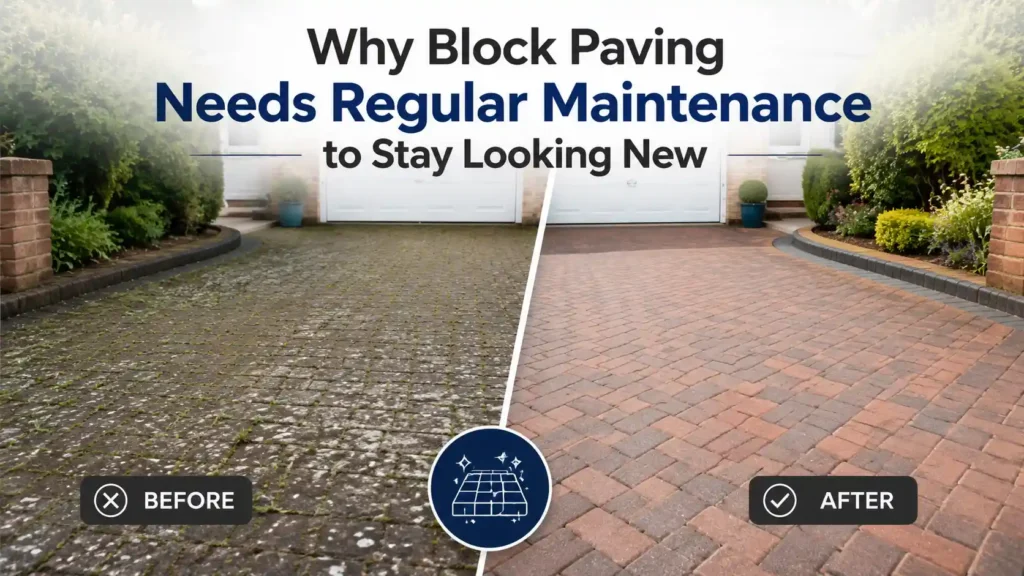
It keeps colour and contrast vibrant. Modern block paving uses pigments that can dull noticeably under accumulated grime, organic matter, and UV exposure. A clean, well kept surface looks dramatically newer than a neglected one, even if the underlying blocks are identical.
It catches small problems before they grow into major ones. A loose block, a small dip, a stain, or a patch of sinking is much easier to address early. Left alone, these small issues turn into uneven surfaces, water pooling, broken blocks, and the kind of damage that can require lifting and relaying entire sections.
It protects the value and kerb appeal of your home. The driveway is one of the first things visitors and potential buyers see. A pristine block paved driveway adds genuine kerb appeal. A neglected one does the opposite, no matter how nice the rest of the property is.
What Happens If You Skip Maintenance
When block paving is left without care for a few years, the deterioration usually follows a predictable pattern.
First comes the surface grime and a slight dulling of the colour. Then green or black streaks of algae appear, particularly along edges and in shaded areas. Moss starts colonising the joints. Weeds follow. Jointing sand washes out over winter, and individual blocks begin to feel slightly loose underfoot. Stains from leaves, oil, or rust set in deeper because there is no protection between the dirt and the block surface.
Eventually, the joints widen, blocks shift, and the surface starts to look genuinely tired. At this point, simple cleaning is no longer enough on its own. Restoration becomes a much bigger job involving lifting blocks, re levelling the base, fresh jointing sand, and sometimes block replacement.
The whole point of a maintenance routine is to stop this cycle before it ever starts.
The Simple Maintenance Routine That Keeps Block Paving Looking New
Here is the practical routine that actually works. It does not need to be done every weekend, but each task plays its part in keeping your surface looking new.
1. Sweep Regularly to Stop Problems Starting
A simple sweep with a stiff broom is the single most effective bit of low effort maintenance you can do. Removing leaves, organic debris, grit, and dust stops the material that feeds moss, algae, and weeds from ever settling into the joints.
Aim for a quick sweep every week or two, especially during autumn when leaves fall heavily, and after any windy spell. It takes minutes and prevents hours of work later.
2. Wash the Surface to Lift Grime and Stains
Sweeping handles the loose stuff. Washing handles the dirt that sticks. For light grime, warm soapy water and a stiff brush is enough. For deeper cleaning, a professional pressure wash or soft wash is far more effective and avoids the most common mistake homeowners make: blasting the joints out with a domestic pressure washer set too high.
The right technique uses a controlled fan spray pattern, the correct pressure for the surface, and biocidal treatments where moss or algae are present. This is exactly what our driveway and block paving cleaning service is built around, and it makes a dramatic visible difference in a single visit.
3. Treat Weeds, Moss, and Algae at the Root
Pulling weeds and brushing off moss are short term fixes. To actually keep them gone, you need to deal with the spores and roots that produce them. A professional clean usually includes a treatment that kills off algae, moss, and lichen at the source and slows their return for many months afterwards.
For homeowners doing this themselves, avoid harsh chemicals or wire brushes that can damage the surface and harm surrounding plants. Treatments designed specifically for hard outdoor surfaces are far safer and more effective.
4. Re Sand the Joints
The jointing sand between your blocks is the unsung hero of block paving. It locks everything together, sheds water, and stops weeds from finding a foothold. Over time, it slowly washes out, especially after rain or any pressure cleaning.
Once your driveway is clean and fully dry, fresh kiln dried sand should be brushed into the joints, then lightly compacted by walking over it or with a plate compactor. The sand should sit just below the top of the blocks. Polymeric jointing sand is an excellent option for resisting wash out and weed growth, as it hardens once activated with water.
This step is often skipped by people doing it themselves, which is a shame because it is what genuinely keeps the surface stable for years afterwards.
5. Address Stains Promptly
Oil drips, rust marks, tyre rubber, and leaf staining all become harder to remove the longer they are left. A quick response makes a huge difference.
Soak up oil with an absorbent material as soon as you notice it, then treat with a degreaser made for driveways. Rust marks usually respond to a mild acid based driveway cleaner. Tyre marks normally lift with warm soapy water and some scrubbing.
Stubborn stains that refuse to budge are exactly the kind of thing a professional treatment can rescue without damaging the surface.
6. Consider Sealing for Long Term Protection
Sealing is the finishing touch that ties the whole routine together. A quality block paving sealant creates a barrier that resists oil, water, and dirt penetration, locks jointing sand in place, deepens the original colour of the blocks, and slows the growth of moss and algae.
A good seal typically lasts two to three years before it needs reapplying, and it makes routine cleaning far easier in between.
7. Inspect Regularly and Catch Problems Early
Once or twice a year, take a slow walk over your driveway and patio. Look for blocks that have sunk slightly, joints that have lost their sand, hairline shifts at the edges, drainage that no longer flows freely, and any early signs of staining or moss return. Spotting these early lets you sort them while they are still small.
A Year Round Block Paving Maintenance Calendar
Different seasons bring different challenges. Here is when to do what for your driveway and patios in the Bournemouth area.
Spring. This is the ideal time for a full clean. The worst of the winter damp has passed and the surface is ready for fresh sand and, if needed, a new coat of sealant. A spring deep clean sets you up for the rest of the year.
Summer. Light maintenance is the focus. Sweep regularly, deal with any oil drips quickly, and enjoy the surface at its best. Hot, dry weather is also good for sealing if you missed the spring window.
Autumn. Leaf fall is the biggest seasonal threat to block paving. Wet leaves left sitting on the surface leach tannins that cause persistent staining and feed moss growth. Sweep often, and keep gutters clear so they do not overflow onto your driveway and create localised wet patches.
Winter. Avoid rock salt for de icing, which can stain blocks and damage the surface. Use sand or a paving safe de icer instead. Keep an eye on drainage, since pooling water is the precursor to most winter damage.
Warning Signs Your Block Paving Needs Attention Now
A few specific signs should prompt a professional clean or assessment rather than another delay.
The whole surface has a green or black tinge, especially in shaded areas. Joints between blocks look low, empty, or weedy. Individual blocks rock slightly when stepped on or driven over. Water pools in places it never used to. Oil or rust stains have been there long enough that scrubbing makes no difference. The driveway looks noticeably duller than the day it was laid.
If you are nodding along to any of these, it is well worth getting a professional eye on it before small issues compound.
Why a Professional Clean Outperforms DIY
Plenty of basic upkeep can be done at home, and we encourage it. But there are good reasons why a professional clean every one to two years pays for itself in how new your surface looks afterwards.
Professionals use the right pressure for the surface, which removes ingrained grime without blasting out the joints. Biocidal treatments tackle moss and algae at the source rather than just removing what is visible. Fresh kiln dried or polymeric sand is properly worked into the joints to lock the surface back together. Sealing, where appropriate, is applied evenly and at the right thickness. Drainage and base movement issues get spotted early. And the whole job gets done quickly with industrial equipment rather than a weekend of hard graft.
At Platinum Exterior Cleaning, our block paving cleaning service covers all of this in a single visit, using surface safe methods that are kind to surrounding plants, lawns, and the wider environment. If you would like to know more, you can learn about our cleaning approach or get in touch for a free quote.
Frequently Asked Questions
How often should block paving be professionally cleaned?
Most driveways and patios benefit from a thorough professional clean every twelve to twenty four months. Properties surrounded by trees, in heavily shaded areas, or close to the coast often need cleaning more often because of higher moss, algae, and salt exposure.
Can I just use my own pressure washer?
You can, but it is worth being careful. Domestic pressure washers used at full power often blast jointing sand straight out of the gaps between blocks, which then leads to block movement and faster weed growth. The technique matters as much as the equipment.
Is sealing block paving necessary?
It is not strictly required, but it offers real benefits: resistance to stains, better colour, more stable jointing sand, and slower moss return. It also makes future cleans easier and more effective.
Does block paving need re sanding after every clean?
Yes, especially after pressure washing. Some sand will always come out during a deep clean, and replacing it is essential to keep the surface locked together. A clean without re sanding is an incomplete job.
What is the best way to deal with weeds growing between blocks?
Brush off and remove what you can see, then treat the joints with a hard surface weed treatment rather than a garden weed killer. Most importantly, refill the joints with fresh sand afterwards. Empty joints invite weeds back almost immediately.
Can patio block paving be maintained the same way as a driveway?
The principles are identical, but patios usually deal with less weight, less oil, and more foot traffic and outdoor furniture. The same routine applies, scaled to your situation. Our patios and decking cleaning service covers both surfaces.
Keep Your Block Paving Looking New
Block paving rewards a little regular care with years of looking smart, clean, and well kept. Skip the maintenance and even the best installation will lose its edge surprisingly quickly. Stay on top of it, and the same surface can look close to brand new for a decade or more.
If your driveway or patio is looking tired, or if you simply want to keep it looking its best, the team at Platinum Exterior Cleaning is here to help. We provide professional driveway, patio, gutter, and roof cleaning across Bournemouth, Poole, Christchurch, Ringwood, and the surrounding areas, using safe, effective, and environmentally friendly methods.