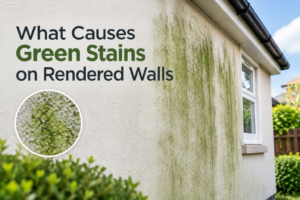

You put the effort into your home, and then one day you notice a green haze creeping across the render. It usually starts on the shady side of the house, then spreads into streaks, patches and dark spots. It looks like something has gone badly wrong, but the cause is usually simple, and the fix is usually very manageable.
In most cases, green stains on rendered walls are algae growing on a surface that stays damp for too long. This guide explains why it happens, how to tell what you are dealing with, what to avoid, and how to keep your walls clean for longer. If you live in Bournemouth, Poole, Christchurch, Ringwood or the surrounding areas, our mild and often damp coastal climate makes this one of the most common problems we see on local homes.
The Short Answer: Algae, Moisture and Time
Green staining on render is a living organism. Algae spores are carried on the wind all year round and land on every exterior surface. On a dry, sunny wall they simply fail to establish. On a wall that stays wet, they settle in, multiply and form the green film you can see.
Three ingredients are needed:
- Moisture that lingers on the surface
- Airborne spores (always present)
- Nutrients such as dust, pollen, pollution and organic debris
Take away the moisture and the growth struggles. Add it, and the wall becomes an ideal home for algae. Almost every cause below comes back to keeping the surface wet.
The Main Causes of Green Stains on Render
1. Shade and Wall Orientation
North facing and heavily shaded walls receive little direct sunlight, and sunlight is the main thing that dries a wall after rain. Without it, the surface can stay damp for days. This is why homeowners often find one elevation completely green while the sunny side looks perfectly fine.
2. Trees, Hedges and Dense Planting
Vegetation close to the wall does two things. It blocks sunlight, and it slows the movement of air that would otherwise dry the render. Trees also drop leaves, pollen, sap and other debris that feed algae. Tall boundary walls and tightly packed side passages create the same stagnant conditions.
3. Leaking Gutters and Downpipes
A cracked joint, overflowing gutter or blocked downpipe can pour water down the same section of wall every time it rains. The result is a green streak that follows the line of the leak. If you see staining directly below a gutter joint or downpipe, the cause is often right above it. Keeping your gutters clean and flowing is one of the simplest ways to protect your render.
4. Rain, Splashback and Ground Level Moisture
Lower sections of wall are hit by rain bouncing off patios, paths and soil. Damp ground, flower beds and shaded driveways keep the base of the wall wetter than the rest. That is why green staining often begins at the bottom of a wall and works its way upwards.
5. The Type and Texture of the Render
Not all render behaves the same way. Textured finishes, monocouche and scraped renders such as K Rend have small ridges and pores that hold moisture and trap dust. That gives algae plenty to cling to. Smoother or coated finishes can shed water more quickly, but no render is completely immune.
6. Colder Wall Surfaces
Modern homes and properties fitted with external wall insulation often have render surfaces that stay colder than older solid walls. A cooler surface attracts more condensation and dew overnight, especially in autumn and winter. Even without heavy rain, the wall can remain damp enough for algae to thrive.
7. Air Pollution and Airborne Nutrients
Traffic film, dust and general pollution settle on render and act as food for algae. Homes near busy roads or in built up areas often see growth appear faster, along with a dull grey film over the wall.
8. Age, Wear and Lack of Maintenance
Render is low maintenance, but it is not no maintenance. Over time, the surface weathers, becomes rougher and holds more moisture. Hairline cracks and worn coatings make it easier for water to sit on the surface. Without occasional cleaning, growth builds up year after year.
Is It Always Green? Other Stains You Might See
Green algae is the most common culprit, but render can show several types of organic growth, sometimes together.
- Green algae: A green film, haze or streaks, most often on shaded walls.
- Black or dark spots: Often black mould or dark algae, usually linked to areas that stay damp for long periods.
- Orange, pink or red patches: Commonly caused by a type of algae called Trentepohlia, which can be more stubborn than green algae.
- White or yellow crusty spots: Usually lichen, which grips the surface more firmly.
- Grey or brown film: General pollution and grime rather than living growth.
Correctly identifying the stain matters, because different growth responds to different treatment.
Does Green Render Mean You Have a Damp Problem?
Usually not. In most cases green staining is a surface issue, not a sign that the render is failing. That said, it is a clear signal that the wall is staying wet for long periods, and that is worth dealing with.
Persistent growth can hold moisture against the surface, and repeated wet and freezing cycles through winter can gradually wear on the render. If you notice cracks, crumbling, blown patches or damp inside the property, it is wise to have the wall properly inspected rather than assuming it is cosmetic.
How to Clean Green Render Safely
How you clean the render matters just as much as whether you clean it. The wrong approach can leave the wall looking worse or cause lasting damage.
Soft Washing
Soft washing uses low pressure and a specialist cleaning solution to break down and kill algae at the root, rather than blasting it off the surface. Because the treatment does the work, the render is not battered with high pressure water. This is widely regarded as the safest method for most render finishes.
Steam Cleaning
Steam cleaning uses heat and gentle pressure to lift dirt and organic growth without harsh chemicals. It is a good option for delicate finishes and for homeowners who prefer an eco-friendly approach. It is one of the methods we use here at Platinum Exterior Cleaning across Bournemouth and the surrounding areas.
Why Professionals Assess First
Different renders, ages and levels of growth need different handling. A proper assessment looks at the render type, how bad the growth is, where the moisture is coming from and what is safe to use on nearby windows, plants and surfaces. That is how you get an even finish without streaks, stripes or damage.
What Not to Do
- Do not use a pressure washer up close. High pressure can crack render, strip coatings, force water into the wall and leave a patchy finish.
- Do not use harsh household chemicals. Bleach and strong products can discolour render, harm plants and run onto other surfaces.
- Do not paint over algae. The growth carries on underneath, leading to peeling, staining and quick regrowth. Render should always be cleaned and dry before it is painted.
- Do not clean from a ladder. Working at height on wet render is a real safety risk.
- Do not ignore the source of moisture. If a leaking gutter is the cause, cleaning alone will not stop the stains coming back.
How to Stop Green Stains Coming Back
No treatment lasts forever, but you can slow regrowth a great deal by tackling the conditions algae love.
- Fix leaks and overflow. Repair damaged gutters, seals and downpipes, and keep them clear of debris.
- Cut back vegetation. Trim trees, hedges and climbers so sunlight and air can reach the wall.
- Improve drainage. Keep soil and planting below the damp proof course, and make sure water runs away from the base of the wall.
- Keep the wider property clean. A dirty roof sheds moss, algae and debris that run down onto walls below. Regular roof cleaning helps protect your render as well as your roof, and our guide to roof cleaning before winter explains why autumn is such a good time to do it.
- Do not forget the surfaces around the house. Green patios and driveways stay wet and throw moisture and spores onto lower walls. Driveway cleaning and patio cleaning help keep the base of your property fresher.
- Schedule regular maintenance. Most homes benefit from a render clean every one to three years, depending on shade, exposure and the type of render. Walls in deep shade or under trees may need attention more often.
- Consider a protective treatment. A biocide treatment applied after cleaning can slow the return of algae, helping your walls stay cleaner for longer.
When Is the Right Time to Clean Render?
The best time is when growth first appears, not when the wall is covered. Light algae is easier to treat, and early cleaning keeps the surface in better condition. Autumn and spring are popular times, as conditions are usually mild and settled enough for treatment to work well. Cleaning in autumn also means your home goes into the wetter winter months looking its best and with less growth to feed on.
Do You Need a Professional?
You can gently brush a very small patch within easy reach using a soft brush and mild detergent. For anything larger, higher up, or on a delicate or painted finish, professional render cleaning is the safer choice. A trained team has the right equipment, knows how to protect surrounding areas and can treat the growth at its source for a more even, longer lasting result.
At Platinum Exterior Cleaning, we help homeowners and businesses across Bournemouth, Poole, Christchurch and Ringwood restore rendered walls using safe, low pressure methods, including steam cleaning, without damaging your property. If you would like advice on your walls, please get in touch with our team.
Frequently Asked Questions
Why is my render turning green?
Almost always because of algae. It grows where render stays damp, especially on shaded walls, near trees, below leaking gutters and in areas with poor airflow.
Are green stains on render harmful?
The stains themselves are usually cosmetic, but they show that the wall is staying wet. Left for years, growth can hold moisture against the render and speed up wear, so it is best to treat it early.
Why is only one wall green?
It is almost certainly the side that gets the least sun and airflow, typically north facing or shaded by trees, fences or neighbouring buildings.
Can I jet wash green render?
It is not recommended. High pressure can crack the render, remove its protective finish, force water into the wall and leave marks. Soft washing or steam cleaning is much safer.
Will bleach get rid of algae on render?
Bleach may lighten the surface, but it can discolour render, damage nearby plants and does not always treat the growth at its roots. A professional solution designed for render is a better choice.
Can I paint over green render?
No. Algae keeps growing under paint and will cause peeling and staining. Clean the render thoroughly, let it dry fully and repair any faults first.
How often should render be cleaned?
Every one to three years is typical, depending on shade, rainfall, render type and surrounding trees. Shaded and damp elevations may need cleaning more often.
Will the green come back after cleaning?
Algae spores are always in the air, so some regrowth is natural over time. Fixing moisture problems, cutting back vegetation and having a protective treatment applied can slow it down significantly.
Does cleaning render improve kerb appeal?
Yes. Clean render makes a home look brighter, sharper and better cared for, and it is one of the quickest ways to refresh your property’s appearance.
Final Thoughts
Green stains on rendered walls are rarely a sign of serious trouble. They are simply nature taking advantage of damp, shaded, sheltered conditions. Understand what is feeding the growth, choose a gentle and effective way to remove it, and deal with the moisture behind it, and your render can stay clean and protected for years.
If your walls are looking tired and green, Platinum Exterior Cleaning is ready to help you bring back that fresh, clean finish.