Living in Bournemouth comes with clear benefits, but our coastal climate is not kind to hard surfaces. Salt in the air, frequent rain, and shaded gardens create the perfect conditions for algae, moss, and lichen to thrive. Patios here get dirty faster and stay damp for longer.
That is where many patio cleaning mistakes begin. Homeowners understandably want fast results, especially after winter. The temptation is to use maximum pressure, strong chemicals, or advice picked up from social media. Unfortunately, slabs are not designed to cope with that kind of abuse.
Using Too Much Pressure On Paving Slabs
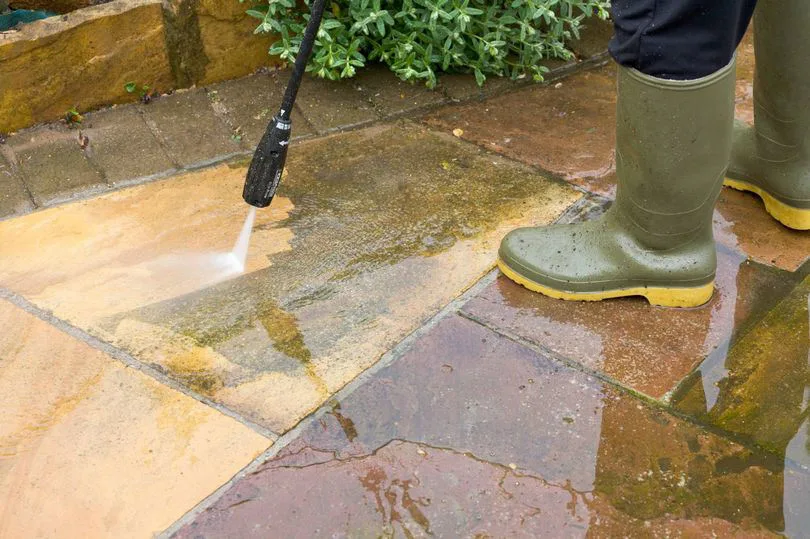
This is by far the most damaging of all patio cleaning mistakes. Pressure washers sold for domestic use are powerful enough to strip the surface layer from concrete slabs. Once that top layer is gone, the slab becomes porous, rough, and far more vulnerable to future staining and frost damage.
You might not notice the problem immediately. At first, the patio looks cleaner than ever. Then, within months, the surface starts to pit and crumble. Algae returns faster, water soaks in instead of running off, and the slabs age years ahead of schedule.
Professional patio cleaners use adjustable pressure, specialist nozzles, and experience to know what a surface can handle. Turning a pressure washer up to full power is not cleaning. It is erosion.
Ignoring The Type of Patio You Have
Not all patios are built the same, yet many cleaning approaches treat them as if they are. Concrete, natural stone, porcelain, and block paving all react differently to water pressure and chemicals.
Natural stone, in particular, is often damaged by patio cleaning mistakes. Acid-based cleaners can permanently etch limestone and sandstone, leaving pale marks that never disappear. Even some “patio safe” products sold online are not suitable for all stone types.
This same lack of awareness causes problems on Driveway Block Paving, where aggressive washing removes the jointing sand. Without that sand, blocks shift, sink, and allow weeds to take over far more quickly.
Washing Away Jointing Sand and Structural Support
A patio is only as stable as what holds it together. High-pressure washing does not just clean the surface. It blasts out the sand between slabs and blocks, undermining the entire structure.
Once the jointing sand is gone, rainwater has a clear path beneath the patio. Over time, this leads to movement, uneven slabs, and drainage problems. Re-sanding is not optional after cleaning. It is essential, yet often overlooked by DIY cleaners.
This same mistake appears again and again with Driveway Block Paving, where missing jointing sand shortens the lifespan of the surface dramatically.
Using Harsh Chemicals to Remove Algae and Stains
Chemical burns are another silent but serious result of patio cleaning mistakes. Strong bleach, acids, or improvised cleaning solutions may kill algae quickly, but they often damage the slab itself and surrounding plants.
Run-off from chemical cleaning rarely stays on the patio. It drains into flowerbeds, lawns, and surface water systems. Over time, repeated chemical use weakens the patio and harms the wider environment.
Cleaning Without Understanding Water Flow and Drainage
Patios do not exist in isolation. Water from cleaning flows somewhere, and poor planning can cause problems well beyond the slabs themselves.
We regularly see patios cleaned aggressively with dirty water forced towards walls, air bricks, and drainage points. This can contribute to damp issues and even impact Gutter Cleaning systems if debris is pushed into downpipes.
The same principle applies higher up the property. Poor cleaning practices on patios often mirror bad habits in Roofs Cleaning, where excessive pressure damages tiles and protective coatings. Exterior cleaning should always consider how water moves across the property as a whole.
Believing That More Frequent Cleaning is Better
Another overlooked mistake is cleaning too often. Each clean, especially when done incorrectly, removes a little more of the surface. Over time, frequent aggressive cleaning accelerates wear rather than preventing it.
A better approach is fewer, well-executed cleans combined with preventative treatments that slow algae regrowth. This keeps patios looking good for longer without unnecessary damage.
Real-world Damage We See Every Year
In Bournemouth alone, we see patios less than five years old already needing partial replacement due to surface damage caused by improper cleaning. According to industry estimates, replacing damaged paving can cost three to four times more than having it professionally cleaned and sealed in the first place.
That is not just a cosmetic issue. A degraded patio can become slippery, uneven, and unsafe, especially for families with children or elderly relatives.
How to Clean a Patio Safely and Correctly
Safe patio cleaning is slower and more considered. It starts with identifying the surface, using controlled pressure, applying appropriate treatments, and finishing with proper re-sanding or sealing where required.
Professional cleaning is not about brute force. It is about preserving the material while restoring its appearance. That difference is what separates a patio that lasts decades from one that fails early.
Frequently Asked Questions About Patio Cleaning Mistakes
Can pressure washing ruin my patio slabs?
Yes. Excessive pressure can strip the surface of concrete slabs and permanently damage natural stone. Once that top layer is gone, it cannot be restored.
Is bleach safe to use on patios?
Bleach can damage slabs, harm surrounding plants, and cause patchy discolouration. It also does not address the underlying cause of algae growth.
Do I need to re-sand after patio cleaning?
In most cases, yes. Cleaning often removes jointing sand, especially on block paving. Re-sanding is essential to maintain stability.
How often should a patio be professionally cleaned?
For most Bournemouth properties, once every one to two years is sufficient when combined with proper treatments.
Can patio cleaning affect other parts of my home?
Yes. Poor water control can impact drainage, walls, gutters, and even roofing systems if cleaning practices are careless.
Final Thoughts and Next Steps
Patio cleaning mistakes are easy to make and expensive to fix. The irony is that most damage happens when homeowners are trying to do the right thing. A clean patio should improve your outdoor space, not shorten its lifespan.
If your patio needs attention and you want it cleaned properly, not aggressively, speak to a local Bournemouth specialist who understands coastal conditions and surface materials. The right approach protects your investment, keeps your property safe, and saves money in the long run.