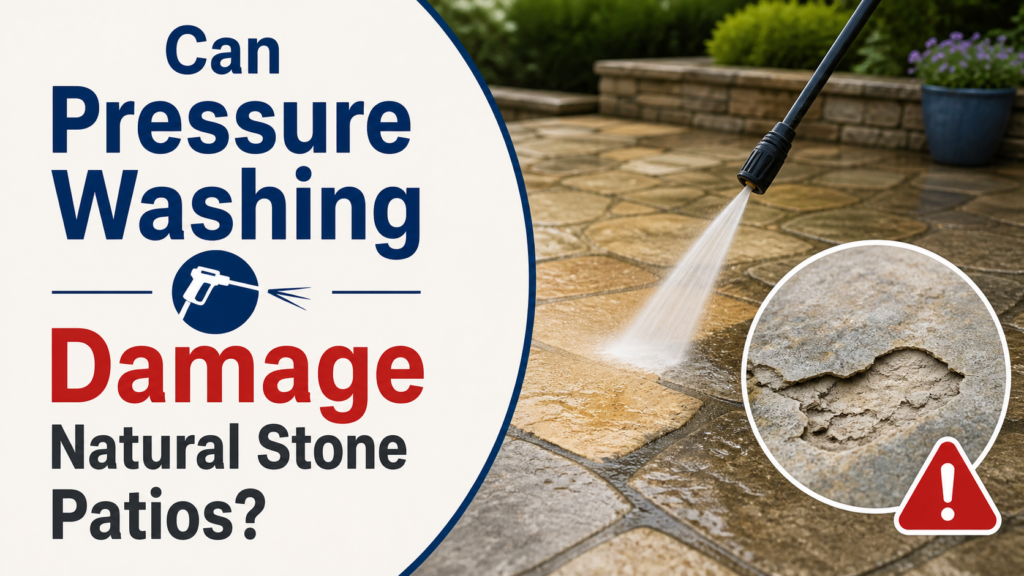
Natural stone patios are one of the most popular features in gardens across Bournemouth, Poole, Christchurch and Ringwood. Indian sandstone, limestone, York stone, slate and granite all bring warmth and character to an outdoor space, but they also come with a question that almost every homeowner asks before booking a clean: can pressure washing damage natural stone patios?
The honest answer is yes, it can, but only when it is done incorrectly. Pressure washing itself is not the enemy. The real risk comes from using the wrong pressure, the wrong nozzle, the wrong technique or the wrong operator. Used correctly, pressure washing remains one of the most effective ways to bring a tired, algae covered patio back to life. Used carelessly, it can strip the surface, erode the joints and leave permanent marks that no amount of cleaning can undo.
This guide walks through exactly how natural stone can be damaged during cleaning, which stone types are most vulnerable, how to spot the warning signs, and what a genuinely safe cleaning approach looks like.
Why Natural Stone Behaves Differently to Other Paving
Natural stone is quarried rather than manufactured, which means every slab has its own porosity, mineral makeup and surface texture. This is very different to man made materials such as concrete or porcelain, which are produced under controlled conditions to be dense and largely uniform.
Because natural stone is porous and often sedimentary in structure, it absorbs water, dirt and cleaning products in a way that porcelain and dense concrete simply do not. That same porosity is what gives sandstone and limestone their attractive, slightly textured finish, but it also makes the surface far more sensitive to excessive water pressure. A cleaning method that works perfectly on a concrete driveway can be far too aggressive for a delicate sandstone patio.
If you would like to compare how this applies to other surfaces, our guide on what causes green algae on exterior walls covers similar porosity issues on render and brickwork.
How Pressure Washing Can Damage a Natural Stone Patio
Surface Erosion
The biggest risk with pressure washing natural stone is physical erosion of the surface. When the pressure is too high, or the nozzle is held too close, the force of the water can strip away the fine top layer of the stone. On sandstone in particular, this often shows up as a lighter, rougher patch where the natural texture and colour have been worn away. This kind of damage is not cosmetic, it is permanent, and it cannot be reversed by further cleaning.
Loss of Jointing Sand and Mortar
Most natural stone patios rely on sand filled or mortar filled joints to keep the slabs stable and to stop weeds taking hold. Aggressive pressure washing, especially with a narrow turbo nozzle, can blast this jointing material straight out from between the slabs. Once the joints are gone, the patio becomes unstable, weeds return far more quickly, and the slabs themselves can start to rock or shift underfoot. This is a very similar issue to the one we cover in our article on why block paving loses sand after pressure washing, which explains the same principle on driveways.
Water Forced Beneath the Surface
Natural stone is porous enough that high pressure water can be driven beneath the surface layer rather than simply washing over it. This trapped moisture becomes a real problem during the colder months. When temperatures drop, water that has penetrated the stone can freeze and expand, placing stress on the surface from within. Over repeated freeze and thaw cycles, this can lead to flaking, cracking or delamination of the stone.
Patchy or Uneven Results
Inconsistent technique, such as moving the wand too quickly in some areas and lingering too long in others, can leave visible stripes, blotches or tide marks across the patio. On natural stone, these marks are often more noticeable than on concrete because the colour variation within the stone makes uneven cleaning stand out.
Algae Returning Faster Than Before
Pressure alone is very good at blasting away the visible layer of algae and moss, but it rarely reaches the spores that are embedded within the pores of the stone. Left untreated, these spores regrow quickly, sometimes within a matter of weeks, which is why a patio that has only ever been pressure washed often seems to need cleaning more often than one that has also received a proper biocide treatment.
Not All Natural Stone Reacts the Same Way
Different types of natural stone have different tolerances for pressure and moisture, so the safest approach always depends on what your patio is made from.
Indian sandstone. One of the most widely used patio materials in the UK, sandstone is soft, porous and layered, which makes it particularly vulnerable to surface erosion. It requires gentle, low pressure cleaning with a wide fan nozzle rather than a concentrated jet.
Limestone. Limestone is sensitive to both pressure and certain chemical cleaners, since it reacts with acidic products. Low pressure washing combined with a stone safe cleaner is generally the safest route.
York stone. A premium, dense sandstone that is more resilient than standard Indian sandstone, but still porous enough that excessive pressure can cause pitting and surface loss over time.
Slate. Slate has a natural layered structure, and high pressure water can force its way between these layers, causing flaking or delamination. Moderate, well controlled pressure is essential.
Granite. Granite is one of the hardest and most weather resistant natural stones, and it generally tolerates higher pressure than sandstone or limestone. Even so, the joints between granite setts or slabs remain vulnerable to erosion.
Signs That a Patio Has Been Damaged by Pressure Washing
It is not always obvious that damage has occurred straight after a clean, since some issues only become clear once the surface has dried. Common warning signs include:
- A rougher, more porous feeling texture compared to the surrounding stone
- Pale or bleached patches where the natural colour has been stripped away
- Visible stripes or tide marks left by an uneven cleaning pattern
- Empty or hollowed out joints between the slabs
- Slabs that have started to rock or feel less stable underfoot
- Cracking, flaking or small pieces breaking away from the surface, particularly after winter
If you notice any of these signs, it is worth having the patio assessed before further cleaning is carried out, since repeating the same aggressive technique will only make the problem worse.
What Safe Pressure Washing Actually Looks Like
Pressure washing does not need to be avoided altogether, it simply needs to be carried out correctly. A safe, professional approach to cleaning natural stone typically follows a few key principles.
Use a wide fan nozzle, never a narrow turbo or pencil jet. A wide fan spreads the force of the water across a larger area, dramatically reducing the risk of erosion compared to a concentrated point of pressure.
Keep the pressure moderate and appropriate to the stone. There is no single correct PSI for every patio. The right setting depends on the type of stone, its age and its current condition, which is why professional judgement matters more than simply turning the machine up to maximum.
Maintain distance from the surface. Holding the nozzle too close concentrates the force in one small area. A greater working distance allows the water to clean effectively without stripping the surface.
Work in even, overlapping passes. Moving the wand steadily and consistently across the whole patio avoids the patchy, striped appearance that comes from rushing or lingering too long in one spot.
Test an inconspicuous area first. Before cleaning the whole patio, a small test patch in a hidden corner shows how the stone responds, allowing the pressure and technique to be adjusted if needed.
Combining Pressure Washing with Chemical Treatment
For patios affected by algae, moss, lichen or black spot, pressure alone is rarely the whole answer. The most effective and lowest risk approach generally combines both methods. A stone safe cleaner or biocide is applied first and left to work into the growth, breaking it down at the root rather than just on the surface. Once the treatment has had time to take effect, a gentle rinse, rather than an aggressive blast, is used to lift away the loosened dirt and residue.
This combined approach tends to outlast pressure washing alone, since it deals with the underlying spores and roots that a jet of water simply cannot reach. It is a similar principle to the one covered in our article on the common causes of black spots on patios and how to remove them, where targeted treatment consistently outperforms pressure alone.
Should You Seal Your Patio After Cleaning?
Sealing is often overlooked, yet it is one of the most valuable steps you can take after a natural stone patio has been professionally cleaned. A good quality sealant helps reduce how much water and dirt the stone absorbs, which in turn slows down algae regrowth, limits staining and makes future cleaning considerably easier. It is particularly worthwhile for porous stones such as sandstone and limestone, which are the most prone to the issues described above.
We cover the timing and considerations around this in more detail in our post on whether you should seal block paving immediately after cleaning, and the same underlying principles apply to natural stone patios.
DIY Pressure Washing Versus Professional Patio Cleaning
Many homeowners own or can hire a domestic pressure washer, and for light, general dirt on a durable surface, this can be perfectly adequate. Natural stone is a different matter. Because the margin for error is so much smaller, and because the damage caused by the wrong pressure or nozzle is permanent, natural stone patios are one of the areas where professional experience genuinely makes a measurable difference.
A professional operator understands how to read the condition of the stone, select the correct pressure and nozzle for that specific material, and combine mechanical cleaning with the right chemical treatments where needed. This is the difference between a patio that looks clean for a few weeks and one that stays clean, safe and structurally sound for years.
How We Clean Natural Stone Patios in Bournemouth, Poole, Christchurch and Ringwood
At Platinum Exterior Cleaning, we treat every natural stone patio individually rather than applying a single standard approach to every job. We assess the stone type, its age and its condition before choosing between soft washing and controlled pressure washing, and we adjust our equipment and technique accordingly to protect both the surface and the jointing. Our full patio and decking cleaning service covers everything from routine maintenance cleans to full restoration of neglected natural stone.
If your patio also borders a driveway or block paving area, it is worth reading about our approach to driveway and block paving cleaning as well, since the same care around pressure and jointing applies there too.
Frequently Asked Questions
Is it safe to pressure wash Indian sandstone?
Yes, provided the correct pressure, a wide fan nozzle and adequate distance are used. The risk lies in the technique and equipment, not in pressure washing as a method.
What PSI is safe for a natural stone patio?
There is no single figure that suits every patio, since the right pressure depends on the type, age and condition of the stone. This is one of the main reasons professional assessment matters more than simply following a fixed number.
Can pressure washing remove black spots from a patio?
Pressure alone often only removes the surface layer of black spot staining, leaving the root of the growth intact. A targeted chemical treatment combined with gentle rinsing generally gives a far more complete and longer lasting result.
Will pressure washing remove the sand from between my patio joints?
It can, particularly if a narrow or turbo nozzle is used at close range. Controlled pressure and the correct nozzle greatly reduce this risk and help keep the jointing intact.
How often should a natural stone patio be cleaned?
Most natural stone patios benefit from a professional clean roughly every twelve to twenty four months, although shaded or damp areas that are prone to algae and moss may need attention more frequently.
Should I seal my patio after it has been cleaned?
Sealing is not essential, but it is strongly recommended for porous stones such as sandstone and limestone, as it helps reduce staining, slow algae regrowth and make future cleaning easier.
Final Thoughts
Pressure washing is not inherently harmful to natural stone patios, but it is unforgiving of mistakes. The wrong nozzle, excessive pressure or a rushed technique can cause surface erosion, joint loss and water damage that no amount of further cleaning can put right. Used correctly, and ideally combined with the right chemical treatment for algae, moss and black spot, pressure washing remains a safe and highly effective way to restore a natural stone patio to its original appearance.
If you are unsure whether your patio needs a gentle soft wash, a controlled pressure clean, or a combination of both, our team is happy to assess it and recommend the right approach for your specific stone. Get in touch with Platinum Exterior Cleaning for a free, no obligation quote covering Bournemouth, Poole, Christchurch and Ringwood.