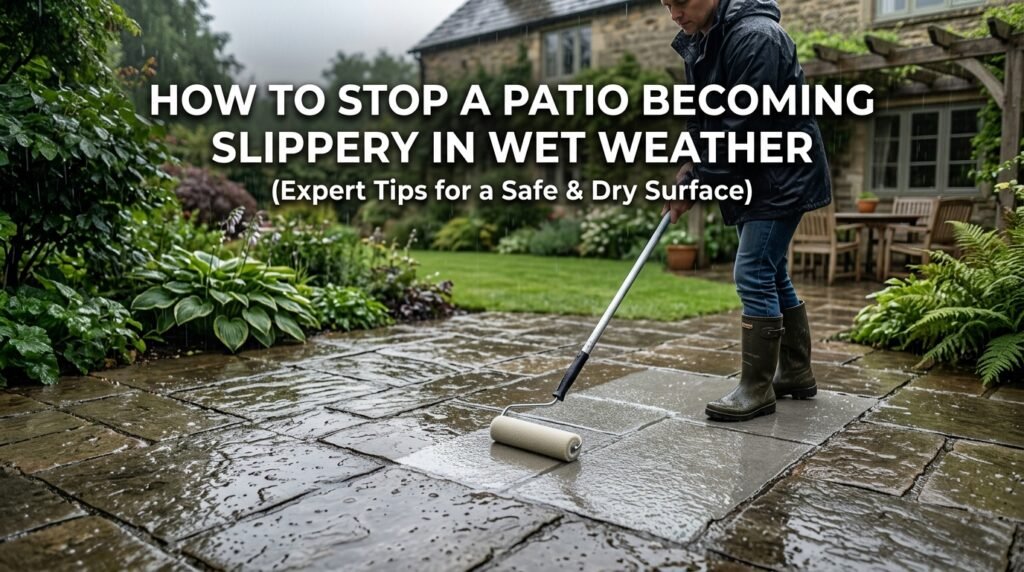
A patio becomes slippery in wet weather because of a thin organic film sitting on the surface, not because of the water itself. Algae, lichen, and moss spores settle into the pores of the stone, stay invisible while the surface is dry, and turn slick the moment rain activates them. Stopping it properly means killing that growth at root level with a biocide treatment, improving how quickly the patio dries out, and keeping on top of the small maintenance jobs that let it take hold in the first place. Platinum Exterior Cleaning treats patios across Bournemouth, Poole, and Christchurch every autumn for exactly this, and the pattern is almost always the same.
Why Water Alone Is Not What Makes a Patio Slippery
Walk onto a dry patio in August and it feels perfectly grippy. The same slabs in November feel like an ice rink. The difference is a biofilm that has been quietly building all year, made up of algae, and often lichen and moss alongside it. When dry, that film is barely visible and gives reasonable grip. When wet, it holds a layer of water against the surface and your shoe never actually reaches the stone.
Algae thrives in four conditions: shade, moisture, a porous surface, and poor drying. A south facing patio in open sun rarely develops a serious slip problem. A north facing one under a tree, or a strip that sits permanently in the shadow of a fence, will develop one every single year without fail. This is the same process behind the green film that appears on so many patios by spring, which we explain in our article on why patios turn green after winter.
The Different Growths Behind a Slippery Patio
Not everything green on your patio is the same organism, and they respond differently to treatment. Ordinary algae forms a thin film or powdery deposit and is the most common cause of general slipperiness. Moss forms cushions that hold water and make edges and steps particularly treacherous. Lichen is more crust like and clings hard to the surface. Liverwort appears as a flat green growth with small leaf shaped lobes. Jelly like black or dark green patches are usually Nostoc, a cyanobacteria that becomes extremely slippery when wet.
Black spot is the one that catches people out. It looks like paint speckles rather than growth, and it is actually a dust like lichen that sends filaments called hyphae down into the pores of the stone hunting for nutrients. It can take two or three years to establish itself below the surface, which is why it does not respond to surface cleaning alone. Our guide on black spots on patios and how to remove them covers that specific problem in more detail.
Which Patio Materials Are Most at Risk
| Surface | Slip Risk When Wet | Why |
| Riven Indian sandstone | High | Very porous with a textured surface that traps biofilm in every dip |
| Natural stone, unsealed | High | Open pores absorb moisture and hold it against the surface |
| Concrete slabs, weathered | Moderate to high | Surface roughens with age, giving algae more to grip |
| Block paving | Moderate | Joints stay damp and algae usually starts there before spreading |
| Smooth porcelain | Low | Non porous, so algae struggles to anchor and the surface dries fast |
| Sealed concrete or sealed stone | Low to moderate | Sealer reduces water absorption and slows colonisation |
If you have riven sandstone in a shaded part of the garden, you are in the highest risk category and will need treating more often than a neighbour with porcelain in full sun. Neither is a fault of the material. It is simply worth knowing which end of the scale you are on so you can plan maintenance accordingly.
Why Pressure Washing Alone Does Not Solve It
This is the single biggest misunderstanding about slippery patios. Pressure washing lifts everything you can see and the patio looks transformed, but the spores and the hyphae anchored below the surface are untouched. Within weeks the film regrows and the slipperiness returns, usually just in time for the wettest part of the year.
There is a second problem. Flooding a porous surface with water creates exactly the damp conditions algae prefers, so an aggressive wash with no follow up treatment can accelerate regrowth rather than slow it. On natural stone there is also a genuine risk of surface damage, covered in our article on whether pressure washing can damage natural stone patios. The wash is a necessary step, just not a complete answer on its own.
Get Your Patio Treated Before the Wet Season
If your patio already feels uncertain underfoot, autumn is the right time to deal with it rather than waiting until a genuine near miss. Platinum Exterior Cleaning’s patio and decking cleaning service combines the right cleaning method for your surface with a biocide treatment that kills growth at root level, so the patio stays safe through winter instead of turning green again by December.
What Actually Works: Biocide Treatment
A biocide treatment applied after cleaning soaks into the pores of the stone and kills algae, lichen, and moss at the root, including the filaments sitting below the surface. It also leaves residual protection that keeps working for months, which is what stops the regrowth cycle rather than just interrupting it.
Timing matters. Treatment works best on a dry or slightly damp surface on a fair weather day, and it needs a few hours to act before rain washes it off. Choice of product matters too, since acidic solutions can erode grout joints and damage acid sensitive stone, which is why a professional will match the treatment to your material rather than using one product on everything.
Practical Steps That Keep a Patio Safe Between Treatments
Sweep leaves off promptly. Wet leaf litter traps moisture against the surface and feeds the exact conditions algae needs. A patio under a tree in Poole or Christchurch that goes unswept from October to February will be noticeably worse by spring.
Move planters and furniture occasionally. The rings underneath are almost always the first areas to go green, because they never dry and never see light.
Check your gutters. An overflowing gutter dumping water onto one section of patio creates a permanently damp strip that will go slippery long before the rest. Clearing blockages is often the simplest fix for a persistent slippery patch, and our gutter and fascia cleaning service resolves this at source.
Cut back overhanging growth. More light and more airflow means faster drying, and faster drying means less algae.
Do the 60 Second Slip Check
Walk outside after rain and pay attention to four places specifically. Step edges, because that is where falls actually happen and where moss loves to sit. The path you genuinely use most, usually to the bins or the side gate. Any north facing strip or permanently shaded corner. And decking boards under fences or trees, which go slippery faster than almost any other surface.
If any of those feel uncertain underfoot, that is your answer. You do not need to treat the whole garden immediately, but those spots need addressing before winter properly sets in.
What We See on Bournemouth Patios
A customer in Winton called us in October last year after her elderly mother slipped near the back door. The patio looked fine from the kitchen window, and she had pressure washed it herself in June. What had happened was that a section of blocked gutter had been overflowing onto a two metre strip right by the door for months, keeping it permanently wet while the rest of the patio dried out normally. Cleaning and treating the patio solved the immediate problem. Clearing the gutter stopped it coming back. It is a combination we see often enough that we now check drainage before assuming a patio simply needs another clean.
Does Sealing Help?
Sealing a clean, treated patio adds a second layer of defence by reducing how much water the surface absorbs, which makes it harder for algae to take root. Some sealers also improve grip compared with bare wet stone. The order matters though. Sealing over an untreated surface locks existing growth underneath, where it continues to spread out of reach of any future treatment. Clean first, treat, allow the surface to dry fully, then seal.
Frequently Asked Questions
Why is my patio slippery even though it looks clean?
Algae biofilm is close to invisible when dry. A patio can look spotless in summer and still have a full layer of growth that only becomes apparent, and dangerous, once it rains.
How long does a biocide treatment last?
Typically six to twelve months depending on shade and rainfall. Heavily shaded patios may need treating twice a year, while open sunny ones often go a full year or longer.
Can I stop my patio going slippery without pressure washing?
Yes, to a degree. Regular sweeping, good drainage, and a biocide treatment will keep a patio in reasonable condition. A wash is still needed periodically to lift accumulated dirt and dead growth.
When is the best time of year to treat a patio?
Late summer or early autumn is ideal, ahead of the wet season. Treating in spring also works well and tackles growth that built up over winter.
Is a slippery patio my responsibility if a visitor falls?
As a homeowner you have a general duty of care to keep your property reasonably safe for visitors. A known slip hazard left untreated is harder to defend than one you had addressed. It is worth taking seriously for that reason alone, beyond the risk to your own household.
What to Ask Before Booking a Patio Clean
Ask whether a biocide treatment is included or only the wash, since a wash alone will not prevent regrowth. Ask what method they will use on your specific material, particularly for natural stone or older sandstone where pressure settings matter. A cleaner who wants to know what your patio is made of before quoting is asking the right question.
Book a Patio Treatment With Platinum Exterior Cleaning
If your patio turns treacherous every time it rains, it is a problem with a proper solution rather than something you have to live with each winter. Get in touch with the Platinum Exterior Cleaning team to arrange a free assessment for your patio in Bournemouth, Poole, Christchurch, or Ringwood, and we will tell you honestly what your surface needs.