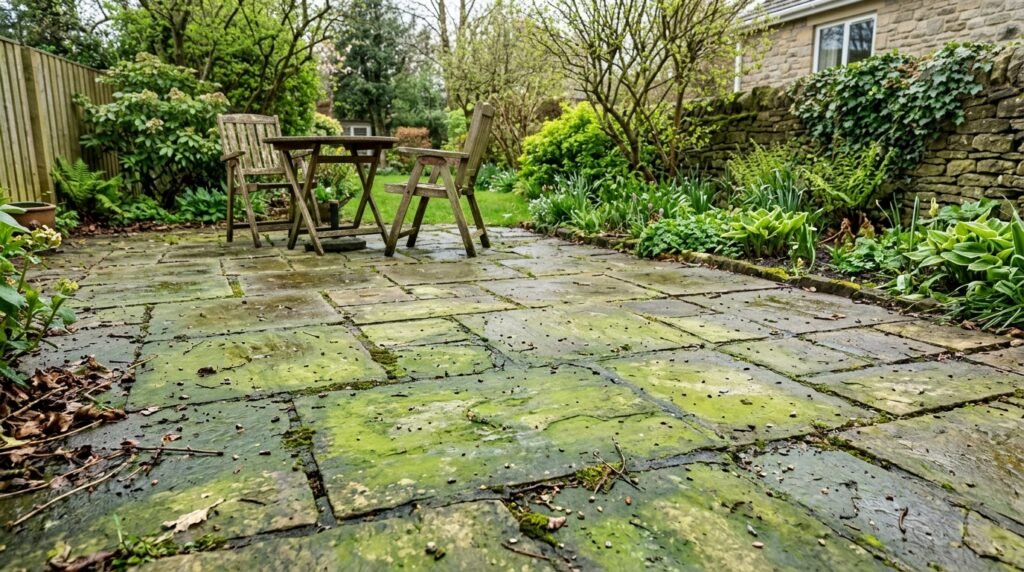
Your patio turns green after winter because algae spores that sit dormant for most of the year finally get the damp, shaded, low light conditions they need to grow. Winter gives algae almost everything it wants: long wet spells, weak sunlight, and surfaces that stay damp for days rather than hours. By the time spring arrives, that thin green film has usually spread across shaded corners, north facing strips, and anywhere rainwater sits rather than drains away. Platinum Exterior Cleaning sees this pattern on almost every patio visited across Bournemouth, Poole, and Christchurch between January and April.
What Actually Causes the Green Growth on Your Patio
The green colour is algae, a simple organism that thrives wherever moisture, shade, and organic debris combine. Unlike moss, which grows in raised, cushiony clumps, algae forms a thin, often slippery film directly on the surface of the stone. It spreads fastest on porous materials like natural sandstone and older concrete flags, since these hold moisture longer than dense, sealed surfaces.
Three conditions drive most winter greening. Shade from fences, trees, or the house itself keeps the surface from drying between rain showers. Poor drainage, often from a slight dip in the paving or a blocked gully, leaves standing water sitting on the slabs for hours after rain stops. Leaf litter left over autumn breaks down into the exact organic matter algae feeds on, which is why patios under trees tend to green up faster than open, south facing ones.
Green Algae Versus Black Spots: Two Different Problems
It’s worth knowing the difference, because green algae and black spots on a patio are not the same organism and don’t respond to the same treatment. Green algae is the thin, slippery film described above, while the darker, crustier black marks that often appear later in the year are usually lichen, a much slower growing organism that bonds tightly to the stone. Platinum Exterior Cleaning’s guide on the common causes of black spots on patios covers why lichen needs a different, more patient removal approach than algae does.
Not Sure Whether It’s Algae or Something Else?
If you’re staring at a patchy green or black patio and aren’t sure what you’re dealing with, it’s worth getting a proper look before reaching for a pressure washer. Platinum Exterior Cleaning can identify whether it’s algae, moss, or lichen and recommend the right treatment for your specific stone type through the patios and decking cleaning service. Getting the diagnosis right the first time avoids treating the wrong problem entirely.
How to Remove Green Algae From Your Patio
| Method | How It Works | Best For |
| Biocide or algae treatment | Soaks into the surface and kills spores at the root, including ones not yet visible | Delicate or porous stone, and preventing quick regrowth |
| Hot water pressure wash | Physically lifts the algae film from the surface | Heavily soiled, hard wearing surfaces like concrete or porcelain |
| Soft washing | Low pressure application combined with a cleaning solution | Natural stone, older or softer paving prone to surface damage |
| Warm water and a stiff brush | Manual scrubbing lifts surface growth without any equipment | Small areas or light, early stage algae |
A pressure washer alone often looks effective within minutes, but it only removes what’s visible. Spores left in the surface pores regrow quickly, sometimes within a matter of weeks, which is why a biocide treatment applied either before or alongside pressure washing gives a longer lasting result than pressure washing on its own.
Why Bournemouth Gardens Are Especially Prone to Winter Greening
Coastal towns like Bournemouth, Poole, and Christchurch see higher humidity and more overcast days through winter than inland areas, which keeps patios damp for longer stretches between dry spells. Add in the number of period properties with mature trees and shaded courtyard gardens across areas like Southbourne and Westbourne, and it’s easy to see why local patios green up faster than the national average. Salt laden coastal air also tends to keep surfaces slightly damp even on days without rain, which gives algae an extra head start compared with drier inland gardens.
Mistakes People Make When Treating a Green Patio
Jet washing on the highest pressure setting. This can etch or roughen softer stone, and a roughened surface actually holds more moisture and gives algae more texture to grip onto next time.
Cleaning once and assuming the problem is solved. Without a biocide treatment or preventative maintenance, algae reliably returns the following winter, often faster than the first time because the surface has been left more porous by aggressive cleaning.
Bleach is another common shortcut that causes more harm than good, since it can bleach the colour out of natural stone and does nothing to prevent regrowth once it washes away. Ignoring drainage issues is just as common, since treating the algae without fixing the standing water that caused it means the same patch turns green again within a season.
A Job That Shows Why Diagnosis Matters
On a patio in Southbourne last February, a homeowner had already tried a domestic pressure washer on a shaded natural stone patio that kept turning green every winter. The pressure wash lifted the algae for a few weeks, but the surface came back looking worse than before, patchy and slightly rough in the areas cleaned most aggressively. A soft wash combined with a biocide treatment cleared the algae properly without damaging the stone, and a look at the guttering nearby found a downpipe discharging directly onto one corner of the patio, which explained why that section always greened up first. Fixing the drainage alongside the clean meant that corner stayed clear well into the following winter.
Keeping Your Patio Green Free Once It’s Clean
A biocide treatment applied after cleaning continues working for months, slowing regrowth even through damp weather. Trimming back overhanging branches and improving airflow around shaded corners helps surfaces dry faster after rain. Sealing is another option worth considering once a patio is fully clean and dry, since a sealed surface holds far less moisture in its pores. Platinum Exterior Cleaning’s article on the benefits of sealing your driveway after pressure washing explains the same principle as it applies to patios and paved areas.
Frequently Asked Questions
Why does my patio only turn green in certain spots?
Shaded corners, areas under trees, and spots where water drains poorly stay damp longer than the rest of the patio, giving algae the conditions it needs to establish first in those exact places.
Is a green patio dangerous?
Yes, algae creates a slippery film that becomes a real slip risk, particularly on steps and sloped areas, and it’s worth treating promptly once you notice it rather than waiting until spring.
Will pressure washing alone stop it coming back?
Not on its own. Pressure washing removes visible growth, but spores often remain in the surface. A biocide treatment applied alongside or after cleaning gives longer lasting results.
Does sealing my patio stop algae growing?
Sealing reduces how much moisture the surface absorbs, which makes it harder for algae to establish, though it works best as part of a routine that also includes regular cleaning and drainage checks.
How often should I treat my patio to prevent green growth?
Most patios in the Bournemouth area benefit from a biocide treatment once a year, ideally in autumn before the wet winter months set in, with an additional check in early spring.
What to Ask Before Booking a Patio Clean
Ask whether a biocide treatment is included alongside any pressure washing, since cleaning without it tends to bring the algae back sooner. Ask whether the drainage around the patio will be assessed too, since treating the growth without addressing standing water only delays the same problem returning.
Book a Patio Clean With Platinum Exterior Cleaning
If your patio has turned green again this winter, Platinum Exterior Cleaning can identify the cause, choose the right treatment for your stone type, and help stop it coming straight back. Get in touch with the Platinum Exterior Cleaning team to arrange an assessment for your Bournemouth, Poole, or Christchurch patio.