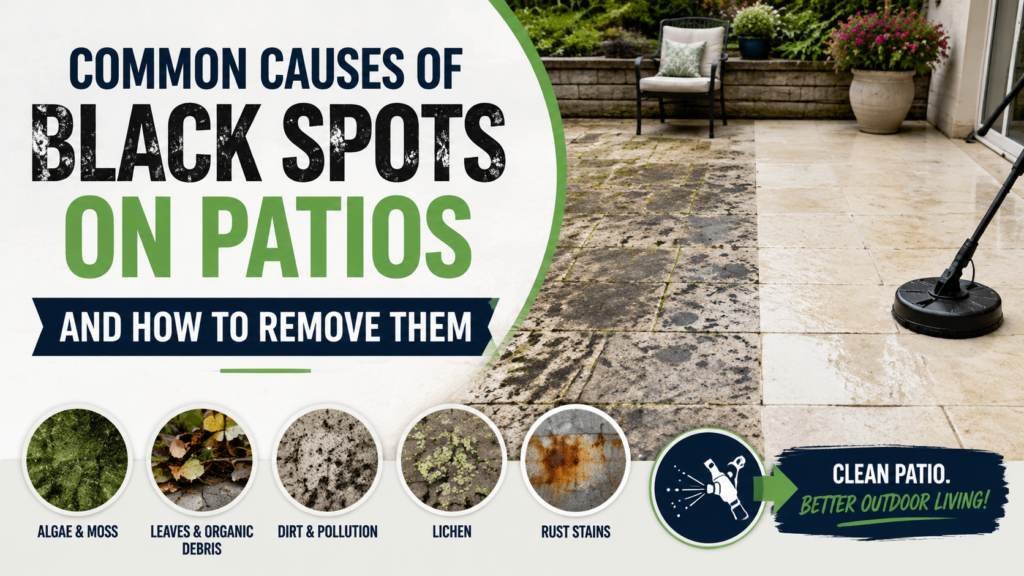
You’ve spent time and effort creating a beautiful outdoor space, only to notice small dark marks creeping across your paving. You sweep, scrub, and blast them with the pressure washer, but they refuse to shift. Weeks later, they seem to have spread. Sound familiar?
Those stubborn dark blemishes are called black spots, and they are one of the most common (and most misunderstood) problems homeowners in Bournemouth, Poole, Christchurch, and Ringwood face on their patios. The damp British climate provides near perfect conditions for them to thrive, and once they take hold, they can be remarkably difficult to remove with everyday cleaning methods.
The good news? With the right knowledge and the right approach, even a heavily affected patio can be restored. In this guide, our team at Platinum Exterior Cleaning explains exactly what black spots are, what causes them, why they’re so hard to shift, and the most effective ways to remove them and keep them from coming back.
What Are Black Spots on Patios?
Contrary to what many people think, black spots are not simply dirt, ink stains, or general grime. They are a form of lichen, a hardy organism formed from a symbiotic relationship between fungi and algae. This partnership makes lichen incredibly resilient, able to survive drought, cold, and even repeated scrubbing.
On a patio, black spot lichen usually appears as small, dark, circular marks that look like splashes of ink or bitumen. Up close, you’ll notice they have a slightly raised, crust like texture. That crust is a protective outer layer that shields the organism from the elements and from most conventional cleaning products, which is why a pressure washer alone often fails to remove them.
Left unchecked, black spots will slowly spread across the surface and can become embedded deep into the paving. Over time, they can also make surfaces slippery, especially after rain, turning your patio into a genuine safety hazard.
Common Causes of Black Spots on Patios
Black spot lichen doesn’t appear out of nowhere. It needs specific conditions to grow, and understanding these is the first step to controlling it. Here are the main causes.
1. Damp, Shaded Areas
Lichen loves moisture, and it thrives where surfaces stay damp for long periods. Patios in shaded gardens, north facing areas, or spots overshadowed by fences and walls are far more vulnerable because sunlight rarely reaches them long enough to dry the paving out. In coastal areas like Bournemouth and Poole, higher humidity in the air adds to the problem.
2. Overhanging Trees and Organic Debris
If your patio sits beneath trees or close to shrubs, you’ll almost certainly see faster black spot growth. Falling leaves, twigs, blossom, and berries trap moisture against the paving and add organic matter that lichen feeds on. Bird droppings and airborne spores from surrounding vegetation only accelerate the problem.
3. Poor Drainage
Standing water is one of the biggest triggers for biological growth. If your patio doesn’t drain properly, either because of the way it was laid or because moss and debris are blocking the joints, water pools on the surface and gives lichen the constant moisture it needs to establish itself.
4. Porous, Untreated Paving
Some paving materials are much more prone to black spots than others. Natural sandstone, limestone, and concrete slabs are porous by nature, meaning they absorb moisture and hold onto it. This gives lichen the perfect anchor point. Denser materials like porcelain and granite are more resistant, though still not immune, especially if left untreated or unsealed.
5. Lack of Regular Maintenance
Perhaps the single biggest cause is simply neglect. A patio that’s swept, washed, and inspected regularly is far less likely to develop black spots than one that’s left to accumulate leaves, dirt, and moss year after year. Once lichen has established itself, it becomes exponentially harder to remove.
6. The British Climate
Finally, we have to accept that the UK climate does black spots plenty of favours. Long, mild winters, frequent rain, and short summers all create conditions in which lichen can survive and reproduce most of the year. Coastal towns across Dorset, with their combination of humidity, sea air, and shaded gardens, are particularly prone.
Why Are Black Spots So Difficult to Remove?
Most homeowners assume that a decent scrub or a strong blast with the pressure washer should be enough. When it isn’t, it can be genuinely baffling. Here’s why.
The visible black mark you see on the surface is only part of the organism. Beneath it, the lichen has developed root like structures that penetrate into the microscopic pores of your paving, anchoring it firmly in place. Even when the crust on top is broken away, the roots often remain in the stone, ready to regrow within weeks or months.
On top of that, lichen produces a natural protective coating that resists water, chemicals, and mechanical scrubbing. Many general purpose patio cleaners will happily remove dirt, algae, and moss but simply can’t penetrate that defensive layer. So the patio looks great for a short while, and then the spots quietly return.
This is why permanent, long lasting black spot removal usually requires a two step approach: a specialist biocidal treatment that breaks the organism down at root level, followed by proper cleaning to lift the residue away.
Which Patio Surfaces Are Most at Risk?
Not every material behaves the same way when it comes to black spots. Here’s a quick guide to how common patio surfaces cope.
Concrete slabs are highly vulnerable. Concrete is porous and rough, giving lichen plenty of grip and moisture to feed on.
Sandstone is one of the most affected materials in UK gardens. Its warm colour and natural texture make it a popular choice, but its high porosity leaves it wide open to lichen contamination.
Limestone is also at high risk for the same reason. It absorbs water readily, and once sealed inside the stone, that moisture creates an ideal home for lichen.
Block paving attracts black spots easily, particularly where the joints are worn or the surface is faded. Debris in the joints holds moisture and creates growth points.
Porcelain paving is much more resistant thanks to its dense, non porous surface. However, black spots can still develop on the joints or where residue has built up over time.
Granite is one of the most resistant natural materials, but it can still be affected in heavily shaded or wet areas.
Regardless of the material, no patio is completely immune, and older or neglected surfaces of any type are always at greater risk. If you’re unsure about the right approach for your paving, our patio and decking cleaning specialists can identify the material and recommend a safe cleaning method.
How to Remove Black Spots from Your Patio
Now for the part you came here for: actually getting rid of them. There are a few different approaches, ranging from gentle DIY methods to full professional restoration. Which one is right for you depends on how severe the problem is and how much time you’re willing to invest.
Step 1: Clear and Prepare the Surface
Before any cleaning method will work properly, you need a clean, clear surface. Remove all garden furniture, planters, and toys from the patio. Sweep away leaves, twigs, and loose dirt with a stiff outdoor brush. Pull any weeds and clear moss from the joints between slabs. Give the whole area a good rinse with a garden hose so you can clearly see the affected spots.
Step 2: Choose Your Treatment Method
There are three broad approaches to consider.
Homemade solutions: A mix of white vinegar and warm water, or a paste of baking soda and water, is often suggested as a natural cleaner. These can lift very light staining and surface dirt but rarely tackle established lichen. Bleach is another common home remedy, but it comes with significant downsides. It can discolour paving, damage nearby plants and grass, and is far from environmentally friendly, and even then it usually only kills the surface layer rather than the roots.
Off the shelf patio cleaners: These vary widely in strength. General cleaners target dirt, algae, and moss but often fall short on black spot lichen. Products specifically marketed as black spot removers work better, though results depend on how deep rooted the contamination is. Always follow the manufacturer’s instructions and check the product is safe for your specific paving material.
Specialist biocidal treatments: These are the professional grade solutions used by exterior cleaning companies. They’re designed to penetrate the protective crust of the lichen, break down its cellular structure, and kill both the visible growth and the roots. When applied correctly, they deliver dramatically better long term results than any DIY method.
Step 3: Apply the Treatment
Wear rubber gloves, eye protection, and old clothing. Apply the treatment liberally to the affected areas, working it into the joints and around any stubborn patches. Leave it to dwell for the time stated on the label (this is the critical stage that allows the product to penetrate the lichen), and avoid rinsing too soon or the treatment won’t work properly.
Step 4: Clean and Rinse
Once the treatment has done its job, use a soft brush or medium pressure washer to lift away the dead lichen and residue. Be careful with pressure washing, though: too much pressure on softer stones like sandstone or limestone can pit the surface and actually create more places for future growth to take hold. This is why professional cleaners use soft washing techniques on delicate surfaces, saving higher pressure for tougher materials like concrete or granite.
Step 5: Repeat If Necessary
Heavily contaminated patios may need more than one round of treatment. Don’t be discouraged if the first pass doesn’t remove everything. Each application weakens the lichen further, and stubborn areas usually clear with a second treatment.
When to Call in the Professionals
DIY methods can work well for light, early stage black spots. But if you’re dealing with any of the following, it’s worth calling in a professional patio cleaning specialist.
You’ve tried scrubbing, pressure washing, and off the shelf cleaners without lasting success. The spots keep coming back, sometimes within weeks. Large areas of your patio are affected. Your paving is delicate (natural sandstone or limestone) and you’re worried about damaging it. The patio has become slippery or unsafe. You simply want the job done properly, thoroughly, and without spending your weekends scrubbing.
Professional exterior cleaners have access to specialist biocides, commercial grade equipment, and soft washing systems that combine the right pressure with the right chemistry for each surface. The result is a deeper, longer lasting clean that DIY methods struggle to match. At Platinum Exterior Cleaning, we’ve restored countless patios across Bournemouth, Poole, Christchurch, and Ringwood that homeowners thought were beyond saving.
How to Prevent Black Spots from Coming Back
Getting rid of black spots is only half the battle. Keeping them away is where good long term maintenance comes in. Here are our top prevention tips.
Sweep regularly. A simple weekly sweep removes the leaves and organic debris that feed lichen growth. It’s the single most effective habit you can adopt.
Clear the joints. Weeds and moss in the joints between slabs hold moisture and give lichen ideal growing conditions. Keep them clear.
Improve drainage. If water pools on your patio after rain, get to the root of the problem. Sometimes it’s a simple case of unblocking a drain or grinding a channel; sometimes the patio needs relaying. Either way, standing water is your enemy.
Cut back overhanging branches. Reducing shade and cutting off the constant supply of falling debris makes a big difference, especially in gardens with mature trees.
Keep your gutters clean. Overflowing gutters can drip constantly onto patios and paving, keeping them permanently damp. Our professional gutter and fascia cleaning service helps prevent this common but often overlooked cause of patio deterioration.
Seal your patio. After a thorough clean, applying a quality patio sealer creates a barrier that reduces water absorption and makes future cleaning much easier. This is particularly important for porous materials like sandstone and limestone.
Schedule regular professional cleaning. Even the best maintained patios benefit from a deep clean every one to two years. This catches any early lichen growth before it establishes itself and keeps the surface looking fresh.
The Best Time of Year to Tackle Black Spots
Timing matters. Warmer, drier months (spring through early autumn) are generally the best time for both DIY and professional treatment, because the paving dries faster and biocidal treatments work more effectively. Many homeowners choose to have their patios cleaned in late spring, ready for the summer entertaining season.
That said, black spot lichen doesn’t take the winter off. If your patio has become slippery or the contamination is severe, waiting several months to act only allows the problem to spread further. Milder winter days in the South Coast climate often provide a workable window for cleaning too.
Restore Your Patio with Platinum Exterior Cleaning
Black spots may be one of the most stubborn patio problems, but they don’t have to be permanent. With the right treatment, even patios that appear beyond saving can be restored to a condition that looks close to new.
At Platinum Exterior Cleaning, we specialise in bringing tired, stained, and lichen affected patios back to life across Bournemouth, Poole, Christchurch, Ringwood, and the surrounding Dorset areas. Our team uses safe, eco friendly cleaning methods matched to your specific surface, whether that’s delicate natural stone, robust concrete, block paving, or porcelain. We also offer complementary services including driveway and block paving cleaning and roof cleaning if other parts of your property are showing signs of biological growth.
If black spots are ruining the look of your outdoor space, get in touch with our team and let us restore your patio to its best.
Frequently Asked Questions
What are the black spots on my patio?
Black spots are a form of lichen, a hardy organism made up of fungi and algae working together. They appear as small, dark, circular marks with a slightly raised, crust like texture, and they embed deep into the surface of paving, making them difficult to remove.
Will pressure washing get rid of black spots?
Pressure washing alone rarely removes established black spots. It can strip off the visible surface growth, but the root structures embedded in the paving usually remain, and the spots grow back within weeks or months. Effective removal typically requires a specialist biocidal treatment followed by proper cleaning.
Can bleach remove black spots from a patio?
Bleach may kill the surface layer of lichen, but it rarely delivers long lasting results and comes with real risks. It can discolour paving, harm nearby plants and grass, and damage the surrounding environment. Dedicated patio treatments are safer, more effective, and better for your garden.
Does vinegar remove black spots from patios?
Diluted white vinegar can help with very light surface staining and general dirt, but it’s not strong enough to penetrate the protective crust of established black spot lichen. It’s a reasonable natural refresh but not a real solution for a serious black spot problem.
How can I stop black spots from coming back?
Regular maintenance is key. Sweep leaves and debris away weekly, keep joints clear of weeds and moss, improve drainage where possible, cut back overhanging branches, and consider sealing your patio after a thorough clean. Scheduling a professional deep clean every one to two years also helps keep lichen at bay.
Are black spots dangerous?
They’re not toxic, but they can make patio surfaces slippery, especially when wet. This creates a genuine slip hazard, particularly for children and older family members. That’s a good reason not to ignore them, aside from the impact on your patio’s appearance.
Can black spots damage my patio permanently?
If left untreated for a long time, the roots of the lichen can penetrate deeply into porous paving and cause slow surface degradation, including pitting and discolouration. In most cases the damage is aesthetic rather than structural, but severe, long neglected contamination can shorten the lifespan of the paving.