
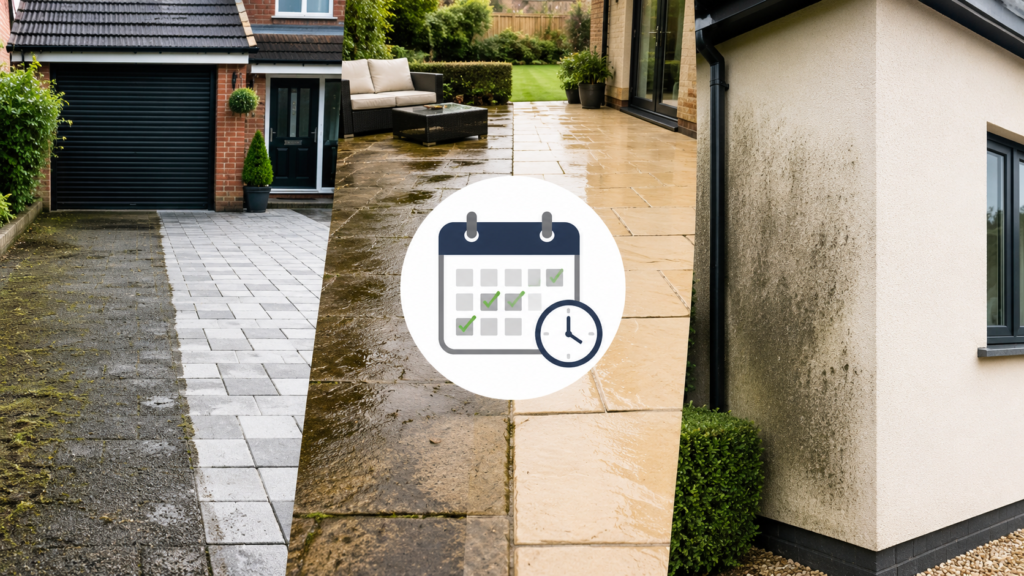
If you have ever stood at your front door and wondered why your driveway looks tired, your patio has turned green, or your render has developed grey streaks, you are not alone. The British climate, damp, mild, and often shaded by trees and hedges, is almost perfectly designed to encourage moss, algae, and lichen to take hold on exterior surfaces. The question homeowners across Bournemouth, Poole, Christchurch, and Ringwood ask us most often is simple: how often should these surfaces actually be cleaned?
The honest answer is that it depends on the surface, the material, where your property sits, and how it is used. In this guide, we will walk through exactly how often to clean your driveway, patio, and render, the warning signs that tell you it is overdue, and how to keep your property looking its best between professional visits.
The Quick Answer
As a general rule, most UK driveways and patios benefit from a professional clean every 12 to 24 months, while render typically needs attention every 2 to 3 years. Shaded, north facing, or tree lined properties often need cleaning towards the shorter end of that range, while open, sunny, well drained areas can usually stretch towards the longer end.
That said, a calendar is only ever a starting point. Your surface will usually tell you when it needs attention long before the date on a schedule does, and we will cover exactly what to look out for further down.
Why Cleaning Frequency Actually Matters
It is tempting to think of driveway, patio, and render cleaning as purely cosmetic. In reality, the timing of a clean has a direct impact on the lifespan and safety of your property.
It prevents long term damage. Moss, algae, and lichen do not simply sit on the surface. Their root systems and biofilm work their way into pores, joints, and hairline cracks. On block paving, this pushes jointing sand apart and destabilises the blocks. On render, trapped moisture behind organic growth can lead to cracking and, eventually, damp penetrating the wall. Left unchecked over several winters, what would have been a straightforward clean turns into a repair job.
It reduces the risk of slips and falls. Wet moss and algae are extremely slippery, and in the UK’s damp climate this is a genuine safety issue for family members, visitors, delivery drivers, and elderly relatives, particularly through autumn and winter.
It protects kerb appeal and value. A clean driveway and a fresh looking render finish are among the first things a visitor, neighbour, or potential buyer notices. Estate agents regularly recommend a full exterior clean before a property goes on the market, since neglected paving and streaked render can make even a well kept home look tired from the street.
It supports the effectiveness of any sealant or coating. If your driveway has been sealed or your render has a protective coating, cleaning at the right intervals helps that treatment continue working as intended, rather than trapping dirt and moisture underneath it.
How Often Should You Clean Your Driveway?
Driveway cleaning frequency depends heavily on the material it is made from, since each surface reacts differently to weather, traffic, and organic growth.
Block paving is one of the most popular driveway choices in the UK, but the joints between blocks are a magnet for moss, weeds, and jointing sand loss. Most block paving driveways benefit from a professional clean every 12 to 18 months. If your driveway sits under trees or faces north, aim for the shorter end of that range, since reduced sunlight allows algae to establish more quickly.
Concrete driveways are porous, which means oil, tyre marks, and organic staining soak in rather than sitting on the surface. A clean every 12 to 24 months is typical, though oil spots and fuel stains should be treated as soon as they appear rather than left until the next scheduled visit.
Tarmac and asphalt hold up well to traffic but need careful treatment, since excessive pressure can lift the surface aggregate. A professional clean every 18 to 24 months is usually enough, and any fuel or oil spills should be dealt with promptly, as petroleum products can break down the binder in tarmac over time.
Resin bound driveways rely on their permeability to drain water effectively, and this can be reduced once dirt and organic matter clog the surface pores. A clean roughly every 12 to 18 months keeps drainage performance intact.
Natural stone driveways, including sandstone and granite setts, tend to need a professional clean around once a year, since different stone types react differently to cleaning products and require the right approach to avoid etching or discolouration.
Across all materials, the same rule applies: heavier vehicle use, multiple cars, or a shaded, poorly drained position will always push you towards more frequent cleaning, while an open, sunny, lightly used driveway can often go longer between visits.
If you would like a deeper look at caring for block paving specifically, our guide on driveway cleaning in the UK covers the methods that work best. You can also read about how regular driveway cleaning can add value to your home.
How Often Should You Clean Your Patio?
Patios face many of the same challenges as driveways, but with a few important differences. They see less vehicle weight but more standing water, more foot traffic in bare feet, and often more shade from fences, garden walls, and planting.
For most UK gardens, a professional patio clean every 12 to 24 months keeps the surface safe and attractive. Patios that catch a lot of shade, sit close to overhanging trees, or have poor drainage can develop slippery green patches within months rather than years, so these areas often need attention annually.
Natural stone patios such as Indian sandstone and limestone are particularly prone to staining and moss growth in their pores, and they generally respond best to a gentle, low pressure soft wash rather than aggressive jet washing, which can strip the surface and accelerate wear. Composite and porcelain paving are more resistant but still benefit from a periodic clean to remove biofilm buildup, especially where slabs meet lawn edges or borders.
Since a patio is somewhere people walk barefoot and children often play, treating slipperiness as a safety issue rather than just an appearance one is worth keeping in mind. If you want to avoid common pitfalls, take a look at our article on patio cleaning mistakes that could damage your outdoor space before attempting any DIY work.
How Often Should You Clean Render?
Render is often overlooked in cleaning schedules, yet it is one of the most visible surfaces on a property and one of the most vulnerable to moss, algae, and black streaking, particularly on north facing or shaded elevations.
As a general guide, render should be professionally cleaned every 2 to 3 years. Properties in exposed, damp locations, or those close to trees and hedging, may need attention closer to the two year mark, while sheltered, south facing walls in good condition can often go a little longer.
Unlike a driveway, render is a vertical, often painted or coated surface, so the cleaning method matters enormously. High pressure jet washing is not appropriate for render, since it can force water behind the surface, damage the coating, and cause long term problems with damp. A soft washing approach, using a gentle application of biodegradable solution followed by a controlled low pressure rinse, is the safe and effective method for removing algae, lichen, and grime without harming the finish. This is the approach we use across Bournemouth, Poole, Christchurch, and Ringwood.
Watch for early warning signs on render, including green or black streaking beneath window sills and roof edges, a dull or patchy appearance compared to the rest of the wall, and visible moss or algae growth in shaded corners. Catching these signs early, rather than waiting for the whole wall to discolour, keeps the job simpler and protects the coating underneath.
Seasonal and Climate Factors Specific to the UK
The UK’s weather plays a bigger role in cleaning frequency than most homeowners realise. Rather than working purely to a fixed calendar, it helps to think about how the seasons and your local conditions affect growth.
Spring is a popular time to clean, since it clears away the grime, salt residue, and organic debris that has built up over winter and gets your property looking fresh for the warmer months ahead.
Autumn is equally important, particularly for properties near deciduous trees. Falling leaves create a damp, decomposing layer across driveways and patios that accelerates moss and algae growth heading into winter, so a clean before the leaves properly drop can prevent a much bigger job in spring.
Coastal and exposed properties face additional challenges from salt laden air and persistent moisture, both of which encourage faster organic growth and can contribute to efflorescence on render and natural stone.
Shaded, tree lined, or north facing properties almost always need more frequent attention than open, sunny plots, since reduced light and airflow are exactly what moss and algae need to thrive.
If your property ticks several of these boxes, it is worth erring towards the shorter end of the frequency ranges above rather than waiting for a fixed date to come around.
Signs It Is Time to Clean, Regardless of the Calendar
Sometimes the calendar is less useful than simply looking at the surface itself. These are the clearest signs that your driveway, patio, or render needs attention sooner rather than later:
- Green or black patches spreading across the surface
- A noticeably slippery feel underfoot when the surface is wet
- Weeds or moss pushing up through paving joints
- Water pooling rather than draining away after rain
- Render that looks patchy, streaked, or dull compared to when it was last cleaned
- You genuinely cannot remember the last time it was professionally cleaned
If two or more of these apply to your property right now, it is a strong sign that your next clean is overdue.
DIY Maintenance Versus Professional Cleaning
Between professional visits, there is plenty you can do yourself to stretch out the time before the next deep clean is needed.
Sweep driveways and patios weekly to stop leaves and debris from decomposing into the surface. Pull weeds as soon as they appear, since small weeds come away easily while established ones damage jointing and root themselves deeper. Keep drains, gulleys, and channel drainage clear so water does not pool and accelerate organic growth. Trim back overhanging branches and hedges to let in more light and air, which naturally discourages moss. Deal with oil, fuel, or food spills immediately rather than letting them set into a porous surface.
That said, a proper deep clean, particularly for render or heavily soiled paving, is best left to professionals. Getting the pressure, technique, and cleaning solution wrong on the wrong surface can cause real damage, from stripped sealant to water forced behind a render coating. Professional equipment also reaches a more consistent, even finish than a domestic pressure washer typically achieves, and a trained eye will know which surfaces need a gentle soft wash rather than high pressure jetting.
For more general guidance on building a sensible maintenance routine across your whole property, our article on how often you should book exterior cleaning for your home is a useful next read.
Frequently Asked Questions
Can cleaning a driveway or patio too often cause damage? Yes. Using high pressure equipment more often than needed, or at the wrong setting for the surface, can wear away jointing sand and strip protective sealant. Sticking to the recommended frequency for your surface type, and choosing the right method, avoids this.
Does render need a different cleaning method to a driveway? Definitely. Render is a vertical, often coated surface, so it should always be soft washed at low pressure rather than jet washed. High pressure water can force moisture behind the render and cause long term damp issues.
What is the single biggest factor affecting how often I need to clean? Shade. Properties that are north facing, sit under trees, or are otherwise starved of direct sunlight will almost always need more frequent cleaning than open, sunny positions, regardless of the material involved.
Should I clean before or after sealing a driveway? Always clean thoroughly first. Sealing over dirt, moss, or algae traps the problem underneath the coating and shortens the life of the seal considerably.
Keeping Your Property Looking Its Best
Ultimately, the right cleaning schedule for your driveway, patio, and render comes down to your specific property. A sunny, open driveway with light use might comfortably go two years between cleans, while a shaded, tree lined patio or a damp, north facing wall could need attention every 12 months to stay ahead of moss and algae.
At Platinum Exterior Cleaning, we help homeowners across Bournemouth, Poole, Christchurch, and Ringwood build a maintenance schedule that suits their property, using the right method for each surface, from driveway and block paving cleaning and patio cleaning to gentle render soft washing. We also offer gutter and fascia cleaning and roof cleaning if you are looking to bring your whole exterior back to life at once.