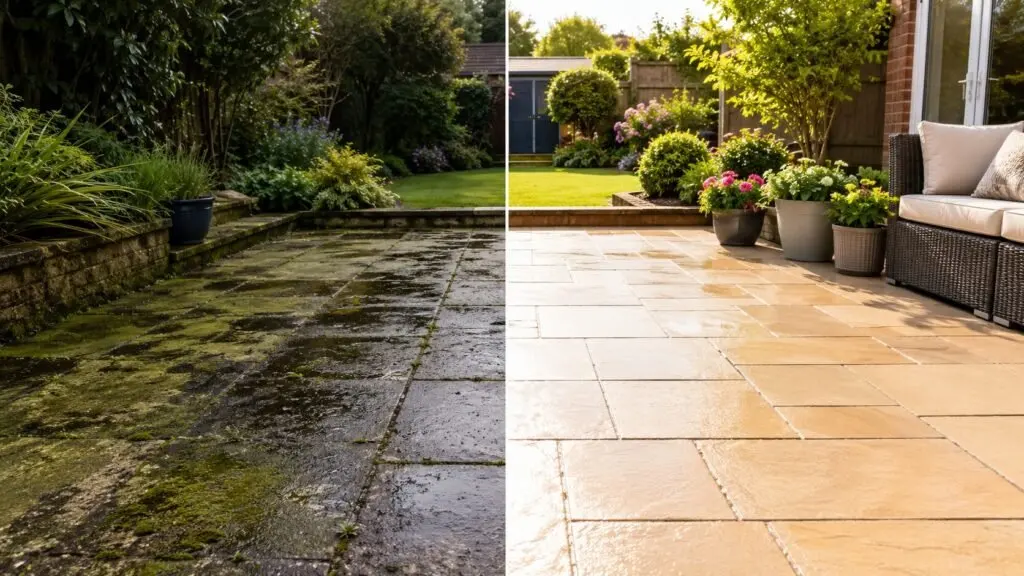
Your patio is the heart of your garden. It’s where you host summer barbecues, enjoy a morning coffee in the sun, and watch the kids play on a warm afternoon. But after a few British winters, that same patio can quietly turn against you, slabs go green, joints sprout weeds, and the surface that once looked smart now drags the whole garden down.
The good news is that this is almost always reversible. A professional patio clean is one of the fastest, most dramatic improvements you can make to an outdoor space, and the results are visible the moment the job is done. In this guide we’ll explain exactly how professional patio cleaning transforms your garden, what it costs in 2026, how different surfaces should be treated, and how to keep your patio looking its best for years.
At Platinum Exterior Cleaning, we clean patios across Bournemouth, Poole, Christchurch and Ringwood, so everything below is grounded in what actually works on UK patios in our damp, coastal climate.
Why Patios Get Dirty in the First Place
Before you can appreciate the transformation, it helps to understand what you’re up against. UK patios are exposed to the elements all year round, and our climate is almost perfectly designed to encourage organic growth.
The main culprits are:
- Algae the green film that makes paving look tired and turns it dangerously slippery when wet.
- Moss thrives in shaded, damp areas and in the gaps between slabs, lifting jointing over time.
- Lichen and black spot stubborn, ingrained marks that bond to the stone and are notoriously difficult to remove by hand.
- Weeds colonise joints and block paving, widening gaps and destabilising the surface.
- Stains barbecue grease, food and drink spills, leaf tannins, oil and general garden grime.
Shaded, north-facing patios and those surrounded by trees suffer the most, because they stay damp for longer and rarely get the sunlight that would otherwise dry them out. Left unchecked, this build-up doesn’t just look bad, it actively shortens the lifespan of your paving.
The Real Transformation: 5 Ways a Clean Patio Changes Your Garden
A professional clean does far more than make slabs look nicer. Here’s what genuinely changes.
1. Your Garden Instantly Looks Bigger and Brighter
The first thing you notice after a professional clean is space. Years of grime flatten and darken paving, making the whole garden feel smaller and more enclosed. Stripping that back restores the paving’s original colour and reflectivity, and the difference is immediate — a dull grey-green patio can come up looking close to new in a single visit. Because the patio is usually the largest hard surface in a garden, refreshing it lifts everything around it: the planting looks greener, the furniture looks smarter, and the space feels open again.
2. It Becomes Safe to Use Again
This is the benefit homeowners underestimate most. Algae and moss don’t just look unpleasant, they make a patio genuinely hazardous. A wet, algae-covered slab can be as slippery as ice, and slips on patios are a common cause of household injuries, particularly for older family members and young children. Professional cleaning removes the slippery organic layer entirely, restoring proper grip and making the space safe to use in all weather.
3. You Protect Your Paving and Save Money Long-Term
Moss, algae and weeds aren’t passive passengers. Over time they penetrate the surface, hold moisture against the stone, force open jointing, and accelerate cracking, discolouration and frost damage. Regular professional cleaning removes these contaminants before they cause permanent harm and a good cleaner will spot early problems such as failing joints or loose slabs before they become expensive repairs. When you consider that relaying a patio costs many times more than maintaining one, regular cleaning is genuinely a cost-saving measure, not just a cosmetic one.
4. It Boosts Your Property’s Kerb Appeal and Value
Outdoor space is a major selling point, and a clean, well-kept patio creates an immediate positive impression on visitors and potential buyers. A neglected one does the opposite, it signals a property that hasn’t been looked after. If you’re preparing to sell, or even just want your home to look its best, a professionally cleaned patio (and the rest of your exterior) is one of the highest-impact, lowest-cost improvements available.
5. You Reclaim Your Weekend
Cleaning a patio properly is hard, slow, physical work and that’s before you factor in hiring equipment, buying the right chemicals, and the risk of damaging your paving if you get it wrong. Professionals arrive with commercial-grade equipment and the experience to use it correctly, completing in a few hours what would take you a full weekend, with a far better and longer-lasting result.
Different Surfaces Need Different Care
One of the biggest reasons to use a professional is that there is no single correct way to clean a patio, the right approach depends entirely on the material. Using the wrong pressure or chemical can permanently damage your surface, and this is where DIY jobs most often go wrong.
- Concrete slabs and tarmac are hard-wearing and tolerate higher-pressure washing well, though they can still stain and grow algae.
- Block paving needs more care. Weeds and moss grow in the joints, and aggressive cleaning blasts out the kiln-dried sand, so the joints almost always need re-sanding afterwards to keep slabs stable and resist regrowth.
- Natural stone such as Indian sandstone, limestone and slate is porous and far softer. It needs lower pressure and pH-neutral solutions; harsh acidic or bleach-based cleaners can cause permanent discoloration and pitting.
- Decking and timber should never be hit with high pressure, which gouges and splinters the wood. It needs a gentle, specialist approach instead.
A professional assesses the surface before touching it and adjusts pressure, technique and cleaning solution accordingly. That single judgement is often the difference between a patio that’s transformed and one that’s ruined. You can read more about how we handle different materials on our patio and decking cleaning page.
DIY vs Professional Patio Cleaning
So should you tackle it yourself or call in a professional? Both have their place, it comes down to the size, condition and material of your patio.
DIY makes sense when your patio is small, the dirt is light, and you already own or can borrow a pressure washer. A simple maintenance wash with a stiff brush and mild detergent is well within most people’s reach, and it’s the cheapest option for routine upkeep.
The drawbacks of DIY are real, though. Domestic pressure washers typically run at around 100–130 bar, far weaker than the professional machines that reach up to 200 bar, so they struggle with ingrained black spot, lichen and heavy moss. It’s also slow, physically demanding work, and the risk of damage is high: too much pressure on sandstone, the wrong nozzle, or skipping the re-sanding step can all do lasting harm.
Professional cleaning is the better choice when your patio is large, heavily soiled, made of delicate natural stone, or you simply want a guaranteed, hassle-free result. Professionals bring the right equipment, the experience to match method to material, and often include extras such as re-sanding and sealing that dramatically extend how long the clean lasts.
The honest summary: for a quick refresh of a small concrete patio, DIY is fine. For a transformation, especially on natural stone, block paving, or a patio that’s been neglected for years, professional cleaning delivers a result that’s safer, faster and far longer-lasting.
How Much Does Professional Patio Cleaning Cost in the UK?
Cost is usually the first question, so let’s be straight about it. Most UK companies price patio cleaning per square metre, by the hour, or as a fixed price per job.
As a 2026 benchmark, professional patio cleaning typically costs around £4–£8 per square metre, with a small patio of roughly 15m² costing £60–£100 and a medium 25m² patio costing £100–£200. Cleaning-only rates often start lower, while jobs that include re-sanding or sealing typically run higher, in the region of £5–£9 per square metre.
The final price depends on a handful of factors:
- Size: Larger patios cost more overall but usually attract a better per-square-metre rate.
- Surface type: Natural stone takes longer and needs specialist care, so it costs more than plain concrete.
- Condition: Heavy moss, black spot and ingrained staining take more time and treatment.
- Extras: Re-sanding block paving joints and applying a sealant add to the cost but extend the result.
- Location: Prices in London and the South East tend to sit at the higher end.
When you weigh that against the cost of relaying a patio, which runs into the thousands, a periodic professional clean is excellent value. For an accurate figure for your specific patio, the best approach is always a free, no-obligation quote.
When Is the Best Time to Clean Your Patio?
Timing matters more than most people realise in the UK climate.
Spring (March–May) is the most popular and arguably the best time. It washes away the moss, algae and grime that built up over winter and gets your patio ready for the summer season ahead. Just avoid washing during a frost, wait until overnight temperatures are reliably above freezing.
Summer (June–August) is ideal for maintenance washes and for sealing, because the warm, dry weather lets surfaces dry quickly and evenly. It’s also the best time to spot-clean barbecue and food stains as they happen.
Autumn (September–November) is a smart time to clear leaf litter and tannin stains before they set in over winter, and demand is often lower so you may find better availability.
Winter (December–February) is generally the quietest period; cold, damp conditions and frost risk make it less effective, and many contractors scale back outdoor work.
For most homeowners, an annual deep clean in spring, topped up with light maintenance through summer and a leaf-clearing pass in autumn, keeps a patio looking its best all year.
Common Patio Cleaning Mistakes to Avoid
If you do decide to clean yourself, steer clear of these costly errors that we’re regularly called out to put right:
- Using maximum pressure on everything. This erodes soft stone, etches concrete and blasts jointing out of block paving. Match the pressure to the surface.
- Skipping the re-sanding. On block paving, washing removes the kiln-dried sand from the joints. Failing to replace it leads to shifting slabs and rapid weed regrowth.
- Reaching for bleach or vinegar. Both can discolour stone and, just as importantly, run off into your borders and lawn where they harm or kill plants. Choose biodegradable, surface-appropriate cleaners instead.
- Not testing first. Always test any cleaner on a hidden slab before treating the whole area.
- Ignoring drainage. Dirty run-off can flood lawns and flowerbeds. A professional plans for where the water goes.
Keeping Your Patio Clean for Longer
A transformation is only worth having if it lasts. To keep your patio looking fresh between professional cleans:
- Sweep regularly to stop debris and leaves building up and staining the surface.
- Deal with spills quickly, grease and food stains are far easier to remove before they set.
- Trim back overhanging plants to let more light and air reach the patio, which slows moss and algae growth.
- Treat annually with a suitable biocide to kill spores before they take hold.
- Consider sealing after a clean. A quality sealant resists staining, slows organic regrowth and makes every future clean easier particularly worthwhile on porous natural stone.
Part of a Bigger Picture: Your Whole Exterior
A spotless patio looks even better when the rest of your property matches it. Patio cleaning often pairs naturally with cleaning your driveway and block paving, clearing your gutters and fascias, and refreshing your roof, all of which can usually be tackled together in a single visit for a complete exterior transformation. If you’d like to know more about how we work, our about page explains our approach and the areas we cover.
Transform Your Garden with Platinum Exterior Cleaning
A clean patio genuinely transforms a garden it brightens and enlarges the space, makes it safe to use, protects your investment, and lifts the value of your whole property. While a small refresh is something you can do yourself, a proper transformation especially on natural stone, block paving or a long-neglected patio is best left to professionals who can match the method to the material and deliver a safe, lasting result.
At Platinum Exterior Cleaning, we use safe, eco-friendly methods and the right technique for every surface to restore patios across Bournemouth, Poole, Christchurch and Ringwood. Whether your patio needs a seasonal refresh or a full restoration, we’d be glad to help.
Ready to bring your patio back to life? Contact us today for a free, no-obligation quote or call 07734 928740 and rediscover the garden you’ve been missing.
Frequently Asked Questions
How often should I have my patio professionally cleaned?
Most patios benefit from a professional clean every 12 to 24 months. Shaded, north-facing patios or those surrounded by trees may need it more often, as they stay damp and grow moss and algae faster.
Will pressure washing damage my patio?
Not when it’s done correctly. Damage happens when the wrong pressure or technique is used on a delicate surface. A professional assesses the material first and adjusts accordingly, which is exactly why professional experience matters on softer surfaces like natural stone and timber.
Is patio cleaning safe for my plants and pets?
It is when done responsibly. We use eco-friendly, biodegradable methods and manage run-off carefully so your borders, lawn and pets are protected. Harsh bleach and vinegar solutions, common in DIY jobs, are far riskier to surrounding plant life.
Should I have my patio sealed after cleaning?
Sealing is optional but recommended, especially on porous natural stone and block paving. It resists staining, slows the regrowth of moss and algae, and makes future cleaning easier extending the life of the clean.
Do you clean other surfaces at the same time?
Yes. We can clean your patio, driveway, decking, gutters and roof in a single visit, which is the most efficient way to refresh your property’s entire exterior.