Introduction: Why Roof Moss Is a Bigger Problem Than It Looks
If you’ve noticed green patches spreading across your roof tiles, you’re not alone. Moss is one of the most common problems facing UK homeowners and thanks to our mild, wet climate, it’s a challenge that doesn’t go away on its own. What starts as a thin green film can quickly become a thick, sponge-like mat that quietly damages your roof month after month.
At Platinum Exterior Cleaning, we specialise in professional roof cleaning in Bournemouth, Poole, Christchurch, and Ringwood. In this guide, we’ll walk you through everything you need to know about safely removing moss from roofs in the UK, including the safest methods, what to avoid, realistic costs, and how to prevent it from coming back.
What Is Moss and Why Does It Grow on UK Roofs?
Moss is a small, non-vascular plant that thrives in damp, shaded environments. Unlike most plants, it has no roots and instead anchors itself directly onto surfaces including your roof tiles drawing moisture straight from the surrounding air and rainfall.
The UK’s frequent rain, cool temperatures, and overcast skies make our roofs one of the most moss-friendly surfaces in Europe. Certain conditions make growth even more likely:
- North-facing roof slopes that receive little direct sunlight
- Overhanging trees that deposit organic debris and create permanent shade
- Poor roof drainage or blocked gutters that allow water to pool
- Older, pitted, or textured tile surfaces that trap moisture
- Properties in coastal or rural areas with naturally higher humidity
Because moss reproduces through airborne spores, even a freshly cleaned roof can begin to show regrowth within a few years without the right preventive treatment. Understanding these causes is the first step to preventing it long-term, something our roof cleaning service is specifically designed to address.
Is Moss on Your Roof Actually Dangerous?
Many homeowners assume moss is purely cosmetic an unsightly green tinge that doesn’t cause real harm. This is a costly misconception. Left untreated, moss can cause serious structural and financial damage to your property.
Physical Damage to Roof Tiles
Moss holds moisture against the tile surface, creating repeated freeze-thaw cycles through autumn and winter. Each time trapped water expands as it freezes, it gradually cracks and delaminates tiles, particularly concrete tiles, which are highly porous. Over time, tiles can lift, crack, or dislodge entirely, leaving the roof structure exposed to the elements.
Blocked Gutters and Water Damage
As moss grows, fragments break off and wash into your gutters and fascias. Blocked gutters cause rainwater to overflow and run down exterior walls, leading to damp issues, rot in timber, and even foundation damage over time.
Shortened Roof Lifespan
Continuous moisture retention from moss dramatically accelerates the natural wear process. A neglected roof that should last 40 years may begin requiring costly repairs after just 20–25 years.
Reduced Energy Efficiency
Moss reduces a roof’s ability to reflect sunlight, increasing heat absorption into the roof space during summer. This can raise cooling costs and reduce overall thermal efficiency.
Reduced Property Value
A moss-covered roof signals neglect to potential buyers and surveyors. Estate agents across the UK report that visibly mossy roofs can reduce offers by 2–5%, on a £300,000 home, that’s up to £15,000 lost simply because of an unmaintained roof.
| ⚠️ Important: Moss is not just a cosmetic issue, it is a structural concern that, if ignored, can lead to repair bills many times greater than the cost of professional cleaning. |
The Safest Methods for Removing Moss From a Roof in the UK
When it comes to roof moss removal, the method matters enormously. The wrong approach can cause more damage than the moss itself. Here’s a breakdown of the most commonly used methods, from safest to most risky.
1. Soft Washing — The Gold Standard for Safe Roof Cleaning
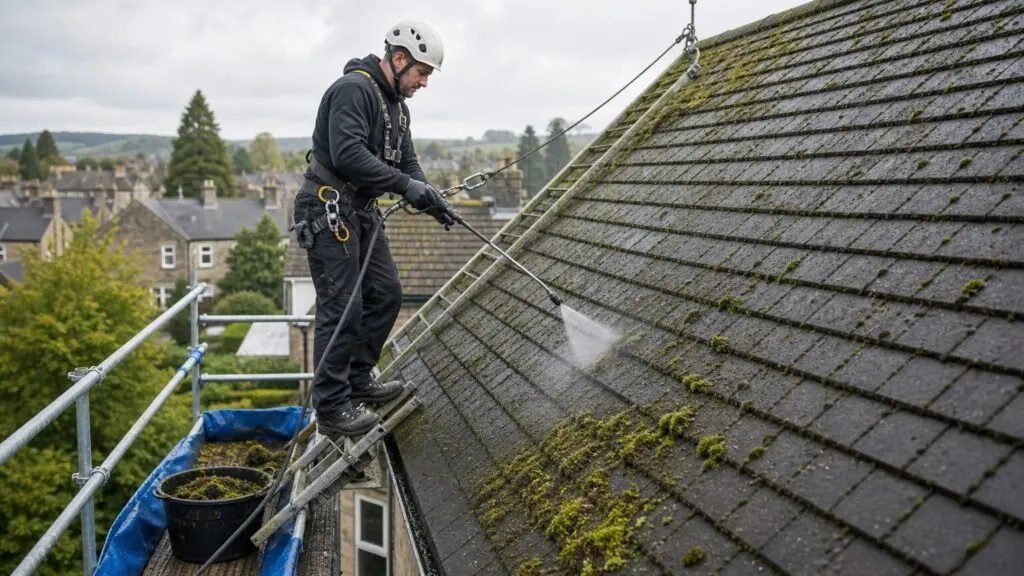
Soft washing is widely regarded by industry professionals as the safest and most effective method for removing moss, algae, lichen, and other biological growth from roof tiles. At Platinum Exterior Cleaning, it’s our preferred method for most residential roofs.
Soft washing uses low-pressure water combined with a specially formulated biocidal cleaning solution. The solution penetrates the moss at its roots, killing it rather than just removing the visible surface growth. This means it not only cleans the roof but actively prevents regrowth for 3–5 years.
Key advantages of soft washing:
- Uses very low water pressure no risk of cracking, lifting, or displacing tiles
- Kills moss, algae, lichen, and spores at the root level
- Long-lasting results: typically 3–5 years before regrowth begins
- Safe for all tile types including slate, clay, and concrete
- Biodegradable cleaning agents safe for the surrounding environment
2. Steam Cleaning Gentle, Eco-Friendly, and Highly Effective
Steam cleaning uses high-temperature steam delivered at low pressure to break down and remove organic growth from roof tiles. The intense heat kills moss, algae, and other biological contaminants on contact without the need for any chemical products.
This method is particularly well-suited to:
- Delicate roof materials like natural slate or clay tiles
- Properties where chemical runoff is a concern (near ponds, gardens, or water features)
- Roofs with heavy, well-established moss growth that needs physical removal
At Platinum Exterior Cleaning, we often combine steam cleaning with our soft washing service for optimal results, the steam breaks down the bulk of the growth, and the biocidal wash prevents it from returning.
3. Manual Scraping — Effective but Best Left to Professionals
For roofs with thick, well-established moss, manual scraping is often necessary before a soft wash or biocide treatment can be applied. A trained operative uses a hand-held or telescopic scraper to carefully remove moss from tiles, working from the ridge downward.
When done correctly by a professional, scraping is very effective. However, there are several important caveats:
- Only plastic or rubber-edged tools should be used on slate tiles metal tools can cause chipping and cracking
- Scraping must be done on a dry day wet moss is harder to remove cleanly and increases slip risk
- Scraping alone will not prevent regrowth it must always be followed by a biocidal treatment
- Incorrect technique can dislodge or crack tiles, creating leaks
In most professional roof cleaning projects in the UK, the full process combines manual scraping, a low-pressure rinse, and a biocidal soft wash application, the safest, most thorough approach available.
4. Pressure Washing — What to Avoid
High-pressure washing may seem like an obvious choice, it’s fast, cheap, and visually satisfying. However, it is widely considered the wrong choice for roof moss removal and is not recommended by roofing professionals or insurers in the UK.
The problems with pressure washing a roof include:
- High-pressure water strips the protective coatings and granules from concrete tiles
- It forces water beneath tiles, saturating the roof deck and insulation
- It can crack, lift, and dislodge tiles especially older or more fragile ones
- It does not kill moss at the root level, meaning rapid regrowth occurs
- The results may invalidate your roof warranty or homeowner’s insurance
Professional Roof Moss Removal Costs in the UK
One of the most common questions we receive is: how much does professional roof cleaning cost in the UK? The answer depends on several factors including the size of your roof, the degree of moss coverage, and the access required.
Here’s a general guide to typical costs for professional moss removal and soft washing in the UK:
Moss Removal for Different Roof Types
Different roof materials require different approaches. Here’s how professionals tailor their methods depending on your roof type:
Concrete Tiles
The most common roof tile in the UK. Concrete tiles are highly porous and prone to absorbing moisture, making them particularly susceptible to moss growth. Soft washing with a biocide is the recommended approach, pressure washing is strongly discouraged as it strips the surface coating.
Clay Tiles
Clay tiles have a glazed surface that is somewhat more resistant to moss but still vulnerable, particularly if the glaze has worn over time. Gentle scraping combined with soft washing works well. Care must be taken not to chip or crack the tile edges.
Natural Slate
Slate is one of the most durable roofing materials but also one of the most fragile to clean incorrectly. Only soft plastic scrapers should be used — never metal tools. Steam cleaning is particularly well-suited to slate as it delivers effective results without any physical scraping risk.
Moss, Algae, and Lichen: What’s the Difference?
Many homeowners confuse moss with other types of biological roof growth. While they may appear similar from a distance, they’re quite different and may require slightly different treatments:
| Growth Type | Appearance & Behaviour |
| Moss | Thick, fluffy, green clumps. Highly absorbent — causes the most physical damage through moisture retention. |
| Algae | Thin dark streaks or green/black staining. Mostly aesthetic but signals moisture issues. |
| Lichen | Flat, crusty grey or white patches. Grows slowly but adheres tightly to tiles and is harder to remove. |
Professional roof cleaners typically encounter all three on the same roof. A combined approach — manual removal of thick moss followed by a soft wash biocide treatment — is the most effective way to deal with all three types simultaneously.
How to Prevent Moss Returning After Cleaning
A professional clean provides an excellent foundation, but prevention is equally important for long-term roof health. Here are the most effective measures to slow or prevent moss regrowth:
1. Biocidal Post-Treatment
After cleaning, a professional-grade biocidal wash should always be applied. This kills any remaining moss spores and inhibits regrowth for 3–5 years. At Platinum Exterior Cleaning, we include this as standard in our roof cleaning process.
2. Trim Overhanging Trees
Shade is one of the biggest contributors to moss growth. Cutting back branches that overhang your roof increases sunlight exposure and reduces the debris (leaves, twigs) that accumulates between tiles and in gutters.
3. Keep Gutters Clear
Blocked gutters cause water to back up under tiles and increase moisture on the roof surface — perfect conditions for moss. Our professional gutter cleaning service ensures your drainage system remains clear and fully functional throughout the year.
4. Zinc or Copper Strips
Installing zinc or copper strips along the ridge of your roof is a highly effective passive prevention method. Rainwater washes metal ions down the tiles, creating an environment that inhibits moss and algae growth. These strips typically last 5–10 years with minimal maintenance.
5. Improve Roof Ventilation
A well-ventilated roof space reduces the surface moisture that encourages moss growth. If you’re experiencing persistent moss problems, it may be worth having a roofer assess your loft ventilation as part of a wider maintenance plan.
When Is the Best Time to Clean Moss Off Your Roof?
Timing matters when it comes to roof moss removal. The ideal window is spring or early autumn, and here’s why:
- Moss is actively growing making it easier to remove and helping biocide absorb more effectively
- Rainfall is lower than in winter giving biocide treatments time to adhere to the tile surface
- Temperatures are mild safer working conditions for operatives
- Tiles are dry essential for effective scraping and chemical treatment
Mid-winter cleaning is not recommended due to icy, slippery surfaces and the risk that biocidal treatments will wash off before they take effect. Similarly, peak summer heat can cause chemical solutions to evaporate too quickly.
DIY Moss Removal vs. Professional Cleaning
Some homeowners attempt to tackle roof moss removal themselves. While it’s understandable to want to save money, DIY roof cleaning carries significant risks that most professionals would advise against.
The Case Against DIY
- Safety risk: Roof falls are one of the leading causes of serious injury in UK home DIY accidents
- Tile damage: Without professional tools and training, incorrect scraping can crack, lift, or dislodge tiles
- Incomplete coverage: Without access equipment, you may only clean part of the roof
- No biocide follow-up: Most DIY treatments don’t include the professional-grade biocide needed to prevent regrowth
- Insurance implications: Some insurers will not cover roof damage caused by homeowner cleaning attempts
Why Professional Cleaning Is Worth It
A professional team like Platinum Exterior Cleaning brings the right equipment, the right techniques, and the right products to the job. We work safely at height, clean thoroughly, apply professional biocide treatments, and can identify any minor tile damage or gutter issues before they become expensive problems.
Our roof cleaning servicecovers properties across Bournemouth, Poole, Christchurch, and Ringwood. We provide free, no-obligation quotes and transparent pricing with no hidden extras.
Frequently Asked Questions
How often should I have my roof cleaned?
For most UK properties, a full professional clean every 3–5 years is sufficient, followed by biocide reapplication every 3–4 years. Properties in heavily shaded or coastal areas may benefit from more frequent maintenance.
Will moss removal damage my tiles?
Not when done by trained professionals using the correct methods. Soft washing and steam cleaning are specifically designed to clean without causing damage. Damage occurs when high-pressure washing or incorrect tools are used which is why choosing the right contractor matters.
Can I use bleach to kill roof moss?
No. Household bleach can discolour tiles, damage surrounding plants and lawns through runoff, and may void your roof warranty. Professional biocidal treatments are specifically formulated for use on roofing materials and are far safer and more effective.
Does moss actually cause leaks?
Yes — though not immediately. Over time, moss retains moisture and lifts tiles, creating small gaps where rainwater can penetrate. This leads to damp insulation, timber rot, and eventually active leaks. Preventive cleaning is far cheaper than repairing water-ingress damage.
What’s the difference between moss removal and roof cleaning?
Moss removal focuses specifically on scraping and killing moss growth. Roof cleaning is a broader term that includes removing algae, lichen, general dirt, and staining as well. Professional roof cleaning in the UK typically encompasses both.
Is roof cleaning covered by home insurance?
Moss removal itself is generally considered maintenance and is not typically covered by home insurance. However, damage caused by neglected moss (such as leaks or cracked tiles) may be covered depending on your policy. Always check with your insurer.
Ready to Get Your Roof Professionally Cleaned?
If your roof is showing signs of moss, lichen, or algae or if it hasn’t been cleaned in the last three to five years, now is the time to act. At Platinum Exterior Cleaning, we offer safe, effective, and eco-friendly roof cleaning using proven soft washing and steam cleaning techniques.
We serve homeowners and businesses across:
- Bournemouth
- Poole
- Christchurch
- Ringwood
- And surrounding areas
Get in touch today for your free, no-obligation quote. Call us on 07734 928740, email us at info@platinumexteriorcleaning.co.uk, or visit our contact page to submit an enquiry online.
You may also be interested in our other exterior cleaning services: driveway and block paving cleaning, patio and decking cleaning, and gutter and fascia cleaning all carried out to the same high standard as our roof cleaning work.