Block paving is one of the most popular driveway choices for homes across Bournemouth, Poole, Christchurch, and Ringwood, and it is easy to see why. It looks smart, it copes well with our unpredictable coastal weather, and it can last for decades when it is looked after properly. The trouble is that block paving does not stay looking smart on its own. Bournemouth’s damp climate, coastal air, and shaded gardens create the perfect conditions for moss, algae, weeds, and grime to take hold between the joints and across the surface.
If your driveway has started to look dull, patchy, or slippery, you are probably wondering what the best way to clean it actually is. In this guide, we will walk through why block paving gets dirty so quickly in this part of Dorset, the cleaning methods that actually work, the mistakes to avoid, and how often you should be cleaning to keep your driveway looking its best all year round.
Why Block Paving Driveways Get Dirty So Fast in Bournemouth
Bournemouth’s climate plays a bigger role than most homeowners realise. The combination of sea air, higher than average rainfall, and mild winters creates an environment where moss and algae thrive, particularly on driveways that sit in shade for part of the day or under trees.
A few common culprits behind grubby block paving include:
Moss and algae growth. Damp, shaded areas of the driveway are the first to turn green. Left untreated, this growth spreads quickly and becomes slippery underfoot, which is a genuine safety concern for families and elderly relatives visiting your home.
Weeds in the joints. Gaps between the blocks are an easy target for weed seeds carried on the wind. Once established, weed roots can push the blocks apart, leading to an uneven surface over time.
Oil and tyre marks. Vehicles naturally leave behind oil drips, tyre residue, and general road grime, all of which soak into porous block paving and become harder to shift the longer they are left.
General dirt and organic debris. Leaves, pollen, and airborne dirt settle into the surface texture of block paving, gradually dulling its original colour.
Understanding the cause helps explain why the right cleaning method matters so much. A driveway that is only rinsed with a hose will look better for a week or two before the same problems creep back.
The Best Cleaning Method for Block Paving Driveways
There is no single trick that solves everything on a block paving driveway. The best results come from combining a few proven techniques, each targeting a different problem.
1. Professional Pressure Washing
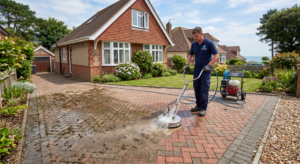
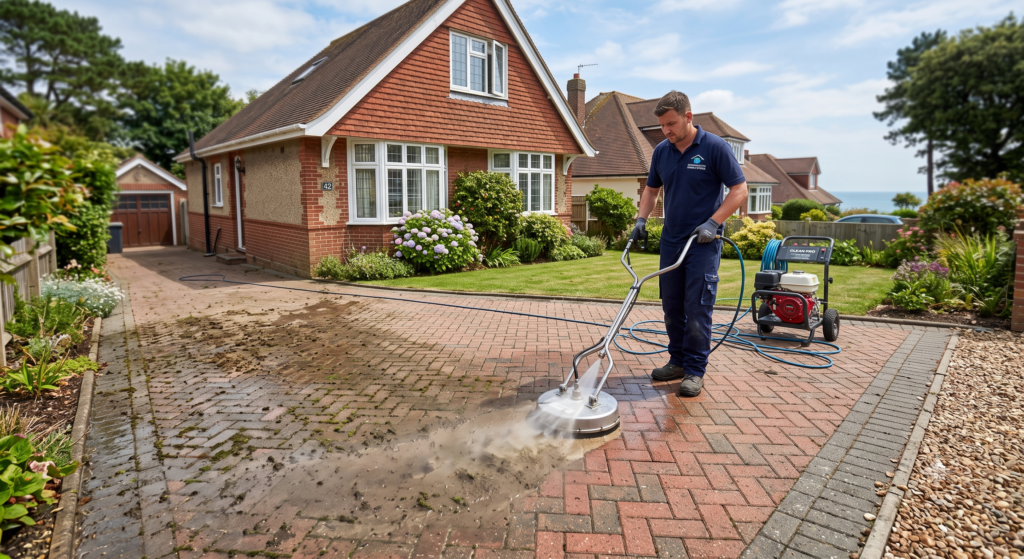
Pressure washing remains the most effective way to lift ingrained dirt, moss, and algae from block paving. A specialist surface cleaner attachment, run at ground level alongside a pressure washing unit, cleans evenly across the whole driveway without leaving the streaky patches you often get from a handheld hose or domestic pressure washer.
The key is using the correct pressure setting for the surface. Too much pressure can damage the block paving, erode the joints, or blast away the bedding sand underneath, so this is a job best left to someone with the right equipment and experience. Our team at Platinum Exterior Cleaning follows the same principle across all our driveway and block paving cleaning work, adjusting the technique to suit concrete, tarmac, natural stone, or block paving surfaces.
2. Weed and Moss Treatment
Pressure washing removes what you can see, but it does not always stop weeds and moss from coming back. A proper clean should include treating the joints to discourage regrowth, rather than simply blasting the surface and hoping for the best. This step is often overlooked by DIY cleaning attempts, which is why weeds tend to reappear within a matter of weeks when homeowners try to tackle the job themselves.
3. Oil and Stain Removal
Standard pressure washing alone rarely lifts stubborn oil stains completely. These need a targeted stain treatment applied before or during the wash to break down the residue, followed by thorough rinsing. Getting this stage right is the difference between a driveway that looks freshly cleaned and one with faint dark patches still visible once it dries.
4. Re-Sanding the Joints
This is the step that many people forget, yet it is essential. Pressure washing naturally removes some of the sand from between the blocks along with the dirt. If this sand is not replaced, the blocks lose stability, can shift out of position, and become more vulnerable to weeds pushing back through the gaps. Applying kiln dried sand into the joints once the driveway has fully dried locks the blocks back into place, improves the overall strength of the surface, and helps slow down future weed growth.
Skipping this final step is one of the most common reasons a newly cleaned driveway starts looking tired again within a few months.
DIY Cleaning vs Hiring a Professional
It is entirely possible to hire or buy a domestic pressure washer and have a go at cleaning your own driveway. However, there are a few reasons professional cleaning tends to deliver better and longer lasting results.
Equipment matters. A domestic pressure washer generally cannot match the output and control of a commercial grade surface cleaner, which cleans more evenly and covers larger areas without leaving stripes or missed patches.
Surface knowledge matters. Not every driveway responds the same way to the same pressure setting. Older or more fragile block paving needs a gentler approach, while heavily soiled tarmac or concrete may need a stronger technique. Getting this wrong risks permanent surface damage.
Time and consistency. A full clean, including weed treatment, stain removal, and re-sanding, takes considerably longer than a quick DIY rinse. Professionals complete the whole process in one visit using the correct products and sequence, rather than leaving steps out.
Long term protection. Professional cleaning is usually paired with treatments that slow down moss and weed regrowth, meaning the results last significantly longer than a basic wash.
If your driveway has not been cleaned in a while, or if you have tried a DIY approach that has not lasted, it is worth having it assessed by a specialist before deciding on the next step.
How Often Should You Clean Your Block Paving Driveway?
Most driveways in and around Bournemouth benefit from a professional clean roughly every twelve to twenty four months. That said, a few factors can shorten this window considerably.
Driveways that sit in shade for most of the day, or are surrounded by trees and hedges, tend to collect moss and algae far more quickly and may need attention every year. Properties close to the coast can also see faster build up due to salt laden air combined with moisture. If your driveway is used daily and regularly exposed to vehicle traffic, oil marks, and general wear, more frequent cleaning helps keep stains from setting in permanently.
Keeping an eye on early signs, such as a slight green tinge in shaded corners or the first weeds poking through the joints, allows you to book a clean before the problem spreads across the whole surface.
The Benefits of a Properly Cleaned Driveway
A clean block paving driveway does more than just look good. It genuinely protects your investment in a few important ways.
It improves the kerb appeal of your entire property, which matters whether you are simply enjoying your own home or preparing to sell. It also removes the slip hazard created by algae and moss, making the driveway safer for family, visitors, and delivery drivers. Regular cleaning and re-sanding helps prevent structural issues such as shifting or sinking blocks, which can be costly to fix if left unchecked for years. Many homeowners also find that once their driveway is cleaned, extending the refresh to their patio or roof gives the whole exterior of the property a consistent, well cared for look.
Frequently Asked Questions
Can I pressure wash block paving myself?
You can, but the results and durability are usually far better with professional equipment and technique. Incorrect pressure or an uneven approach can damage the surface or strip away too much jointing sand, leading to instability.
Does cleaning remove weeds permanently?
Cleaning removes existing weeds and growth, but re-sanding and follow up treatment are what actually slow down regrowth. Cleaning alone, without these extra steps, tends to see weeds return within weeks.
Is re-sanding always necessary after cleaning?
In almost all cases, yes. Pressure washing removes jointing sand along with the dirt, and without replacing it, the blocks become loose and more prone to shifting or further weed growth.
Will pressure washing damage my block paving?
Not when carried out correctly. A trained team will assess the surface and adjust pressure levels accordingly, protecting the blocks and joints while still delivering a thorough clean.
What is the best time of year to clean a driveway?
Spring and autumn tend to work well, as they help clear away the build up from wetter months before it worsens, though driveway cleaning can genuinely be carried out at any time of year.
Ready to Restore Your Driveway?
A block paving driveway is one of the first things people notice about your home, and keeping it clean protects both its appearance and its structure for years to come. At Platinum Exterior Cleaning, we specialise in driveway and block paving cleaning across Bournemouth, Poole, Christchurch, and Ringwood, using techniques designed to lift years of dirt, moss, and stains without damaging the surface underneath.
Whether your driveway needs a full refresh, weed treatment, oil stain removal, or a complete clean and re-sand, our experienced team is ready to help. Get in touch today for a free, no obligation quote and see the difference a proper clean makes.