If you’ve been searching for ways to get rid of the moss, algae, or black streaks taking over your roof, you’ve probably come across two terms: roof cleaning and soft washing. At first glance, they sound like the same thing and to be fair, the marketing isn’t always clear. But there’s a meaningful difference between the two, and choosing the wrong method can cost you thousands in roof repairs.
At Platinum Exterior Cleaning, we get asked this question almost every week by homeowners across Bournemouth, Poole, Christchurch, and Ringwood. So in this guide, we’re going to break it all down into what each method actually is, when to use them, how much they cost, and most importantly, which one is right for your home.
Quick Answer: Roof Cleaning vs Soft Washing in 30 Seconds
Roof cleaning is the umbrella term for any process used to remove dirt, moss, algae, and lichen from your roof. It includes several techniques: pressure washing, soft washing, manual scraping, and biocide treatments.
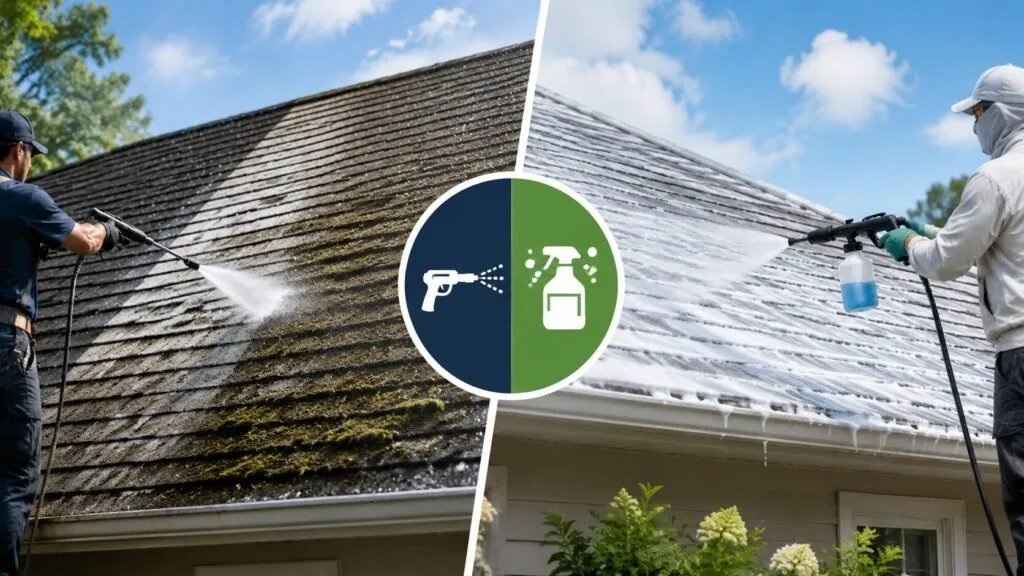
Soft washing is one specific method of roof cleaning. It uses low-pressure water (typically under 500 PSI) combined with biodegradable cleaning solutions that kill organic growth at the root.
So the short answer is: soft washing is a type of roof cleaning, but not all roof cleaning is soft washing. The other main method of pressure washing (also called jet washing or power washing) uses high-pressure water to physically blast contaminants off your roof.
For most UK homes, soft washing is the safer and more effective option. But there are exceptions, and we’ll cover those below.
What Is Roof Cleaning, Exactly?
Roof cleaning is the general practice of removing buildup from your roof’s surface. Over the years, especially in the UK’s damp climate, roofs collect:
- Moss: those fluffy green patches that hold moisture against your tiles
- Algae: usually visible as black streaks or green tints
- Lichen: crusty grey or white growths that bond aggressively to tiles
- General dirt and debris: leaves, pollen, bird droppings, atmospheric grime
Left alone, this buildup doesn’t just look bad. Moss in particular acts like a sponge, holding water against the tiles and causing freeze-thaw damage during winter. Algae and lichen secrete acids that slowly eat into roofing materials. And blocked drainage caused by debris can lead to water pooling, leaks, and damp problems inside the property.
A proper roof cleaning service typically involves an inspection, the actual cleaning (using one of the methods we’re about to explain), and often a biocide treatment afterwards to prevent regrowth.
The two main methods used in roof cleaning are pressure washing and soft washing and that’s where the confusion usually starts.
What Is Pressure Washing (Jet Washing) a Roof?
Pressure washing, also known as jet washing or power washing, uses a high-pressure stream of water to physically blast dirt, moss, and algae off surfaces.
Domestic pressure washers can produce anywhere from 1,500 to 2,900 PSI (pounds per square inch). Commercial machines go even higher. That force is fantastic for breaking up stubborn grime, which is why pressure washing is the go-to method for cleaning driveways, patios, and block paving.
But here’s the problem: your roof isn’t a driveway.
Pressure washing relies entirely on mechanical force. The water doesn’t kill moss or algae spores it just dislodges them. Within months, the same organic growth comes back, often worse than before, because spores get scattered across the rest of the roof during cleaning.
Worse, that high pressure can:
- Crack or dislodge tiles, especially on older properties
- Strip protective granules from asphalt shingles
- Force water under the tiles and into the roof underlay, causing leaks
- Damage flashing and ridge mortar
- Void roof manufacturer warranties many specifically prohibit high-pressure cleaning
That said, pressure washing isn’t useless. It has its place in roof cleaning, just not in the way most people think (more on that below).
What Is Soft Washing a Roof?
Soft washing is a low-pressure cleaning method that uses specialist biodegradable chemicals to clean and disinfect surfaces. Instead of relying on physical force, it relies on chemistry.
Here’s how it works:
- Inspection: The roof is checked for damaged tiles, loose flashing, and the level of contamination.
- Application: A specialist cleaning solution (usually containing a mild biocide) is applied via a low-pressure spray, typically under 500 PSI. That’s about the same pressure as a garden hose.
- Dwell time: The solution is left to work for 15–30 minutes, breaking down moss, algae, and lichen at the cellular level.
- Gentle rinse: The roof is rinsed using low-pressure water, and dead organic matter is either washed away or removed by hand.
- Biocide treatment: Many soft wash services finish with an additional biocidal spray that continues killing spores for months, keeping the roof cleaner for longer.
The result? A roof that’s not just visually clean, but biologically clean too. Because soft washing kills moss and algae at the root, regrowth takes much longer, typically 3 to 5 years compared to 6–12 months after a pressure wash.
This is why we use soft washing as our primary method for all roof cleaning in Bournemouth and surrounding areas.
Roof Cleaning vs Soft Washing: Side-by-Side Comparison
To make the comparison crystal clear, here’s how the two main roof cleaning methods stack up:
| Factor | Pressure Washing | Soft Washing |
| Water pressure | 1,500–2,900+ PSI | Under 500 PSI |
| Cleaning mechanism | Mechanical force | Chemical breakdown |
| Kills moss & algae spores | No — surface only | Yes — at the root |
| Risk of tile damage | High | Very low |
| Risk of water ingress | High | Minimal |
| Time to clean | Fast | Slower (dwell time required) |
| How long results last | 6–12 months | 3–5 years |
| Suitable for delicate tiles | No | Yes |
| Water usage | High | Lower |
| Environmental impact | More runoff | Lower (biodegradable solutions) |
| Best for | Driveways, concrete, metal roofs | Almost all residential roofs |
| Long-term cost | Higher (frequent re-cleans + repairs) | Lower (longer-lasting results) |
Which Roof Cleaning Method Is Best for Your Roof Type?
Different roofing materials respond very differently to each method. Here’s a quick guide:
Concrete Tiles
The most common roof type in the UK. Concrete tiles are durable, but their surface coating can be stripped by high pressure, leading to faster moss regrowth and a chalky appearance. Soft washing is the recommended method.
Clay Tiles
Beautiful but brittle. Clay tiles can crack under pressure washing, particularly if they’re older. Soft washing only.
Slate Roofs
Slate is naturally durable but expensive to replace if damaged. High-pressure water can erode the surface and force water under the tiles. Soft washing is strongly advised.
Asphalt Shingles
The granular protective layer on shingles is easily stripped by pressure washing, which dramatically shortens the roof’s lifespan. Soft washing is the only safe option.
Metal Roofs
Metal roofs (often used on commercial buildings or modern extensions) can tolerate moderate pressure. Either method works, but soft washing still gives longer-lasting results.
Flat Roofs (Felt, EPDM, Fibreglass)
These membranes can be punctured or peeled by high pressure. Soft washing only.
If you’re not sure what type of roof you have or which method it needs, get in touch with our team. We offer free roof assessments across the Bournemouth area.
Is Soft Washing Always Better Than Pressure Washing?
Honestly? For roofs, almost always. But pressure washing still has a place in exterior cleaning, just not where most homeowners think.
Pressure washing is genuinely better for:
- Driveways and block paving where the surface is durable and ingrained dirt needs mechanical removal
- Patios and decking paving stones and hard surfaces respond well to controlled pressure
- Concrete paths, garden walls, and other tough surfaces
- Pre-paint or pre-seal preparation, where you want to strip the surface clean
Hybrid cleaning is another option some professionals use: applying a soft wash biocide first to kill organic growth, then using a low-to-moderate pressure rinse to wash away dead debris. This works well on heavily contaminated concrete tile roofs where soft washing alone might leave residue.
The key is matching the method to the surface and that’s something an experienced contractor will assess before quoting you.
Signs Your Roof Needs Cleaning
Not sure if your roof needs attention? Here are the most common warning signs we see in Bournemouth, Poole, and Christchurch:
- Visible green or black streaks running down the tiles
- Patches of moss between the tiles or along the ridges
- Lichen spots usually pale grey or yellow crusty growths
- Discoloured tiles that look darker on one side of the house
- Blocked or overflowing gutters with moss debris falling in
- Damp patches or staining on internal ceilings (this can mean moss is forcing water under the tiles)
- A roof that simply looks dirty compared to neighbouring properties
If you’re seeing two or more of these, it’s worth booking a roof assessment. Catching the problem early means a simpler clean and less risk of long-term damage. You may also want to consider gutter and fascia cleaning at the same time, since moss runoff often clogs guttering.
Why Soft Washing Works So Well in the UK Climate
The UK and particularly the south coast around Bournemouth, Poole, and Christchurch — is a perfect breeding ground for moss, algae, and lichen. We get:
- Mild, damp winters that keep roofs moist for months
- Coastal humidity that supports algae growth year-round
- Shaded north-facing slopes where moisture lingers
- Plenty of trees dropping organic debris onto rooftops
These conditions mean that even after pressure washing, organic growth comes back fast. Soft washing’s biocidal treatment is far better suited to UK weather because it doesn’t just remove what’s visible today it prevents what would otherwise return within months.
That’s also why we recommend cleaning your roof during late spring through early autumn. The milder, drier weather gives the cleaning solutions optimal dwell time, and there’s less risk of frost damage during or after the clean.
Can I Soft Wash or Pressure Wash My Own Roof?
We get this question a lot, and the honest answer is: please don’t.
Roof cleaning is genuinely dangerous. The UK Health and Safety Executive reports that falls from height are one of the leading causes of fatal workplace injuries and that’s among trained professionals using proper equipment. For a homeowner with a domestic ladder and a hired pressure washer, the risks are significantly higher.
Beyond the safety issue:
- Hired pressure washers are unpredictable and easy to misuse, leading to damaged tiles
- DIY soft wash chemicals can be dangerous if mishandled and ineffective if mixed incorrectly
- No insurance cover if you damage your roof, neighbour’s property, or injure yourself, you’re on the hook
- Missed issues professionals spot loose tiles, cracked flashing, and gutter problems during cleaning
A professional service uses proper safety equipment (harnesses, scaffold towers, or telescopic lances), carries full public liability insurance, and knows exactly which products and pressures work on your specific roof type. The cost of professional cleaning is almost always less than the cost of a single DIY mistake.
What to Look for in a Roof Cleaning Company
If you’re hiring a contractor, here’s what we’d recommend checking:
- Public liability insurance at least £2 million cover
- Working at heights training IPAF or PASMA certified is a good sign
- Experience with your roof type ask for examples or before/after photos
- A proper inspection before quoting beware anyone who quotes blindly over the phone
- Transparent pricing no hidden extras for chemicals, biocides, or access
- Local reviews Google, Trustpilot, and Checkatrade are good places to check
- A clear method statement they should be able to explain whether they’ll soft wash, pressure wash, or use a hybrid approach, and why
At Platinum Exterior Cleaning, we’re a fully insured, locally based team serving the Bournemouth, Poole, Christchurch, and Ringwood areas. We’ve been carefully chosen by hundreds of homeowners because we tailor our approach to each roof rather than using a one-size-fits-all method.
How Often Should You Clean Your Roof?
For most UK properties, a professional roof clean every 3 to 5 years is ideal. However, that varies based on:
- Tree coverage homes surrounded by trees may need cleaning every 2–3 years
- Shade and dampness north-facing or heavily shaded roofs collect moss faster
- Proximity to the coast coastal properties (like much of Bournemouth and Poole) get more salt air and algae growth
- Roof material porous tiles like concrete collect more organic growth than glazed clay
A good rule of thumb is to inspect your roof visually each spring after winter. If you can see new moss patches, black streaks, or lichen developing, it’s probably time to book a clean.
Frequently Asked Questions
Is soft washing safe for roof tiles?
Yes, when carried out by a trained professional, soft washing is the safest cleaning method for virtually all roof tile types. The low pressure poses no physical risk to tiles, and the biocidal solutions are designed to be tough on organic growth but gentle on roofing materials.
Will soft washing damage my plants or garden?
The biocides used in professional soft washing are biodegradable, but they can affect plants if not handled properly. Reputable cleaners cover or pre-soak surrounding vegetation and ensure runoff is managed safely. Always ask your contractor how they protect garden areas before work begins.
How long does a soft wash roof clean take?
A typical residential soft wash takes between 3 and 6 hours, depending on roof size, pitch, and the level of contamination. Larger or more complex properties may require a full day or scaffolding access.
Does roof cleaning increase property value?
A clean, well-maintained roof is one of the most visible signs that a property has been cared for. Estate agents consistently report that kerb appeal improvements including roof,driveway, and patio cleaning can speed up sales and improve offers. While it’s hard to put an exact figure on it, a dirty, mossy roof can deter buyers and prompt them to assume hidden damage.
Can pressure washing crack my roof tiles?
Yes. High-pressure water can crack older or weaker tiles, dislodge them entirely, or force water under the tiles into the underlay. This is one of the main reasons we don’t recommend pressure washing as a primary method for residential roofs.
Will moss grow back after roof cleaning?
Eventually, yes moss is part of the UK climate. But how quickly depends on the method used. After a pressure wash, moss typically returns within 6–12 months. After a soft wash with a proper biocide treatment, it can take 3–5 years or longer.
Final Word: Which Is Right for Your Roof?
For 95% of homes in Bournemouth, Poole, Christchurch, and Ringwood, soft washing is the better choice. It’s gentler on your tiles, kills moss and algae at the root, lasts significantly longer, and works out more economical over time.
Pressure washing has its place especially for driveways, paths, and patios but for roof cleaning, the risks usually outweigh the benefits.
If you’re still not sure which method your roof needs, the easiest next step is to book a free assessment. We’ll inspect your roof, tell you exactly what condition it’s in, and recommend the safest, most cost-effective cleaning approach for your specific property. No pressure, no obligation.
We cover Bournemouth, Poole, Christchurch, Ringwood, and the surrounding Dorset and Hampshire areas with professional roof cleaning, soft washing,gutter cleaning,driveway cleaning, and patio cleaning services.