Few things are more frustrating than spending a weekend scrubbing and jet washing a patio, only to watch the same dark marks creep back within a few months. Most homeowners assume these black spots are simply dirt, algae, or weather staining. In our experience treating patios across a wide range of stone types, the real cause is almost always something more stubborn, and understanding it properly is the only way to stop the cycle for good.
Quick answer: Black spots on patio slabs are usually caused by black lichen, a living organism that anchors itself into the pores of stone and concrete rather than sitting on top of it. Jet washing removes the visible surface but leaves the root structure intact, which is why the marks reappear, often faster and worse than before.
What Are Black Spots on Patio Slabs?
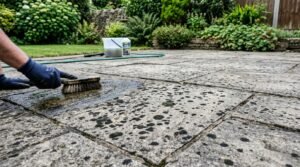
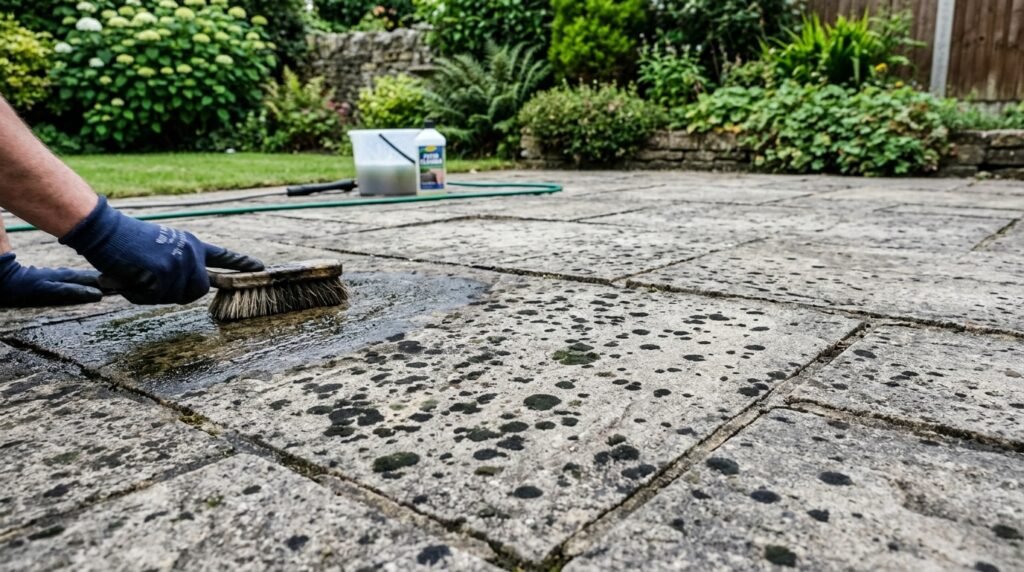
The black marks spreading across sandstone, limestone, concrete, and block paving are typically caused by a hardy form of black lichen. Lichen is not dirt, mould, or pollution. It is formed from a fungus and algae growing together in partnership, which allows it to survive conditions that would kill most other growth.
How Lichen Attaches to Paving
Once established, lichen does not simply sit on the surface. It anchors into the microscopic pores of stone or concrete, and on natural materials such as sandstone and limestone it can even feed on minerals within the stone itself. Over time it becomes part of the patio rather than something resting on it. This is why black spots often stay visible even when the paving looks completely dry.
Why Newer Patios Are Not Immune
One of the most confusing aspects of black spots is how quickly they can appear, sometimes within just a few years of installation. Homeowners often assume something has gone wrong during laying. In most cases, the explanation is simpler: lichen spores can lie dormant for a long time. Once the patio has weathered slightly and begins holding a little more moisture, conditions become ideal, and the spots start to develop.
Why Jet Washing Alone Rarely Solves the Problem
Pressure washing is usually the first thing people try, and it is genuinely effective against loose dirt, moss, and general grime. Against embedded black lichen, though, it only strips away the visible top layer. The root structure stays anchored inside the pores, ready to regrow as soon as damp conditions return.
The Hidden Damage of Repeated Jet Washing
What surprises most homeowners is that repeated high pressure cleaning can make the problem worse rather than better. The force of the water roughens the surface of stone and concrete, opening up more pores and pits. A rougher, more porous surface holds moisture more easily, which creates better growing conditions for lichen. This is why patios often show black spots returning faster and spreading further after each jet wash, rather than staying cleaner for longer.
Where Black Spots Develop Fastest
Black spots rarely appear evenly across a patio. Based on the patterns we see most often on site, growth tends to establish first in areas that stay damp the longest.
High Risk Areas
- North facing corners and sections that get little direct sun
- Spaces shaded by fences, walls, or garden buildings
- Areas beneath trees or overhanging shrubs
- Patios near lawns, borders, or dense planting
These areas dry more slowly after rainfall, giving spores far more time to settle before the surface has a chance to dry out. Fallen leaves, soil, moss, and general organic debris add to the problem by feeding the lichen and helping it retain moisture against the surface. Older, more porous materials such as aged sandstone and older concrete are particularly vulnerable, since their surfaces absorb moisture more readily than newer or denser paving.
Why the UK Climate Makes This Worse
Frequent rainfall, relatively mild temperatures, and long damp spells through autumn and winter create close to ideal conditions for this kind of biological growth. It is one reason patios in the UK tend to show black spot problems that homeowners in drier climates rarely encounter.
Why DIY Cleaners and Bleach Fall Short
Household bleach, vinegar, and shop bought patio cleaners can lighten black spots temporarily, giving the impression the problem is solved. In practice, they usually only affect the surface layer and rarely reach the root structure embedded within the stone. Acidic products can also damage natural stone over time, increasing its porosity and making future outbreaks more likely rather than less.
Why Sealing Too Early Can Backfire
Sealing a patio without treating the underlying lichen first often makes things worse. Even breathable sealers allow spores to penetrate over time, and once lichen grows beneath a sealed surface it becomes considerably harder to remove and can lead to patchy discolouration that is difficult to correct later.
The Right Way to Remove Black Spots
Lasting results come from treating the cause of the problem rather than repeatedly attacking the symptom. A proper softwash treatment targets the lichen at a biological level, breaking it down gradually within the pores of the stone so it can be lifted away safely, without the surface damage that comes from excessive pressure.
This approach focuses on penetration rather than force. Because the growth is neutralised from within, colour and texture return gradually instead of being stripped away, and the risk of scarring or eroding softer stone is greatly reduced. Older or heavily affected patios may need more than one treatment, but this method avoids the damaging cycle of repeated aggressive jet washing that so often leads to faster regrowth.
Our patio cleaning service is built around this principle, combining careful preparation with specialist treatment to remove black spots properly rather than masking them for a few weeks. If your driveway shows similar staining, our driveway cleaning service follows the same approach and is worth doing at the same time, since spores often travel between neighbouring hard surfaces.
Because blocked or overflowing gutters keep nearby paving wetter for longer than it should be, it is also worth checking whether your gutter clearing service is overdue. Poor drainage close to a patio is one of the most common contributors to recurring black spot growth, and it is often overlooked entirely.
How to Stop Black Spots Returning
Once a patio has been treated properly, prevention becomes just as important as the original clean. It is not possible to stop spores landing on a surface entirely, since they exist naturally outdoors, but it is possible to make conditions far less inviting for them.
Practical Maintenance Habits
- Sweep away leaves and organic debris regularly
- Trim back overhanging branches and shrubs to improve airflow and light
- Improve drainage around consistently damp areas
- Book periodic maintenance cleaning before growth becomes heavily established
- Avoid excessive pressure when cleaning between professional treatments
Frequently Asked Questions
Do black spots mean my patio needs replacing?
No. Black spots are a natural response to damp, shaded conditions and porous materials, not a sign the patio has failed. Most affected patios can be restored with the correct treatment.
Will jet washing eventually remove black spots for good?
On its own, rarely. It removes surface growth but leaves the root structure in the pores, so spots typically return, often faster than before.
Can I prevent black spots from ever appearing?
Not completely, since spores are present in the environment. Good drainage, regular debris removal, and periodic treatment significantly reduce how often they return.
A Smarter Way to Think About Black Spots
Black spots are not a sign of a poorly built patio or neglect. They are a natural response to damp, shaded conditions and the porous materials most paving is made from. Understanding what causes them shifts the approach away from brute force cleaning and toward treating the biology behind the problem.
With the right treatment carried out properly, and a little ongoing care afterwards, a patio can stay bright and spot free for years rather than months.
Ready to see the difference professional treatment makes? Get in touch with our team for a free assessment of your patio.