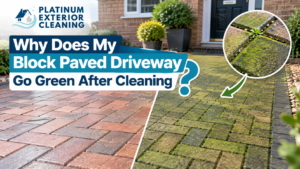

You book a clean, the driveway looks brilliant, and a few months later the green tinge is creeping back across the blocks. It is one of the most common frustrations homeowners have, and it often leads to one question: was the job done properly?
In most cases, yes. A green driveway after cleaning rarely means the work was poor. It usually means the conditions that caused the growth in the first place are still there. Once you understand what is happening on the surface and between the blocks, you can slow the regrowth right down.
This guide explains what the green growth actually is, why block paving is so prone to it, why it returns, and what genuinely helps it stay away.
What Is the Green Growth on Your Driveway?
The green colour is not dirt. It is living organic growth, and it usually comes in three forms.
Algae are simple organisms that form a flat green film on the surface. They are the main reason a driveway turns slippery and discoloured. Moss is a more developed plant that grows in soft, raised cushions, mostly along joints and edges where it can anchor itself. Lichen is a flaky, crusty growth that clings tightly to the surface and can appear grey, yellow or pale green. It is much harder to remove than algae.
All three reproduce through microscopic spores that travel on the wind, rain splash, birds and even your shoes and tyres. That detail matters, because it explains why a spotless driveway can be recolonised without you doing anything wrong.
Why Block Paving Goes Green So Easily
Block paving is a particularly welcoming surface for organic growth, and there are a few reasons why.
The blocks themselves are slightly porous, so they hold a little moisture after rain. The surface is also textured rather than perfectly smooth, which gives algae spores something to cling to. Then there are the joints. The sand between the blocks traps water, soil, pollen, leaf fragments and dust, which together make an ideal bed for moss and weeds to take hold.
A smooth tarmac or sealed surface sheds water quickly. Block paving, with its hundreds of small joints, simply stays damp for longer. Damp is what green growth needs most.
Why the Green Comes Back After Cleaning
This is the heart of the question. Cleaning removes the growth you can see, but it does not change the environment around the driveway. Several things tend to be behind a quick return.
The conditions have not changed
Algae and moss thrive where surfaces stay wet and sunlight is limited. If your driveway is shaded by trees, a tall fence, a wall or the house itself, it will dry slowly, even after a thorough clean. A driveway in full sun might stay fresh for a year or more, while a shaded one can show a green film again within a few months. Both can be cleaned equally well.
Spores are always in the air
A clean surface is not a protected surface. Fresh spores land on it constantly. If the blocks are damp and the joints are holding moisture, those spores settle and begin to multiply again almost straight away.
Surface cleaning alone leaves something behind
Pressure washing blasts away visible growth, but it does not always deal with what lies deeper in the pores of the blocks or down in the joints. Without a suitable biocide treatment to kill algae and spores at the source, small amounts survive and rebuild. This is one reason treated driveways usually stay cleaner for longer than ones that have only been jet washed.
The joints were left open
On block paving, cleaning often removes some of the sand from between the blocks. If the joints are not refilled afterwards, they become open channels that collect water and debris, and weeds and moss can take hold much more quickly. Pure Pro Exterior Cleaning makes a similar point, noting that re sanding may be appropriate after cleaning, and the Cannock Window Cleaning team also treats joint restoration as part of a proper clean rather than an optional extra.
The surface has been roughened
Cleaning at too high a pressure can erode the top layer of the block and open up the pores. A rougher surface holds more moisture and gives algae a better grip, so the green can return faster than before. Pressure is only part of the answer, and technique matters just as much.
Is Pressure Washing Enough?
Pressure washing is effective on block paving when it is done with the right equipment and care. It is excellent at lifting heavy dirt, old growth and general grime. The problem comes when it is the only step.
A more complete approach usually combines several things. The surface is cleaned with controlled pressure, often using a rotary surface cleaner so the result is even and the blocks are not damaged. A suitable biocide is applied to treat algae, moss and spores, and it is given time to work. The driveway is rinsed, the joints are refilled, and in some cases a protective sealer is applied.
Each of these steps does a different job. Skipping the treatment or the joint work is what usually leads to fast regrowth, not the washing itself.
The Role of Joint Sand
The joints deserve their own mention because they are where so many problems begin and end.
Good joint material locks the blocks together, stops them from shifting, keeps weeds from germinating and reduces the amount of water the joints can hold. Once it has been washed out, the blocks lose some of that stability and the gaps become a trap for organic matter.
Many professionals refill the joints with kiln dried sand or a polymeric sand, which hardens slightly once activated and resists washout and weed growth better than plain sand. The right choice depends on the age and condition of the paving, which is why it is worth having the driveway assessed rather than assuming one product suits all.
Shade, Drainage and Seasons
Because the environment matters so much, it is worth looking at it honestly.
Trees and hedges that overhang the driveway cast shade and drop leaves, seed and sap. Fallen leaves that sit on the blocks break down and feed algae. Overflowing gutters or downpipes that discharge onto the driveway keep one area permanently wet. Low spots and poor drainage leave water standing long after the rain has stopped.
The seasons play their part too. In the UK, autumn and winter bring cooler temperatures, shorter days and long periods of damp, which is why green growth often becomes much more noticeable in these months. A driveway cleaned in spring may look flawless until the following autumn, even if nothing has gone wrong.
If your gutters are part of the problem, a visit from a gutter cleaning service can reduce the amount of water running onto your paving.
Common Mistakes That Make Regrowth Worse
Some well meant efforts can actually shorten the life of a clean driveway.
Using strong bleach is a popular DIY fix, but it can bleach the blocks, harm nearby plants and run off into drains. Household remedies such as vinegar or washing soap are often suggested online, yet the evidence for lasting results is weak, and HG, a UK cleaning product supplier, notes that algae control in the UK falls under biocide regulations, so approved products matter. Using a turbo nozzle too close to the blocks can pit the surface and strip the joints. Leaving cleaning residue and debris on the surface, or letting leaves pile up afterwards, simply restarts the cycle.
How to Keep the Green Away for Longer
You cannot stop outdoor growth forever, but you can make life much harder for it. A few habits make a noticeable difference:
- Sweep the driveway regularly, especially in autumn, so leaves and debris do not sit on the blocks.
- Trim back overhanging branches and hedges to let in more light and air.
- Keep gutters and downpipes clear so water does not run onto the paving.
- Treat early signs of green with a suitable moss and algae treatment before they spread.
- Keep the joints topped up with the right sand so water and weeds have less room to settle.
Beyond these habits, many homeowners choose to book a professional driveway cleaning every year or two, depending on how shaded and busy the driveway is. Regular light maintenance is usually far easier than waiting until the whole surface is covered.
Should You Seal Your Block Paving?
Sealing can help. A good quality block paving sealer reduces how much water the surface absorbs, makes dirt and algae less able to bond to the blocks, and helps lock the joint sand in place. It can also enrich the colour of the paving.
That said, it is not right for every driveway. The blocks must be completely clean and dry before sealing, and the wrong product or a poorly applied coat can leave a patchy or shiny finish. Sealing also does not replace maintenance. It makes cleaning easier and slows the build up, but it does not make the surface immune. A block paving sealing assessment will tell you whether your driveway is a good candidate.
How Often Should a Block Paved Driveway Be Cleaned?
There is no single schedule, but as a general guide, an open, sunny driveway may only need a deep clean every two years, while a shaded, damp or heavily used one may look better with a clean every year. A light treatment between deeper cleans can also help. If you notice a slippery film, dark patches, or moss appearing along the joints, it is time to act. Algae make surfaces genuinely slippery, so leaving it too long is a safety concern as well as a cosmetic one.
Frequently Asked Questions
Why did my driveway go green so soon after it was cleaned?
The most common reason is that the surrounding conditions, such as shade, damp and nearby trees, have not changed. Spores land on the clean surface constantly, and if it stays damp, they multiply quickly. Skipping a biocide treatment or leaving the joints open can speed this up.
Does a green driveway mean the cleaning was done badly?
Not necessarily. Moisture, shade and surroundings strongly influence how quickly growth returns, so a green driveway is not automatically a sign of poor workmanship. That said, a proper clean should include the right method for the surface, treatment where needed and attention to the joints.
Will pressure washing damage my block paving?
It can if it is done carelessly. Too much pressure can strip the joints and pit the blocks. Controlled pressure, suitable equipment and the right technique protect the surface, and the joints should be refilled afterwards.
Is it worth resanding the joints after cleaning?
In most cases, yes. Fresh joint sand stabilises the blocks, reduces weed and moss growth and limits how much water collects between them. It is one of the most useful steps for making a clean last.
Can I stop my driveway going green completely?
Not entirely, because outdoor surfaces will always be exposed to spores and moisture. You can, however, slow it considerably with regular sweeping, better light and drainage, joint maintenance, periodic treatment and, where suitable, sealing.
How long does a clean driveway usually stay clean?
It varies. A sunny, well drained driveway can stay fresh for a year or more, while a shaded one may start to show green within a few months. Regular upkeep extends the time between deeper cleans.
Final Thoughts
If your block paved driveway has gone green again after cleaning, it is almost never a mystery. Shade, moisture, airborne spores, open joints and the absence of a lasting treatment are usually the real causes. The best results come from looking at the whole picture: cleaning the surface carefully, treating the growth at its source, restoring the joints and improving the conditions around the driveway where you can.