
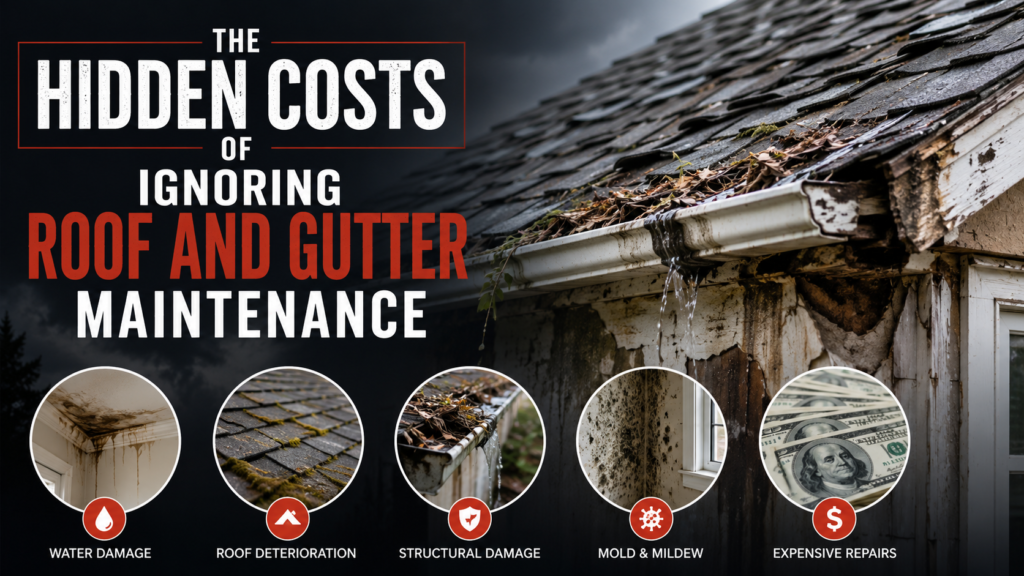
Most homeowners in Bournemouth, Poole, Christchurch, and Ringwood only think about their roof and gutters when something visibly goes wrong. A stain on the ceiling. A gutter spilling over during a storm. A patch of moss creeping across the tiles. By the time these signs appear, the damage underneath has usually been building for months, sometimes years.
Roof and gutter maintenance rarely feels urgent because the consequences of ignoring it are slow and hidden. Water does not announce itself. It seeps quietly behind fascia boards, soaks into brickwork, and settles into timber long before anything looks wrong on the surface. That quiet, gradual damage is exactly what makes neglect so risky, and so easy to underestimate.
In this guide, we will walk through what actually happens when roofs and gutters are left unattended, the physical and structural consequences involved, and the practical steps you can take to protect your property before small issues turn into major ones.
Why Roofs and Gutters Work as a Single System
It is tempting to think of your roof and your gutters as two separate parts of the house, but they function as one connected drainage system. The roof sheds rainwater, and the guttering is responsible for carrying that water safely away from the walls, windows, and foundations.
When either part fails, the other is affected almost immediately. A roof shedding moss and debris will clog the guttering below it. A blocked gutter, in turn, causes water to back up under roof tiles, soaking timber battens that were never designed to get wet. Understanding this relationship is the first step toward understanding why neglecting one so often damages the other.
If you are unsure whether your roof needs attention, our guide on warning signs your roof needs professional cleaning explains what to look for before problems spread to the guttering system.
What Happens When Gutters Are Left Unchecked
Gutters fill gradually with leaves, moss, roof grit, and windblown debris. In a climate like the South Coast’s, damp conditions mean this build up rarely dries out, so it compacts into a dense sludge that blocks water flow almost completely.
Once that happens, several things tend to follow.
Water Overflow and Wall Saturation
Instead of draining away, rainwater spills over the edge of the guttering and runs straight down the exterior walls. Over time, this constant saturation works its way into brickwork and render, creating damp patches that can travel inside the property. Our blog on how blocked gutters lead to damp, mould, and repairs covers this process in more detail.
Fascia and Soffit Damage
Fascia boards and soffits sit directly beneath the roofline and are constantly exposed to overflow water. Timber soffits absorb moisture, swell, and eventually rot, while ventilation gaps that are meant to keep loft spaces dry become clogged and ineffective. Once airflow is blocked, condensation builds inside the roof space, encouraging mould growth that spreads well beyond the point of the original blockage.
Foundation and Ground Erosion
Pooling water around the base of a property is one of the most overlooked consequences of gutter neglect. In older homes with shallower foundations, repeated soaking can erode the surrounding soil, leading to subsidence, hairline cracks in walls, and doors or windows that no longer sit square in their frames.
Pest Activity
Stagnant water sitting in blocked guttering is an open invitation for insects, while the debris itself becomes a nesting spot for birds and rodents. Left long enough, nests can block downpipes entirely, and gnawing pests can damage timber and wiring near the roofline.
What Happens When Roofs Are Left Unchecked
A neglected roof follows a similar pattern of slow, compounding damage.
Moss, Algae, and Lichen Growth
Moss holds moisture against roof tiles long after rain has stopped. Over time, this trapped moisture works its way beneath the tile surface, causing tiles to lift, crack, or become porous. Lichen and algae add to the problem by breaking down the tile surface itself. If you would like to understand the different ways professionals treat this, our article on roof cleaning versus soft washing explains the distinction clearly.
Water Ingress and Timber Rot
Once tiles are compromised, water begins to find its way beneath the roof covering. This affects the timber battens and rafters that hold the structure together, and in cold weather, trapped moisture can freeze and expand, cracking tiles and joints even further.
Reduced Roof Lifespan
A roof that is regularly cleared of moss, algae, and debris will consistently outlast one that is left to accumulate growth year after year. Neglect does not just risk sudden failure, it quietly shortens the working life of the entire roof covering. You can read more about this in our piece on how roof cleaning extends the life of your tiles.
Compromised Insulation and Higher Energy Use
Water that penetrates roof insulation reduces its effectiveness significantly. A home with damp loft insulation loses heat far more quickly, which means heating systems have to work harder to maintain the same indoor temperature, particularly through the winter months.
The Seasonal Pattern of Neglect
The South Coast climate follows a fairly predictable cycle that makes ongoing maintenance especially important.
- Spring brings pollen and seed debris that mixes with leftover winter buildup, encouraging fresh moss growth.
- Summer dries this debris into a hardened layer that restricts water flow and attracts pests.
- Autumn brings heavy leaf fall and increased rainfall, causing the most sudden blockages of the year.
- Winter freezes any trapped water, expanding it and cracking joints, tiles, and gutter brackets.
By the time one full cycle has passed without attention, most roof and gutter systems have already begun to deteriorate in ways that are not obvious from ground level.
Signs Your Roof and Gutters Need Attention
Many of the warning signs are easy to miss unless you know what to look for.
- Water spilling over gutter edges during rainfall
- Sagging or visibly uneven guttering lines
- Green streaks, moss, or algae along the roofline or walls
- Damp patches appearing on ceilings or upper interior walls
- Musty smells in loft spaces or upstairs rooms
- Plants or weeds growing directly out of the guttering
- Missing, cracked, or lifted roof tiles
If you notice more than one of these signs, it is worth arranging a professional inspection before the next heavy rainfall puts additional strain on the system.
Why Waiting Rarely Pays Off
It is easy to assume that a slightly blocked gutter or a mossy patch of roof can wait until next year. In practice, the opposite tends to be true. Water damage compounds. A small patch of damp insulation becomes a larger one. A single cracked tile allows more moisture in with every rainfall. A gutter bracket weakened by trapped debris eventually gives way entirely.
The properties that avoid serious structural repairs are almost always the ones where roof and gutter maintenance happens on a regular schedule rather than in response to a visible problem. Prevention is simply a matter of staying ahead of a process that only moves in one direction if left alone.
Building a Simple Maintenance Routine
You do not need a complicated schedule to protect your property, just consistency.
- Inspect gutters and roofline visually after any major storm
- Clear gutters at least twice a year, ideally in spring and again after autumn leaf fall
- Book a professional roof clean when moss, algae, or lichen become visible
- Trim back overhanging branches that drop debris onto the roof and into the guttering
- Check loft spaces periodically for damp smells, staining, or daylight coming through the roof structure
For a broader look at how often different parts of your property should be cleaned and inspected, take a look at our guide on how often you should book exterior cleaning.
DIY Maintenance Versus Professional Care
Basic tasks like clearing visible leaves from an accessible gutter or removing loose debris from a single storey roof can often be handled safely by homeowners. However, working at height carries real risk, and blockages inside downpipes are frequently invisible from ground level, meaning a visual check alone can miss the true extent of a problem.
Professional teams bring specialist equipment that reaches higher gutters safely, flushes downpipes fully, and identifies early signs of tile damage or timber rot that an untrained eye is likely to overlook. For most two storey and three storey properties across Bournemouth, Poole, Christchurch, and Ringwood, professional cleaning is simply the safer and more thorough option.
Protecting Your Property for the Long Run
Roof and gutter neglect rarely announces itself with a single dramatic event. It builds quietly through one missed autumn clear out, one ignored patch of moss, one gutter that overflows just a little more each time it rains. By the time the damage becomes obvious inside the home, the underlying structure has often already been compromised for a long time.
The good news is that this entire chain of damage is preventable. Regular roof and gutter care keeps water moving exactly where it should, protects the timber, brickwork, and insulation that keep your home dry and efficient, and removes one of the most common causes of unexpected structural repairs.
At Platinum Exterior Cleaning, we help homeowners across Bournemouth, Poole, Christchurch, and Ringwood stay ahead of this cycle with professional gutter cleaning and roof cleaning services, using safe, effective methods that protect your property rather than put it at further risk.
If it has been a while since your roof and gutters were properly checked, now is a good time to arrange an inspection. Get in touch with our team and we will help you put a straightforward maintenance plan in place.